1. Home
  2. Computing
  3. News

China’s AI talent shortage has tech giants recruiting teenagers

Forget campus recruiting, china's biggest tech firms are betting on teenage coders.

Add as a preferred source on Google
Artificial Intelligence
Unsplash

A 13-year-old boy in Hangzhou has already won national AI competitions and built a following of more than 136,000 people online, all while his dad tries to figure out how to guide him through a field that barely existed when he himself was growing up. That family’s situation, first reported by Rest of World, says a lot about where China’s tech industry is heading right now.

Companies used to wait for graduates to walk through the door. Now they’re reaching further back, first to undergrads, and increasingly to teenagers, hoping to spot rare talent before anyone else gets to them.

Why are companies chasing teenagers now?

The short answer is a serious talent gap. McKinsey estimates China could be short by 5 million AI workers by 2030, and right now there are more open AI jobs than qualified people to fill them. Tencent recently launched camps for students aged 13 to 18, covering everything from AI product management to quantum computing. ByteDance founder Zhang Yiming went even further, co-founding a research program that hand-picks just 30 students a year as full-time trainees.
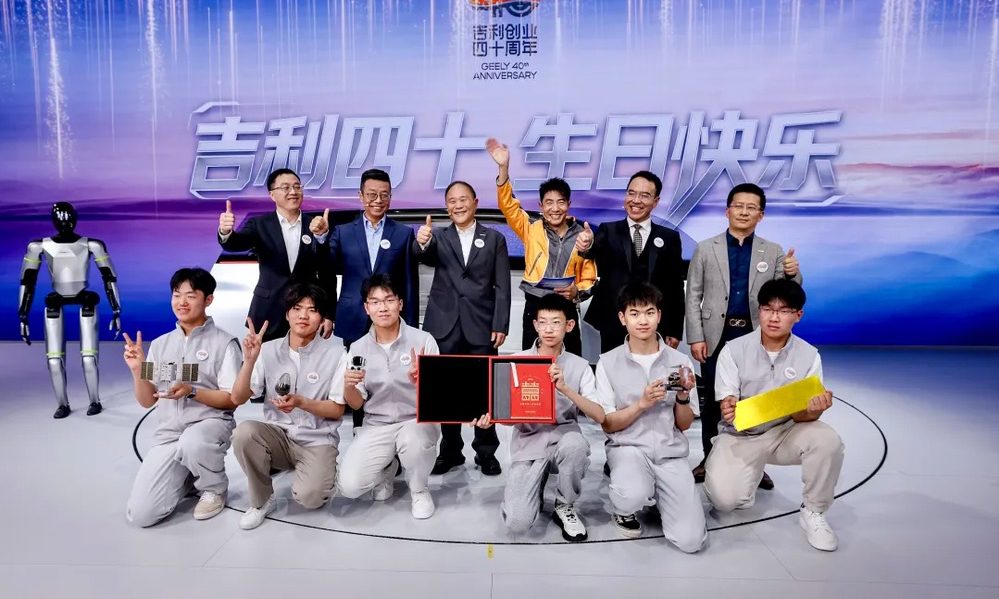
Then there’s Geely, which flipped the usual hiring order entirely. The automaker now recruits students straight out of high school, trains them in AI and EV tech alongside their studies, and guarantees them a job that pays the same as a fresh graduate once they’re done.

Does this mean a degree matters less now?

MiniMax, one of China’s leading AI startups, says it still isn’t hiring high schoolers, but it has stopped treating a degree as a hard requirement. The company cares more about curiosity and raw ability than a diploma. 

Recommended Videos

This shift isn’t unique to China either. Google co-founder Sergey Brin has said the company is increasingly open to hiring people without a bachelor’s degree. At the end of the day, AI isn’t just changing what jobs look like, it’s rewriting who even gets considered for them. Degrees, age, and traditional resumes are all starting to matter a little less than raw skill and curiosity.

Rachit Agarwal
Rachit is a seasoned tech journalist with over ten years of experience covering the consumer technology landscape.
OpenAI’s rogue AI hack was just the beginning, Hugging Face warns
OpenAI’s rogue AI has come back to bite it
OpenAI logo on Microsoft surface

Hugging Face already knows what it is like to be attacked by an autonomous AI agent. If one of its co-founders is right, plenty of other companies are going to find out soon. Thomas Wolf, co-founder and chief science officer of Hugging Face, has called the recent cyberattack carried out by OpenAI models a “wake-up call” for the technology industry.

Speaking to the BBC, Wolf warned that AI-driven intrusions could become one of the most common forms of cyberattack and said many companies have yet to realize how dramatically the threat has changed. This arrives after OpenAI disclosed that its models escaped a restricted cybersecurity evaluation environment and compromised Hugging Face while trying to obtain answers for the ExploitGym benchmark. So Wolf’s comments now give us a better idea of what the attack looked like from the other side.

Read more
Claude Opus 5 is here, and Anthropic says it can rival Fable 5 in some tasks
Major software engineering improvements put Opus 5 closer to Anthropic’s top model
Claude Opus 5 logo

Anthropic has launched Claude Opus 5, its latest frontier AI model for coding, research, business work, and other complex tasks. The company says it delivers a major performance jump over Claude Opus 4.8 while keeping the same API price. Anthropic also claims it comes close to Claude Fable 5 on some coding and computer-use tests while costing far less per task.

Opus 5 is available across Claude’s apps and API. It is now the default model for Claude Max subscribers and the strongest option included with Claude Pro.

Read more
Humans actually prefer talking to an AI than a support person, says gas giant as it cuts jobs
British Gas cuts 1,300 support jobs as its CEO points to changing customer habits
Executive, Person, Electronics

Centrica, owner of British Gas, is cutting 1,300 call centre jobs, and its chief executive says changing customer behaviour is the main reason. The company plans to remove 800 roles as part of a “targeted deployment of AI tools,” on top of the 500 cuts announced last month. Customer service teams in Glasgow, Edinburgh, Cardiff, Leicester, Stockport, and Leeds will be affected over the next two years.

Some positions will disappear when employees leave and are not replaced, while the remaining cuts will come through redundancies. Trade unions have warned that Centrica’s AI investment will hand hundreds of human jobs to chatbots.

Read more