Dell’s new Latitude 7320 Detachable is here with a fresh new design to take on Microsoft’s Surface Pro 2-in-1s.
Available now starting at $1,550, the new Windows 10 tablet sports slim bezels, Intel’s 11th-gen processors under the hood, and features catered to both enterprise and business users.
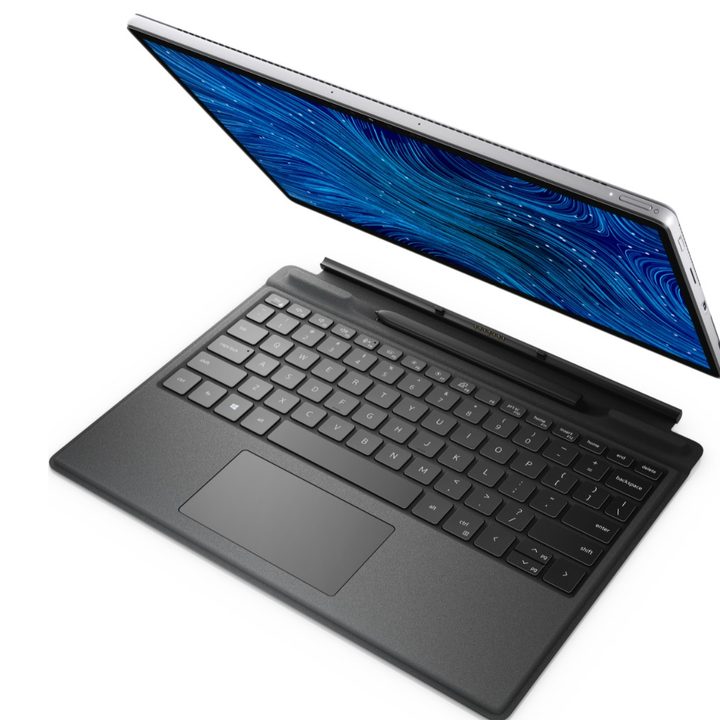
For everyone else, the highlight feature of the new Latitude 7320 Detachable is the 13-inch, 3:2 aspect ratio, 1920 x 1280 resolution screen. Similar to Microsoft’s Surface Pro X, Dell has slimmed down the bezels on the tablet 10% between generations, for an 84% screen-to-body ratio.
This allows you to fit more on your screen and multitask efficiently, a bit like on the Dell XPS 13 laptop. The Latitude 7320 Detachable is now has some of the slimmest bezels among the current Windows tablets, beating out Microsoft’s Surface Pro 7 and the Lenovo ThinkPad X12 Detachable.
There is even an add-on option for a detachable keyboard that has a housing for a pen. Both are separate purchases, but Dell claims that the pen can recharge up to 100% in the housing of the keyboard in 30 seconds, wand offers up to 90 minutes of continuous usage. The keyboard also features a brushed aluminum and synthetic suede finish, with a magnetic hinge to attach it to the Latitude tablet when the kickstand is opened up. That’s just like Microsoft’s Surface Pro X Signature Keyboard, which has a housing for the rechargeable Surface Slim Pen.
The big differentiating factor over the Surface Pro X, though, is what’s inside this tablet. Dell includes options for Intel’s 11th-gen Core processors and up to a Core i7 vPro. RAM can also be pushed up to up to 16GB, and PCIe NVMe storage options range from 128GB up to 1TB. For comparison, the Surface Pro X maxes out at 512GB of storage and 16GB of RAM.
Microsoft’s Surface Pro X has a Qualcomm processor under the hood, which means it suffers from app compatibility issues. With Dell opting for Intel’s 11th-gen processors, this isn’t a concern. The tablet is Intel Evo-certified as it comes with Iris Xe graphics on board. Dell says it offers up to 54% more performance than its predecessor, the Latitude 7210 Detachable.
Other things of note on the Latitude 7320 Detachable include its webcam and connectivity options. You’ll find two Thunderbolt 4 ports on board, as well as an optional fingerprint reader and a SmartCard reader. The front-facing 5-megapixel Full HD webcam promises brighter, sharper video in low light, and there’s an 8-megapixel camera on the rear for whiteboard photography. Windows Hello facial login can also be added as an option for the front camera if needed.

Dell has also thought about those who might not have access to Wi-Fi at all times. The tablet has options for 4G LTE and eSIM models, with a Qualcomm Snapdragon X20 LTE modem inside, similar to how the Surface Pro X has an LTE option.
Of course, as a business and enterprise tablet, the Latitude 7320 Detachable sports some unique intelligent features. That includes Dell Express Connect, which can join the strongest Wi-FI network in the office and direct your bandwidth for videoconferencing.
There’s also Express Sign-In, which lets you instantly wake the device and log into it without a password, while also locking the device when you walk away from it. Express Charge (for a 35% charge in 20 minutes,) Intelligent Audio, (for enhanced audio quality,) and Express Response (which prioritizes your important apps) round out the features on the tablet.