As it introduced a new social hub, Google quickly learned that people’s most frequent e-mail contacts are not necessarily their best friends. Rather, they could be business associates, or even lovers, and the groups don’t necessarily mix well. It’s one reason many people keep those worlds separate by using Facebook for friends and LinkedIn for professional contacts, or by keeping some people completely off either social circle despite frequent e-mails with them. Google Inc. drew privacy complaints this week when it introduced Buzz and automatically created circles of friends based on users’ most frequent contacts on Gmail. Just days later, Google responded by giving users more control over what others see about them.
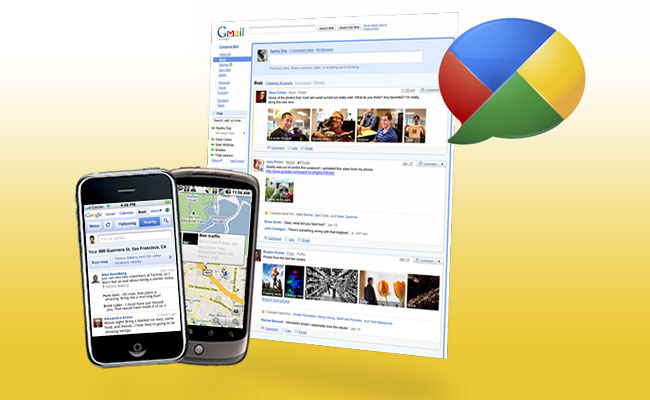
Google introduced Buzz on Tuesday as part of its existing Gmail service. The service includes many of the features that have turned Facebook into the Web’s top spot for fraternizing with friends and family. Like Facebook, Buzz lets Gmail users post updates about what they are doing or thinking. Gmail users can also track other people’s updates and instantly comment on them for everyone else in the social circle to see.
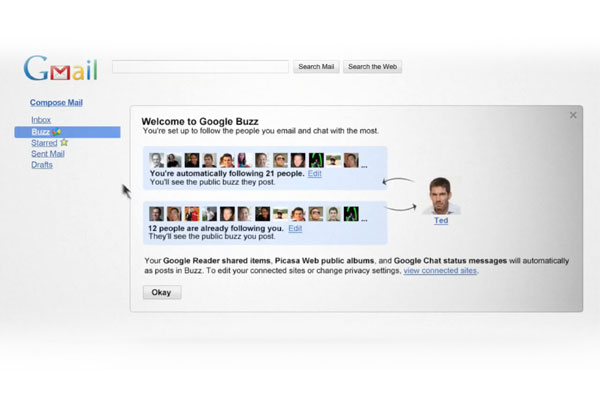
But while Facebook requires both sides to confirm that they are friends before making that relationship public, Google automatically does so by analyzing how often they’ve communicated in the past. Those frequent contacts become part of the circle of people you follow and who follow you. And before Google made the latest changes, who’s in those circles could easily be exposed to others without the user even realizing it. Suddenly your boss could discover that you’ve been corresponding with a rival company that happens to have some job openings.
In response to the privacy concerns, Google said Thursday that it has tweaked Buzz so you can more easily hide your lists of followers and followees. It also made it easier for you to block specific people from following your Buzz updates, such as links, posts, photos and videos. And it left the conversation open, saying in a blog post that it welcomed further suggestions “to improve the Buzz experience with user transparency and control top of mind.”
Privacy concerns intensify when Web sites get social because people want control over what information they share, and with whom. Or at least they say they do, according to surveys by the Pew Internet & American Life Project. Their actions, however, can be contradictory.
“Our surveys have shown that people send mixed messages about privacy,” said Lee Rainie, director of the project. “When asked directly, they place a high value on it. They express a strong desire for control over their personal information and how third parties use it.”
But in their day-to-day activities, people are willing to go against their principles and share quite a lot in exchange for something they value. Companies navigating this environment, Rainie said, “are getting a series of messages from consumers that are sometimes hard to figure out.”
 The issue of privacy has played out, sometimes loudly, as Facebook evolved over six years from a closed network for college students to a social hub for 400 million people around the world.
In 2007, Facebook’s since-discontinued tracking tool, Beacon, caught users off-guard by broadcasting information about their activities at other Web sites, including holiday gifts they just bought for those who could see the information. The company ultimately allowed users to turn Beacon off. Other changes, too, have often met with user uproar. The latest concerns have been over changes made late last year to give users more granular control over what they share with others. But in doing so, Facebook’s recommended settings also nudged users to be more open. Canada’s privacy commissioner is investigating.
Despite privacy uproars, Facebook has been able to amass a sea of users in part by responding to concerns, as varied as the concerns of 400 million people can be. Google, too, was quick to respond, something that won praise from Lauren Weinstein, a privacy advocate who had complained about the automatic circles that Buzz was creating.
“The thing hasn’t been out a week,” Weinstein said Friday. “It’s going to take some period to hash out.”
Of course, those still dissatisfied can simply turn off Buzz. There’s a small link to do so at the bottom of the Gmail page.