  1. Home
  2. Computing
  3. Legacy Archives

Going down: PC holiday-season sales decline for first time in five years

Add as a preferred source on Google

Worldwide PC shipment data for the three-month period ending December 31, 2012 showed a 6.4 percent year-on-year drop with a total of 89.8 million units shipped, research firm IDC said on Thursday.

IDC said the fall marked “the first time in more than five years that the PC market has seen a year-on-year decline during the holiday season.”

Recommended Videos

As well as a sluggish world economy, the emergence prior to 2012’s gift-giving season of a number of feature-rich, attractively-priced tablets from the likes of Amazon and Google no doubt also played its part in the decline, with the late October launch of Microsoft’s new Windows 8 operating system apparently failing to have any major positive impact on global PC shipments.

“Although the third quarter was focused on the clearing of Windows 7 inventory, preliminary research indicates the clearance did not significantly boost the uptake of Windows 8 systems in Q4,” Jay Chou, senior research analyst with IDC’s Worldwide Quarterly PC Tracker, said in a release announcing the latest figures.

“Lost in the shuffle to promote a touch-centric PC, vendors have not forcefully stressed other features that promote a more secure, reliable and efficient user experience,” Chou said, adding, “As Windows 8 matures, and other corresponding variables such as Ultrabook pricing continue to drop, hopefully the PC market can see a reset in both messaging and demand in 2013.”

Lenovo closing in on HP

HP led the way in 2012’s final quarter, shipping 15 million PCs worldwide, down 0.6 percent on the same period a year earlier. China-based Lenovo performed particularly well with 14.1 million shipments, marking a modest though healthy 8.2 percent increase.

For the whole of 2012, HP retained the top spot with 58.1 million shipments though this represented a 6.7 percent fall on 2011’s figures. Lenovo is clearly the main threat to HP – it shipped 52.4 million units in 2012, marking an increase of nearly 20 percent.

The US market saw a 4.5 percent drop in year-on-year fourth quarter shipments, and a 7 percent decline for the full year.

IDC research director David Daoud put this down to the fact that many consumers had been expecting “all sorts of cool PCs with tablet and touch capabilities.” But instead they were offered mostly “traditional PCs that feature a new OS (Windows 8) optimized for touch and tablet with applications and hardware that are not yet able to fully utilize these capabilities.”

[Image: Arsgera / Shutterstock]
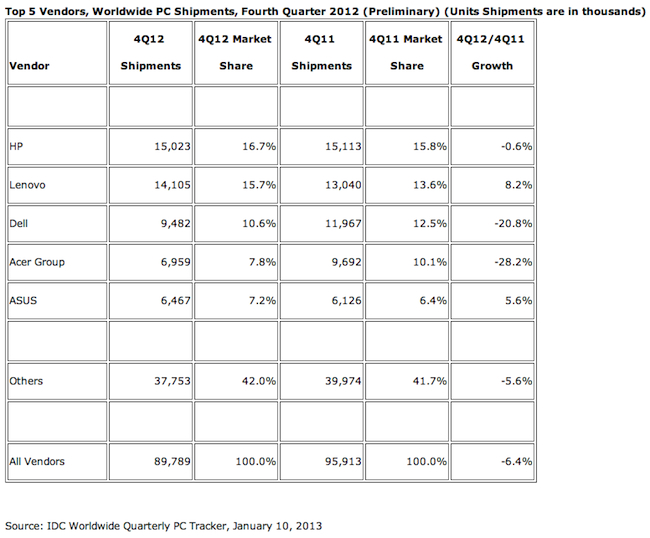
Image used with permission by copyright holder
Trevor Mogg
Contributing Editor
Not so many moons ago, Trevor moved from one tea-loving island nation that drives on the left (Britain) to another (Japan)…
Topics
Google Earth’s AI misadventure lasted only a day. It was a tale of dangerous ignorance.
Nuclear reactors, tanks, and historical destruction on a life-like satellite map? Yeah, that's bad.
Nano Banana AI image generator representation.

Technology behemoths are clearly not reading the room, or they are just moving faster than they should when it comes to AI deployment. Google has already stuffed its Gemini AI in every corner of its software stack, from Android to daily productivity tools like Gmail that are used by hundreds of millions of users every day. AI is everywhere. Not all of it is bad, mind you. But in a few places, it just feels forced.

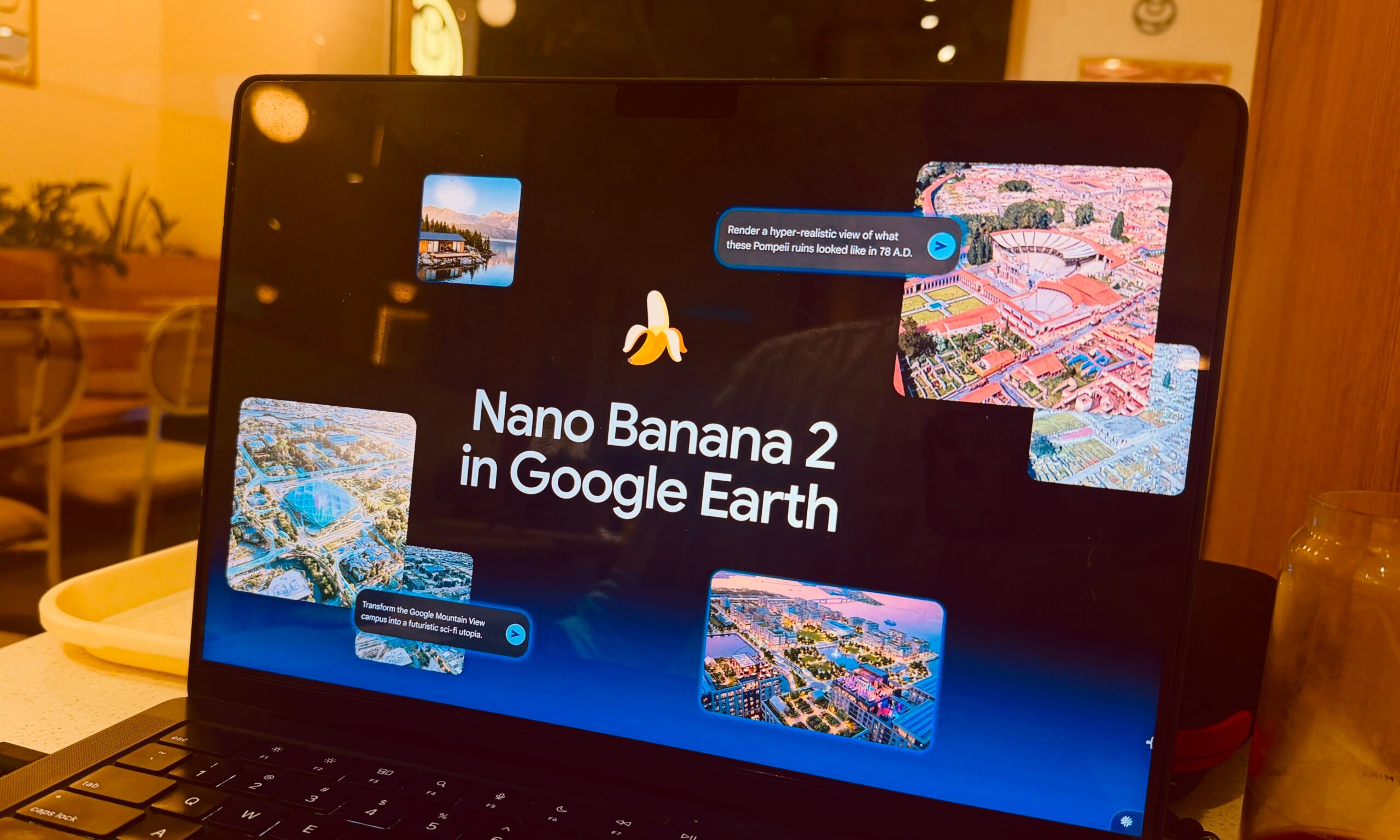
In its latest AI-fication experiment, the company targeted Google Earth. The idea was to let the audience use its Nano Banana 2 AI image generator and make images that can be placed on the map view. On paper, it's a cool idea. What would the Colosseum of Rome look like in your urban neighborhood? Yeah, fun stuff like that.

Read more
AMD is apparently gearing up to raise GPU prices right after Nvidia’s steep hike
AMD has reportedly told AIB partners about a price hike that goes into effect in. August.
AMD RX 7800

AMD is next in line to raise the asking price of its Radeon GPUs, merely days after the news of a similar hike coming for Nvidia graphics cards started making waves. As per ChannelGate on Weibo (h/t VideoCardz), AMD has informed its board partners that the price of GPU and memory bundles will go up by at least 10% in August.

Is a similar price hike coming for standalone graphics cards? I won't be surprised if that happens. The situation is so bad that AMD is planning to bring back graphics cards with 4GB of onboard memory. AMD just introduced the RX 9050 GPU, which costs $279. Notably, it's just $20 less than the RX 9060 XT that offers double the graphics memory.

Read more
Microsoft will make Windows work well with just 8GB RAM. We desperately need it
The dream of a reliable and affordable Windows laptop hinges on the next milestone at Microsoft.
Surface laptop on wooden table

The year 2026 has marked a huge course correction for Microsoft after years of frustrating users with plenty of confusing processes, unoptimized UI elements, and just the generous bloatware that can bring any Windows system to a crawl. Microsoft has finally shifted into a new phase. From fixing the right-click behavior to speeding up the Search system, the company has fixed plenty of papercuts.

The next major milestone is making Windows 11 run smoothly on Windows PCs with just 8GB of RAM. That directly means entry-level and budget laptops will at least get the basics right, even if that means sacrificing the on-device AI bells and whistles. Let's face it. The increasingly AI-first approach to computing on a Windows 11 machine is a little too taxing on the hardware at hand.

Read more