  1. Home
  2. Emerging Tech
  3. Health & Fitness
  4. News

Australia plans to supply its 2016 Olympic athletes with anti-Zika condoms in Rio de Janeiro

Add as a preferred source on Google

The Olympic Village that houses athletes during the Olympic games has a reputation for debauchery, so athletes already have access to free and plentiful supplies of condoms throughout the Olympic Village. But in Rio this year, the Australian Olympic Committee is taking things one step further by supplying athletes with condoms specifically treated to prevent the transmission of the Zika virus.

Two Australian companies collaborated to create the anti-Zika condoms that the Australian Olympic Committee hopes will protect the athletes from down under. Ansell condoms (the world’s second largest condom maker) will be treated with Starpharma’s VivaGel, which helps with antiviral protection against transmission of Zika. VivaGel also works to neutralize more common sexually transmitted viruses like HIV and herpes.

Recommended Videos

The move comes following a variety of overlapping world health scares, including scientists concluding that Zika can be sexually transmitted. “The health and wellbeing of the team comes first,” said Kitty Chiller, Australian chef de mission. Australian athletes will also be provided with intense insect repellents to ward off the Aedes Aegypti mosquitos that carry the Zika virus. Capitalizing on the infamous reputation of off-duty athletes kicking back in the Olympic Village, Ansell’s VivaGel condoms kill two birds with one stone, metaphorically speaking. If all goes well, the double duty condoms may actually help increase the rate of usage amongst Olympic athletes to even better protect against both Zika and unwanted sexual side effects.

Rio’s Olympic Games are already making many athletes nervous, from the spread of Zika, to the city’s allegedly contaminated water supply. But the Olympic Village has sexual health covered, what with its 350,000 male condoms, 100,000 female condoms, and 175,000 containers of lubricant available for free in every building in the village. Hopefully, adding VivaGel to stop the transmission of Zika will keep athletes safe from one more health threat in Rio.

Chloe Olewitz
Former Digital Trends Contributor
Chloe is a writer from New York with a passion for technology, travel, and playing devil's advocate. You can find out more…
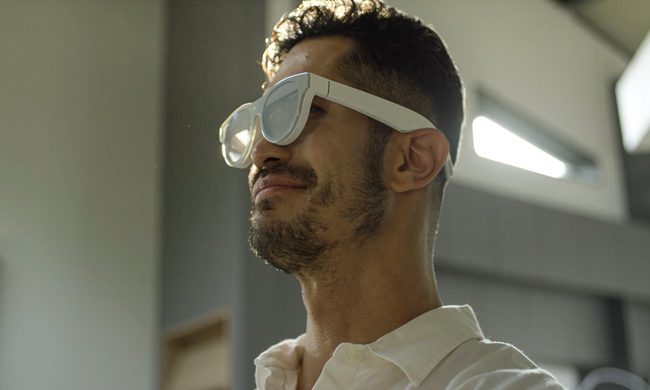
Your future AR glasses might finally stop making the real world look weird
Researchers have developed a new display technique that keeps virtual objects realistic without dimming the real world.
Samsung AR Glasses

One of the biggest promises of augmented reality is blending digital objects seamlessly into the real world. Ironically, today's AR glasses often make the real world harder to see. Researchers at the Shibaura Institute of Technology (SIT) in Japan, led by Assistant Professor Xiaodan Hu in collaboration with Dr. Yan Zhang and Professor Xubo Yang from Shanghai Jiao Tong University in China, and Professor Kiyoshi Kiyokawa from Japan's Nara Institute of Science and Technology, have developed a new AR display technique that aims to make virtual objects look realistic without reducing visibility of the real world. The study was published in IEEE Transactions on Visualization and Computer Graphics.

The biggest AR problem isn't virtual objects; it's everything around them

Read more
Anti-surveillance clothing is getting cheaper, but don’t expect an invisibility cloak
Affordable shirts now claim to confuse facial recognition, although their protection depends heavily on the camera and software watching you
Chart, Plot, Adult

Anti-surveillance clothing is starting to look less like an art-school experiment and more like something you could actually wear outside. Shirts designed to confuse facial recognition systems now cost about as much as ordinary streetwear, although buying one won’t make you disappear.

The Guardian reports that designers are using face-like prints, unusual cuts and infrared lights to interfere with computer vision. These techniques target specific weaknesses, so their success depends on what happens to be watching you.

Read more
This spinning drone hides in plain sight using a visual illusion
This drone doesn't turn invisible. It tricks your brain into thinking it has.
Phantom Twist

For decades, engineers have chased the dream of an invisible drone. The usual approaches have involved transparent materials, camouflage coatings, or complex optical systems that bend light around an object. Researchers at Northwestern University decided to take a completely different route. Instead of hiding the drone itself, they chose to fool the human eye.

The result is Phantom Twist, an experimental drone that spins so rapidly it almost disappears into the background. It's not technically invisible, but to anyone watching, it looks more like a faint blur than a flying machine.

Read more