At any given moment there are approximately a zillion different crowdfunding campaigns happening on the Web. Take a stroll through Kickstarter or Indiegogo and you’ll find there’s no shortage of weird, useless, and downright stupid projects out there – alongside some real gems. We’ve cut through the Pebble clones and janky iPhone cases to round up the most unusual, ambitious, and exciting projects out there this week. Keep in mind that any crowdfunded project — even the best intentioned — can fail, so do your homework before cutting a check for the gadget of your dreams.
Wezr — Ultra-precise weather tracker
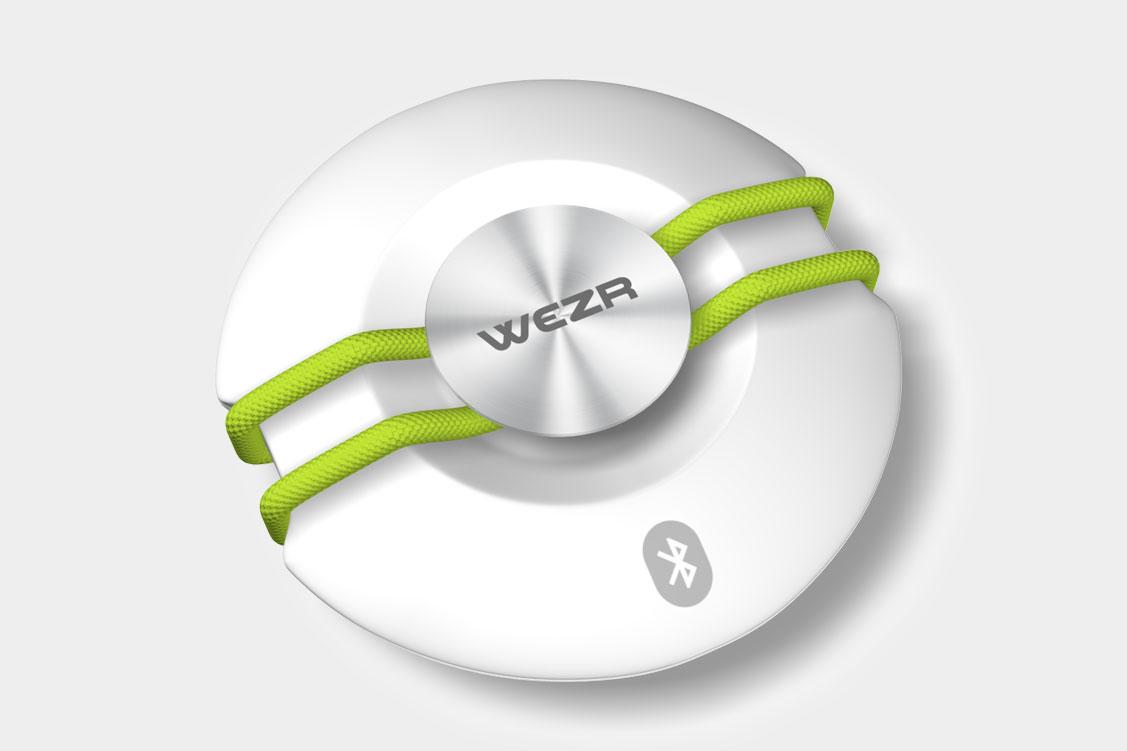
The evolution of smartphones has made it easy to get weather forecasts, live weather updates, and atmospheric data wherever you are, but smartphones have never been able to use live data to generate highly accurate forecasts themselves — until now. Wezr tackles the issues of weather forecast reliability and accuracy by using a combination of sensors, distributed networking, and cloud computing.
In other words, it turns every person with Wezr into a network-connected weather station — providing you and everyone else on the network with with real time, ultra-precise, geolocated weather information. Instead of only getting data from satellites and weather stations that are sparsely scattered across the map, Wezr allows individual people to collect a broad range of weather data (including wind speed, temperature, humidity, and atmospheric pressure) which makes forecasts far more accurate.
Meld — Stove-automating smart knob

Love the idea of appliances that cook for you, but hate the idea of paying thousands of dollars for one of these so-called “smart” appliances? Not to worry. Seattle-based startup Meld has developed an ingenious new device that gives your kitchen all the Jetstons-level tech you’ve ever wanted without the exorbitant price tag Freshly launched on Kickstarter this week, the company’s eponymous device is essentially a low-cost smart knob that you can retrofit onto your existing cooktop.
Once attached, it gives your stove the ability to intelligently regulate its own temperature and cook foods to perfection autonomously. After you’ve got it synced up with the temperature sensor and mobile app via Bluetooth, the knob will automatically turn the burner up or down to keep your stove at the perfect temperature. It knows how to adjust the heat based on the readings it receives from the Meld Clip. Just tell the app what kind of food you’re cooking and Meld will handle the rest.
Meural — Gesture-controlled digital canvas
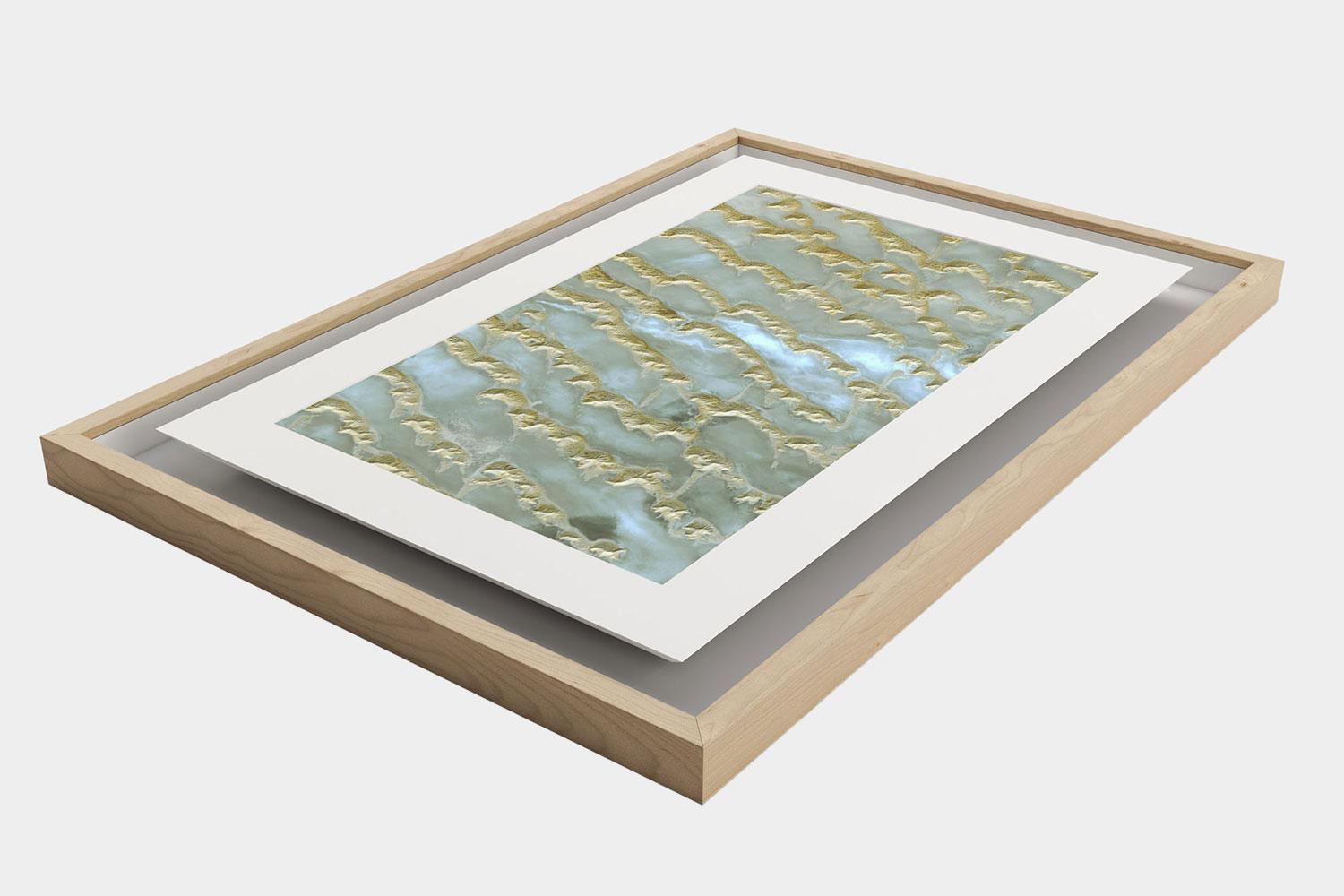
On the surface, Meural is essentially the exact same thing as its predecessors: a sleek, snazzy, network-enabled display intended to hang on your wall and showcase digital art. Using an accompanying smartphone app, you can load different images onto it and swap them out as you see fit; it’s basically a souped-up version of those kitschy digital picture frames that were mildly popular five or six years ago. It’s not exactly a new idea at this point, but Meural does have a few notable features that make it stand out from the crowd.
Unlike some of its competitors, Meural is equipped with a set of motion sensors and gesture recognition software, allowing you to change what’s on the screen by simply waving your hand through the air. Not feeling that Neo-Impressionist mural that’s in your living room? Just swipe right until you find something that suits your mood. It’s like Tinder for art snobs. It also has integrated ambient light sensors that can auto-adjust the display’s brightness, so it’s never super-bright at night or barely-visible during the day.
kSafe — Goal-activated safe

This one is pretty straightforward. The kSafe is a smart safe designed to turn temptation into motivation. How? By locking items away until the user has earned them back — either by hitting an activity goal, spending time at a specific location (library, gym, etc), or simply waiting for a pre-determined amount of time for the lid to unlock. Users can put whatever they like inside the safe, so long as it fits inside the round 7.3 by 7.7 inch container.
The safe links to iOS or Android devices to set up rules for when the lid will unlock. If, for example, you spend too much time playing games or watching television, you can lock the controller away in the jar, and have it open only when you’ve reached your step goal, checked in at the gym, or waited until a pre-determined time of day. The jar can also be used as a password-protected lock box. For fitness-related goals, the product will work with your phone’s built-in location tracking, as well as Fitbit, and a few other wearables. The company is currently working to extend support to more devices.
Wearality Sky — Pocketable VR headset
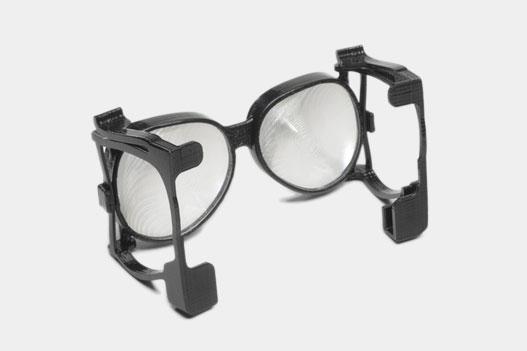
Now that crowdfunded VR headsets like the Oculus Rift and Samsung Gear VR have proven consumers are interested in virtual reality, dozens of clever little startups are popping up with innovative new takes on the idea. Wearality Sky is the latest one to surface on Kickstarter, but unlike other headsets, it’s designed to use your smartphone as its screen, computer, and motion sensor. Both iOS an Android devices can be slipped into a slot in front of two lenses, which are strapped onto the wearer’s head.
Once it’s plugged in, the phone’s screen is split into two images, which are then passed through a set of specially-designed lenses before they reach your eyes. It’s probably not as high-res or accurate as Oculus, but it’s far simpler, and comes with the added benefit of being extremely portable. Pop out your smartphone, and Sky can be folded down flat, so it fits in your pocket. It’s also ridiculously inexpensive — early bird backers on Kickstarter snagged it up for just $50, and it’s expected to retail for less than $100 after launch.