  1. Home
  2. Emerging Tech
  3. Mobile
  4. Legacy Archives

E-book sales make history in the US, top paperback books in sales

Add as a preferred source on Google

e-readers

The fast-changing reading habits of Americans have been highlighted by a report issued on Thursday from the Association of American Publishers (AAP). The report shows that in February, e-book sales in the United States were the top selling format in all publishing categories for the first time ever.

It wasn’t so long ago that many people were turning their noses up at e-readers, claiming that it was more enjoyable to feel the weight of a book in their hands, to caress the paper pages, to smell the freshly printed ink. It was almost as if the actual words in the book were the least important part.

Recommended Videos

But month by month, more and more bookworms are evidently succumbing to the delights of the e-reader. And there are plenty of advantages too. For starters, e-books are cheaper. Also, you can take hundreds of them with you on vacation. Sure, you’ll only read one or two from your collection, but at least you have a whole library to choose from. Even better, they leave more space on the shelves in your apartment for family photos and obscure ornaments like the one given to you by that friend who recently returned from a trip to Papua New Guinea. OK, it’s true that you can’t really use an e-reader when you’re in the bath, but then again, steam and paper don’t really mix too well either.

The AAP’s monthly report makes sense of data supplied by American publishing houses, with February’s statistics showing that e-books made sales of $90.3m, growing by an astonishing 202.3 percent compared to a year earlier. So either a small number of people are buying a whole lot of books for their Kindles and iPads, or a lot of people are dumping the paperback and turning to e-readers instead. My hunch is that it’s the latter.

Admittedly, paperback sales for February remained strong at $81.2m, and the increase in e-book sales was put down partly to what the AAP’s report calls “a high level of strong post-holiday e-book buying,” but nevertheless one has to wonder if these statistics mark the start of a new chapter when it comes to the reading habits of the American people.

Trevor Mogg
Contributing Editor
Not so many moons ago, Trevor moved from one tea-loving island nation that drives on the left (Britain) to another (Japan)…
AI security cameras may soon recognize your walk before they recognize your face
A new AI gait system tracks body motion through skeletal keypoints, aiming at long-range identity checks where face scans and fingerprints fall short.
Security cam

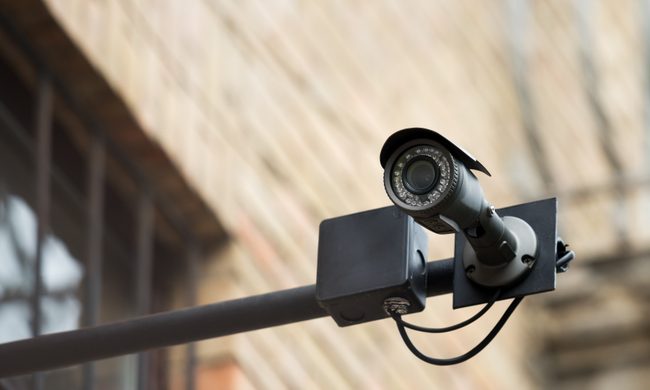
Security cameras are built to look for faces. New research suggests they may soon have another target, the small habits buried in the way someone walks.

A paper published in the International Journal of Reasoning-based Intelligent Systems describes SKDMap-Net as a gait recognition system designed to identify people from walking video, even when the camera doesn’t get a clean look at their face. Instead of relying on a close-up scan, it studies how a body moves from frame to frame.

Read more
A 20-second 3D printer breakthrough comes with exactly the kind of catch science loves
The process can create complex microstructures far faster than some laser-based methods, but full 3D control is still a work in progress.
Aluminium, Smoke Pipe

A 3D printer that can make a structure in about 20 seconds sounds like a lab claim wearing a cape. The clever bit is real. The catch arrives before anyone starts dreaming about instant replacement parts.

University of Utah researchers have demonstrated a holographic 3D printing technique that hardens tiny structures in one exposure instead of building them layer by layer. That one-shot approach could avoid the weak, leaky seams that stacked printing can leave behind. For now, though, this is a tool for microstructures, not a shortcut to printing whatever object pops into your head.

Read more
Amazon is full of copycats and shady brands. This Chrome extension lets you avoid them.
Advertisement, Poster, Text

Shopping on Amazon used to be simple. You searched for a product, compared a few familiar brands, and checked out. These days, it often feels like you're scrolling through an endless parade of names that look like someone leaned on a keyboard before hitting publish. That's exactly the problem Knockoff is trying to solve.

Created by developer Josh Pigford, the Chrome extension doesn't promise to expose counterfeit products or magically tell you what's good. Instead, it tackles something arguably more annoying: the flood of unfamiliar, mass-produced brands that dominate Amazon search results.

Read more