No stranger to sharing his desire to conduct missions to Mars, SpaceX CEO and founder Elon Musk has yet again begun chattering about his interplanetary ambitions. In an exclusive interview with the Washington Post last week, Musk not only reiterated his intent on sending a spacecraft to Mars before the end of this decade but also detailed exactly when he plans on sending humans there as well.
Equating a journey to the red planet with what it was like for colonists to traverse the Atlantic in search of the New World, he believes it’s utterly paramount mankind become a multi-planet species. In other words, it’s just another day at the office for Musk.
Expanding briefly on previous announcements about SpaceX’s affinity with the fourth planet from the Sun, Musk said he’s readying what will be a freight path between Earth and Mars. According to him, the goal is to give scientists as much data pertaining to the predictability (or unpredictability) a trip to Mars may possess. To do this, SpaceX will launch a new unmanned cargo ship roughly every two years — when Earth and Mars are the closest to one another — while it gears up to launch humanity’s first manned mission in 2025.
“Essentially what we’re saying is we’re establishing a cargo route to Mars,” Musk said. “It’s a regular cargo route … It’s going to happen every 26 months. Like a train leaving the station. And if scientists around the world know that they can count on that, and it’s going to be inexpensive, relatively speaking compared to anything in the past, then they will plan accordingly and come up with a lot of great experiments.”
Though some of the experiments would simply be experimental, much of what Musk hopes to transport to Mars during the unmanned missions would be equipment (such as rovers) the future manned missions could make use of. Additionally, the unmanned trips would provide unprecedented information pertaining to what it’s actually like to land a spacecraft on the planet — safely or otherwise.
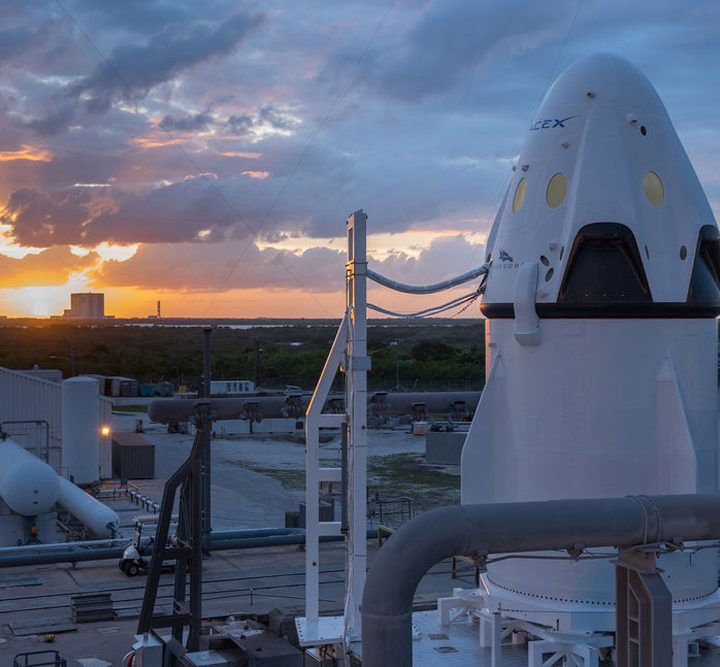
To get to Mars, SpaceX plans on employing its new Falcon Heavy rocket to boost a Dragon capsule into outer space. Thing is, SpaceX has yet to conduct any test launches of the Falcon Heavy, so it’s likely that Musk’s idea of setting up this martian cargo route could be delayed should any problems arise during the first round of tests scheduled for this winter. Furthermore, the agency has also yet to successfully land a Dragon using its own thrusters — an incredibly key component to landing the capsule in one piece.
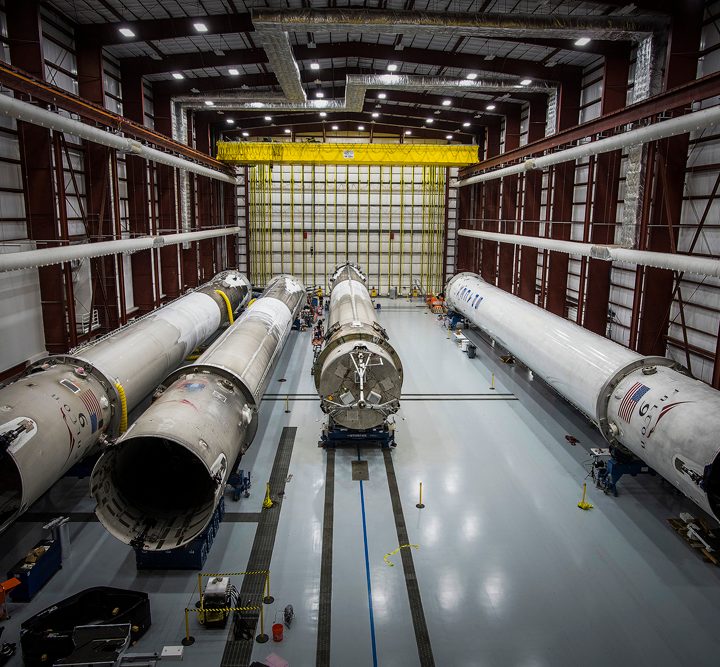
The second time around — in roughly 2020 — Musk says the idea is to send not one, but two Dragon capsules full of experiments to the red planet, making use of two Falcon Heavy rockets as well. Assuming the second launch goes well, SpaceX will then send its Mars Colonial Transporter on the route which further points towards the company’s plan of setting up a full-fledged colony on the distant planet.
“This is going to be mind-blowing,” Musk continued. “Mind blowing. It’s going to be really great … I’m so tempted to talk more about the details of it, but I have to restrain myself.”
However ambitious his plan actually is, Musk did take the time to acknowledge the potential risk factor associated with such a massive endeavor. Aside from pointing out the fact that everything would have to “go according to plan” for the company to hit its goal of landing on Mars in 2025, he also said the first mission wouldn’t have a “huge number” of astronauts so as to avoid a potentially large loss of life in case of a disaster.
“It’s dangerous and probably people will die, and they’ll know that,” he said. “And then they’ll pave the way, and ultimately it will be very safe to go to Mars, and it will be very comfortable. But that will be many years in the future.”