  1. Home
  2. Emerging Tech
  3. Smart Home
  4. News

Get your next dinner party in the mail, thanks to Feastive

Add as a preferred source on Google

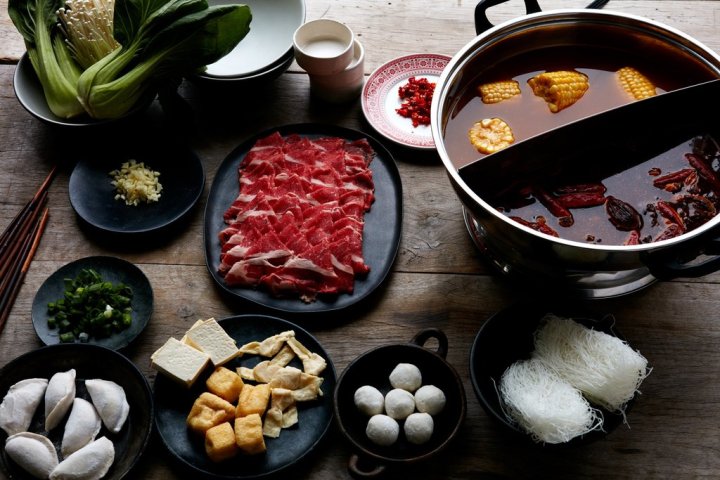
It seems like you can get anything you want delivered right to your door these days. The latest craze is entire meals carefully curated and sent to you for your ease and convenience. Feastive is one such meal delivery service. However, the firm advertises not only as a meal in a box, but a dinner party.

Now one could argue that the purpose of a dinner party is to create an experience, not just serve up a meal. In our busy, fast-paced lives a “meal spent at home” as Feastive describes it may be the best we have to hope for. Who has the time to plan a menu, shop, and prepare a meal on top of creating an experience?

Recommended Videos

The creator of Feastive, Debbie Soo, addressed criticism that having meals delivered to your door took away from the spirit of the dinner party and the excitement and inherent stress it brings. “The experience isn’t necessarily disjointed because it comes in a meal kit,” Soo explains. In her mind, dinner parties are about the connection made through sitting down and enjoying a meal together. While the meals may not be entirely prepared at home, they are made to be enjoyed at home by the host and their guests and Feastive believes that’s the important part.

Feastive offers 5 different menu options, all of Asian inspiration, that you can customize to suit your dinner party size. The prices range from $120-$260 and require that the host order at least 3 days in advance to ensure that all the product will be delivered on time. While the meal comes mostly prepped there is cooking involved so be prepared.

The mission behind Feastive is to take the stress out of dinner parties so that more time can be spent on the actual entertaining and less on the cooking. The firm wants to reduce the hassle of hosting, and who wouldn’t welcome that?

Anthony Thurston
Anthony is an internationally published photographer based in the beautiful Pacific Northwest. Specializing primarily in…
Scammers are teaching AI to sound like you, and research says our brains are falling for it
Has your accent just become a security vulnerability? AI scammers are getting too good at sounding local
Scammers are turning trusted news brands into investment traps

The next scam call you receive may not sound like a robot, a call center, or even someone pretending to be your relative. AI voice generators have become capable of reproducing regional accents and dialects that sound convincing enough that researchers are warning they could become a potent social-engineering tool.

For example, a scammer could use an accent familiar to a targeted community to make a suspicious call sound considerably more trustworthy.

Read more
Scientists found a way to turn plastic bottles into cookies you can actually eat
hand holding a cookie

Plastic bottles and cookies rarely show up in the same sentence, but a team of researchers just gave us a reason to talk about both together. According to Science Daily, scientists at Southern Illinois University Carbondale have engineered yeast that can turn waste from plastic bottles and old crop leftovers into real food ingredients and create cookies.

The work began as part of a NASA program exploring how astronauts might produce their own food during deep space missions, since resupply runs from Earth aren't exactly realistic that far out. The researchers' big insight was simple: plastic bottles are packed with carbon, and so, as it turns out, is food. That single connection became the foundation for everything that followed.

Read more
Students who use AI every day may be falling behind, while moderate users pull ahead
New global testing data suggests more AI in the classroom isn't automatically better.
Logo, Text

I assumed more AI access might help students learn faster. However, a new OECD study dispels that misconception for me and everyone else who gave their children a paid version of AI chatbots, thinking it would help them through their educational journey. 

According to PISA 2025 data from 760,000 students in 91 countries, students who use AI daily score meaningfully worse on standardized tests than their peers. The full picture is more complicated than a simple ban would fix.

Read more