  1. Home
  2. Emerging Tech
  3. News

How to watch Northrop Grumman launch its 13th resupply mission to the ISS

Add as a preferred source on Google

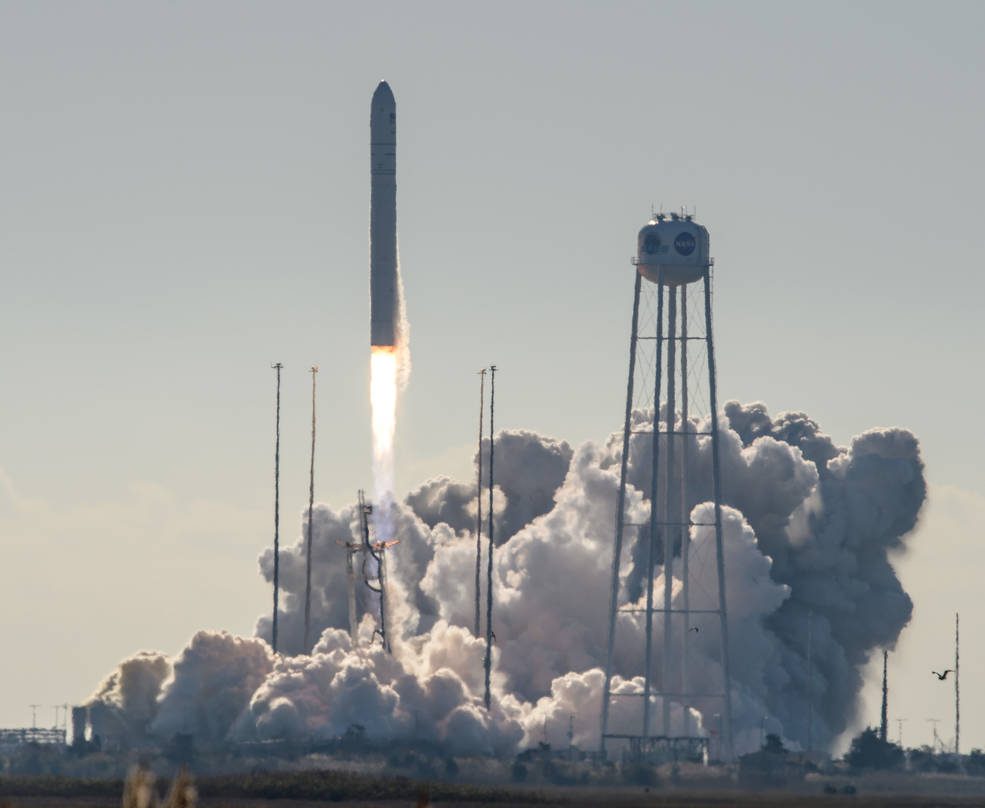
A Northrop Grumman Antares rocket, with Cygnus resupply spacecraft onboard, launches from Pad-0A of NASA's Wallops Flight Facility in Virginia Nov. 2, 2019.
The Northrop Grumman Antares rocket, with Cygnus resupply spacecraft onboard, launches from Pad-0A of NASA’s Wallops Flight Facility, Saturday, November 2, 2019, in Virginia. Northrop Grumman’s 12th contracted cargo resupply mission with NASA to the International Space Station will deliver about 8,200 pounds of science and research, crew supplies and vehicle hardware to the orbital laboratory and its crew. NASA/Bill Ingalls

The Solar Orbiter isn’t the only space mission you can watch launching today — there’s also a resupply mission to the International Space Station (ISS) launched by Northrop Grumman.

Recommended Videos

This will be Northrop Grumman’s 13th resupply mission to the ISS and will consist of an unmanned Cygnus cargo spacecraft which will be launched aboard an Antares rocket from the Mid-Atlantic Regional Spaceport at NASA’s Wallops Flight Facility in Virginia. The spacecraft, which will carry cargo including scientific equipment and supplies, will launch today and should arrive at the ISS by Tuesday, February 11, where it will remain docked for a month until May 11.

The Cygnus spacecraft will carry a total of 8,000 pounds of hardware and supplies, including a bacterial experiment into the use of E. coli bacteria to produce a useful chemical called isobutene, an experiment to see what treatments may be able to mitigate human bone loss, and a cell culturing facility to see how cells respond to microgravity.

The spacecraft, named the SS Robert H. Lawrence, will be captured by ISS astronauts using the station’s robotic arm and installed onto the Unity module, attached to an Earth-facing port.

The weather forecast for the launch looks good, with a 95% chance of clear skies, so the odds are low that it will need to be delayed or moved to another day. You can watch the launch live as it happens using the following video:

NASA Live: Official Stream of NASA TV

Launch coverage will begin at 2 p.m. PT on Sunday, February 9, and the actual launch is scheduled for 2:39 p.m. PT.

If you wish to watch the Cygnus craft being captured by the robotic arm and installed onto the ISS, this will also be shown live. To tune in for this event, use the same video link to see coverage beginning at midnight PT on Tuesday, February 11 for the capture, with the installation scheduled for 3 a.m. PT.

Georgina Torbet
Georgina has been the space writer at Digital Trends space writer for six years, covering human space exploration, planetary…
Starlink V5 is here, and it’s lighter, smarter, and far more efficient
The next-generation satellite internet kit promises improved efficiency while maintaining high-speed connectivity.
Starlink V4 vs V5

Not every hardware upgrade needs to be about speed. With Starlink V5, SpaceX is betting that a lighter design and lower power consumption matter just as much. The company has officially introduced its next-generation Starlink V5 kit, featuring a smaller and lighter design with significantly improved power efficiency.

Smaller, lighter, and far more efficient

Read more
Frontier joins the Starlink club with high-speed in-flight internet
The carrier plans to roll out SpaceX's satellite-powered Wi-Fi across its fleet starting in 2027.
Frontier Starlink partnership featured

If there's one thing budget airlines aren't exactly known for, it's great onboard Wi-Fi. In Frontier Airlines' case, it hasn't offered in-flight internet at all. That's about to change. Frontier Airlines has announced a partnership with SpaceX's Starlink to bring high-speed, low-latency internet across its fleet. Installations will begin in early 2027, making Frontier the first ultra-low-cost carrier in the United States to adopt Starlink's satellite-powered connectivity.

Streaming, browsing, and even gaming at 35,000 feet

Read more
OpenAI’s first hardware product sounds more like a companion than a speaker
The AI company is reportedly building a mobile home device that understands context and proactively helps users.
OpenAI press image

For months, rumors have suggested that OpenAI's first hardware product could be a wearable AI device, or perhaps even the beginning of its long-term smartphone ambitions. As it turns out, the company's first gadget may be something far simpler, yet arguably far more ambitious. It will help control smart-home appliances, play media, answer questions, respond to messages, and tap into the range of capabilities offered by OpenAI's ChatGPT, according to people familiar with the matter.

OpenAI's first AI device could end up being a speaker, following plenty of hype that the company is actually working on a wearable AI device and might even launch a smartphone down the road. According to a Bloomberg report, the speaker will serve as a human-like AI companion that will integrate directly with the smart home ecosystem.

Read more