1. Home
  2. Space
  3. Emerging Tech
  4. Web
  5. News

Jeff Bezos plans a moon base, a moon walk, and an Amazon-like cargo service

Add as a preferred source on Google

No one will ever be able to accuse Jeff Bezos of lacking vision. If the Amazon CEO is anything, it’s ambitious. Want proof? His latest endeavor aims to take two of his companies to the moon.

According to the Washington Post, Bezos and his space company, Blue Origin, has been passing around a white paper that “urges [NASA] to back an Amazon-like shipment service for the moon.” Such a service would bring experiment-related gear, cargo, and humans to the moon by the middle of the next decade, allowing for the “future human settlement” of our natural satellite.

Recommended Videos

“It is time for America to return to the moon — this time to stay,” Bezos said in an email interview with The Post. “A permanently inhabited lunar settlement is a difficult and worthy objective. I sense a lot of people are excited about this.”

The proposal from January 4 is centered around cargo missions, which will help ultimately establish the aforementioned lunar settlement. And it’s really not outside the realm of possibility. NASA has already demonstrated its openness to working with commercial companies; after all, Elon Musk’s SpaceX has been awarded many a contract to fly off into space and someday on to Mars.

Bezos is seizing upon that opportunity and a similar goal. During Thursday’s Aviation Week awards ceremony, Bezos noted, “I think that if you go to the moon first, and make the moon your home, then you can get to Mars more easily.”

The executive said that Blue Origin could be headed to the moon as soon as in July of 2020, but such a mission could “only be done in partnership with NASA. Our liquid hydrogen expertise and experience with precision vertical landing offer the fastest path to a lunar lander mission. I’m excited about this and am ready to invest my own money alongside NASA to make it happen.”

“Blue Moon is all about cost-effective delivery of mass to the surface of the Moon,” Bezos wrote. “Any credible first lunar settlement will require that capability.”

Lulu Chang
Fascinated by the effects of technology on human interaction, Lulu believes that if her parents can use your new app…
Getting to Mars may require a pit stop in orbit, and NASA just tested the nozzle to make that happen
A gas pump nozzle for spacecraft sounds simple. It is not, and that's what makes this test worth paying attention to.
Architecture, Building, Factory

Getting a spacecraft to Mars or beyond requires an enormous amount of fuel, most of which has to be hauled from Earth, adding to the overall cost and weight of the spacecraft. NASA has been working on a different approach, one that could be more efficient and effective.

It wants to refuel a spacecraft in orbit before heading out for the mission. What’s even more interesting is that the space agency just finished testing a component that could make that possible: a cryocoupler.

Read more
Elon Musk’ Starlink could soon offer mobile services as a US carrier
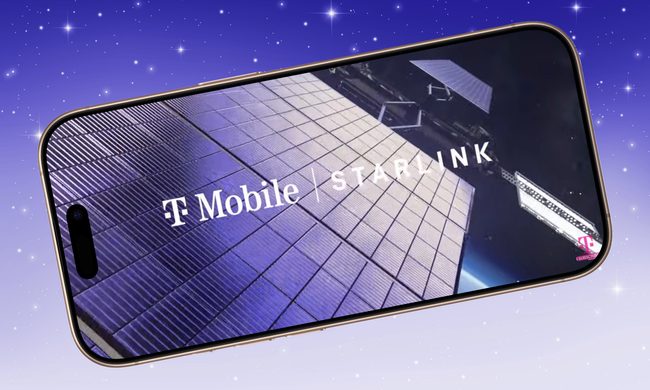
Showcase of T-Mobile Starlink service on an iPhone.

Elon Musk’s Starlink has already changed how millions of people access the internet, especially in places where traditional broadband struggles to reach. Now, the satellite internet service could be preparing for an even bigger leap — becoming your mobile carrier.

According to a Financial Times report, SpaceX has told investors it’s considering launching a retail Starlink mobile service in the US. Instead of simply partnering with wireless carriers, the company could begin selling mobile plans directly to consumers, putting it in direct competition with Verizon, AT&T, and T-Mobile.

Read more
Lightsails have hit another speed bump on the road to interstellar travel
The coolest interstellar travel idea may get betrayed by the light pushing it
LightSail in Earth orbit

Laser-powered lightsails are one of the coolest answers to spaceflight. It might not be as sci-fi-sounding as a warp drive, but now, its practicality has also come under question. Using lightsails, a spacecraft could unfurl an ultra-thin reflective sail and let a powerful laser push it toward another star, without relying on fuel.

The tech was simple and elegant--except it's also more complicated than it sounds. A new preprint from researchers Chao Shen and Jiaze Li of the Harbin Institute of Technology suggests that relativistic lightsails may run into a hidden propulsion problem once they start moving extremely fast.

Read more