
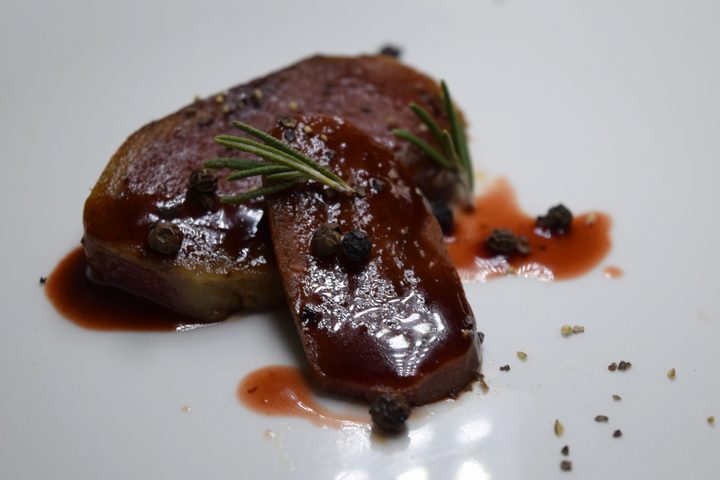
With the number of startups creating everything from shrimps made of specially engineered red algae to hunks of meat crafted out rice, peas, and seaweed, you could be forgiven for thinking that nobody eats a good, old-fashioned dead animal anymore. Adding its name to this growing collective of foodie tech companies is Jet-Eat, an Israeli startup hoping to launch its 3D-printed vegan steak into the world sometime in 2020.
“The discussion about 3D printing as a potential technology for creating the next generation of meat has been around for years,” Eshchar Ben-Shitrit, founder and CEO of Jet-Eat, told Digital Trends. “We asked ourselves a simple question: What does it take for 3D printing to become an alternative to animals in production of meat?”
That question is, of course, one that’s shared by all of the startups working in this space. But Jet-Eat has developed its own proprietary technology to try and create a 3D-printed vegan “meat” product capable of fooling even the most bloodthirsty of carnivores. The company’s efforts reportedly match the structural components of meat (the muscle, the fat, myoglobin, and connective tissue), but also promise to nail the flavor.

“Our unique technology combines software that defines in a digital file desired properties of the printed meat, a special printer that creates very complex structures of food based on that file, and plant-based formulations that contains an element from nature that approximates those found in meat,” Shitrit continued. “The goal is to recreate a natural product — beef — in a digital machine that is not only delivering a great product, but [can do so] in a way that can be scaled up in the future to produce large quantities in reasonable costs.”
This cost factor is one thing that Shitrit thinks could give his product the edge. While the No. 1 quality people will be looking for in meat is flavor, cost would likely be in a close second place. To that end, he said that he working to create an affordable product that’s “potentially even cheaper than beef from animals.”
Will he be able to pull it off? We’ll have to wait and see. However, while the amount of competition in this field likely makes it difficult for startups to stand out, it bodes well for consumers.
“We hope to start market tests in the middle of 2019, but the road for a good product in the right price is still long,” Shitrit continued. “Our strategy is to focus first on a specific product with a specific use-case. We are defining it today with the help of potential customers — chefs and butchers — as well as our partners. A commercial product is likely to be rolled out during 2020.”


