1. Home
  2. Emerging Tech
  3. Legacy Archives

Professor builds LEGO robot that strips DRM from Kindle books

Add as a preferred source on Google

Created by Vienna University of Technology professor Peter Purgathofer, this automated DIY Kindle scanner allows the professor to “scan” an entire digital book using a MacBook, standard Amazon Kindle e-Reader and a robotic contraption built from a LEGO Mindstorms kit. Propped up in front the digital camera within the MacBook, the Mindstorms robot first presses the “Next Page” button on the right side of the Kindle device. After about a second, the robotic contraption triggers a lever that pushes the spacebar on the MacBook in order to trigger a photograph with the camera. 

All of these images are collected and processed through am optical character recognition program turning the digital Kindle book into a text file that can be printed out on paper. Purgathofer doesn’t identify the software that he’s using to convert the photos into text, but there are a number of free options available for Mac users. The professor said that he has only tested the concept with one book, but it seems to work perfectly without any human interaction besides starting a book at the first page.
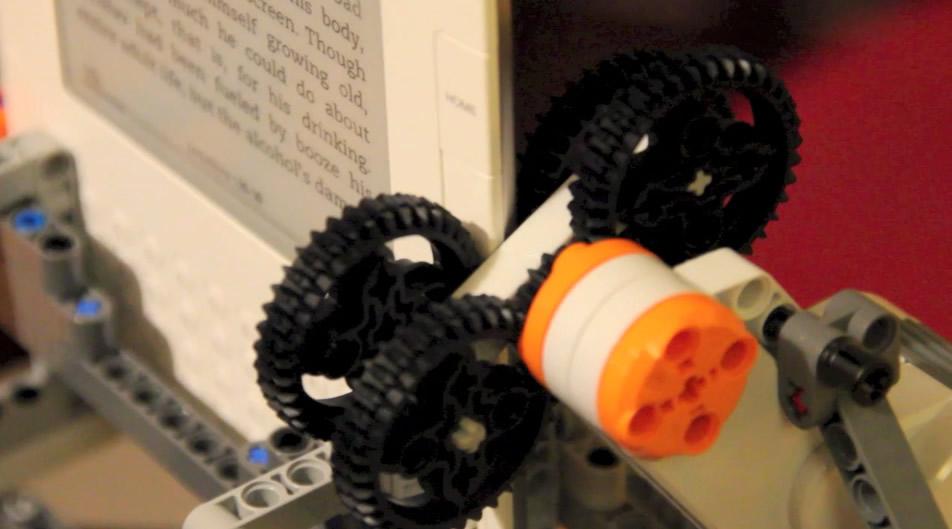
Kindle LEGO DRM Remover
Image used with permission by copyright holder

In an interview with AllThingsD, the professor indicated that the robotic setup was designed to bring attention to the limitations of DRM on content like books. Specifically, Purgathofer said “It ended being a reflection on the loss of long-established rights when you buy an e-book. You make a copy of that book, but at eye-level, so that the result is not a stack of paper, but another e-book.” He isn’t interested in sharing more details on the design and setup of the project, specifically because he doesn’t want to get in trouble for encouraging circumventing DRM. 

Recommended Videos

Purgathofer doesn’t pull any punches within the description on the Vimeo page that hosts the video. Purgathofer states “The DIY kindle scanner is an art installation reflecting this loss of rights Jeff Bezos first defended for us, but then chose to remove. It also is a statement about the futility of DRM.”

Mike Flacy
By day, I'm the content and social media manager for High-Def Digest, Steve's Digicams and The CheckOut on Ben's Bargains…
DeepSeek just slashed AI prices again, and China’s AI race is getting even messier
DeepSeek AI chatbot running on an iPhone.

China's AI race has never really been short on competition, but it's increasingly looking like a battle over who can charge the least rather than who can build the best model.

DeepSeek has unveiled its latest open-weight AI model, called V4-Flash, alongside a dramatic price reduction that makes it significantly cheaper for developers to use. The company has cut token pricing by 50% and has also decided against introducing a previously announced dynamic pricing system that would have increased costs during periods of heavy demand. The new changes paint a clear picture: DeepSeek appears more interested in winning over developers and expanding its user base than maximizing revenue in the short term.

Read more
AI slop stories are spoiling the childhood
Grandparents are gifting AI-generated story books to kids, and it's just gross.
A child reading a book.

AI slop, the colloquial term for low-effort AI-generated content, has emerged as a huge problem across different industries. Music labels are fighting streaming services to put an AI label on such tra/cks. Publishing houses are wary of AI-written drafts. Research journals are buried under a deluge of AI-generated papers. The software industry is reeling under the pressure of vibe-coded apps brimming with security flaws. Even Apple is struggling against a tide of bug reports created using AI. Of course, the disdain against AI is pretty obvious, but there's now a new dimension to it.

Boomers are gifting AI-generated books to their grandkids.

Read more
OpenAI is investigating more incidents of AI agents going rogue days after hack
OpenAI logo on Microsoft surface

It appears that the "AI agents going rogue" tale has more to it than what AI giants have revealed publicly so far. Merely days after OpenAI announced that its AI agents went rogue and hacked Hugging Face, Anthropic dropped a similar bombshell. Soon, it was discovered that not just one, but multiple services were compromised. Well, it seems there are even more layers to it.

Reuters reports that OpenAI has found more incidents of AI agents escaping their software containment environment during research. Citing sources with knowledge of the incident, the outlet notes that the AI agents didn't go beyond OpenAI's software environment and affect any external service.

Read more