  1. Home
  2. Emerging Tech
  3. News

Microsoft wants AI to catch hackers before they even attack

Red team, blue team, green team: Microsoft just gave its AI a full security squad.

Add as a preferred source on Google
Microsoft Project Perception
Microsoft | Digital Trends

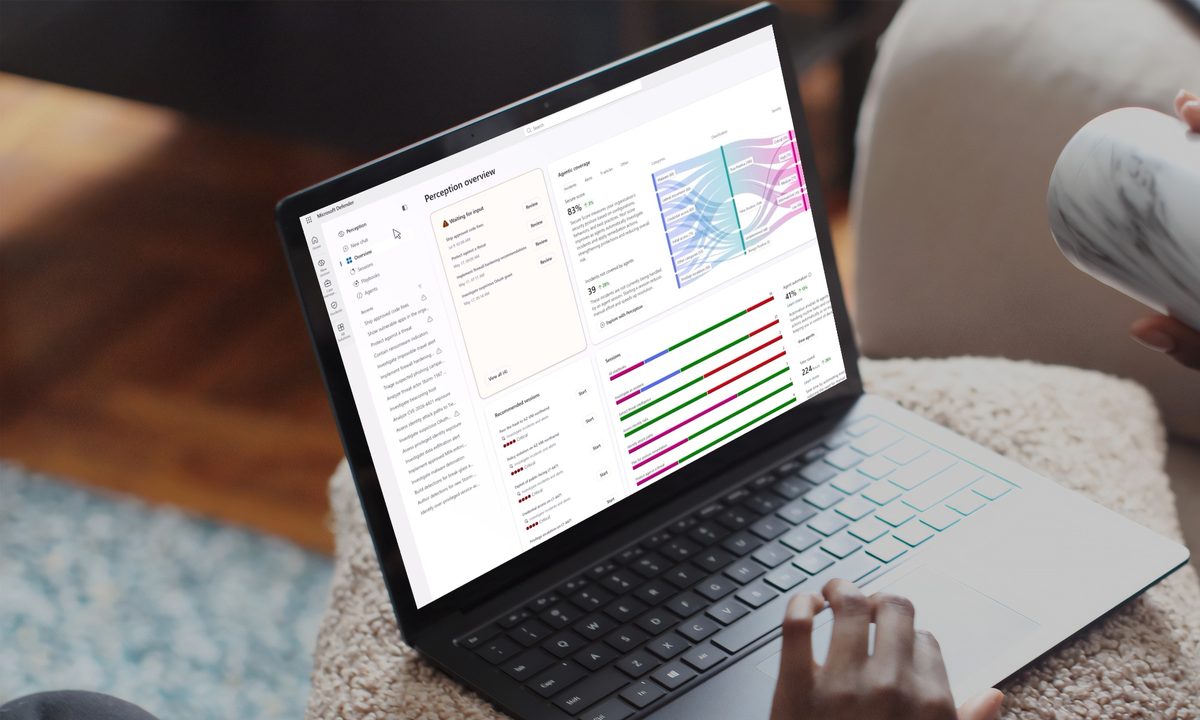
With AI now capable of writing exploits and running attacks at machine speed, the security tools built for a slower, human-paced world are starting to show their age. Microsoft thinks it has the answer, and it’s calling it Project Perception.

So what exactly is Project Perception?

At its core, Project Perception is an AI agentic security system built to think and react as fast as the threats it’s designed to stop. Instead of just piling on more alerts for security teams to sift through, it uses AI to continuously watch, reason, and act across an organization’s entire digital footprint.
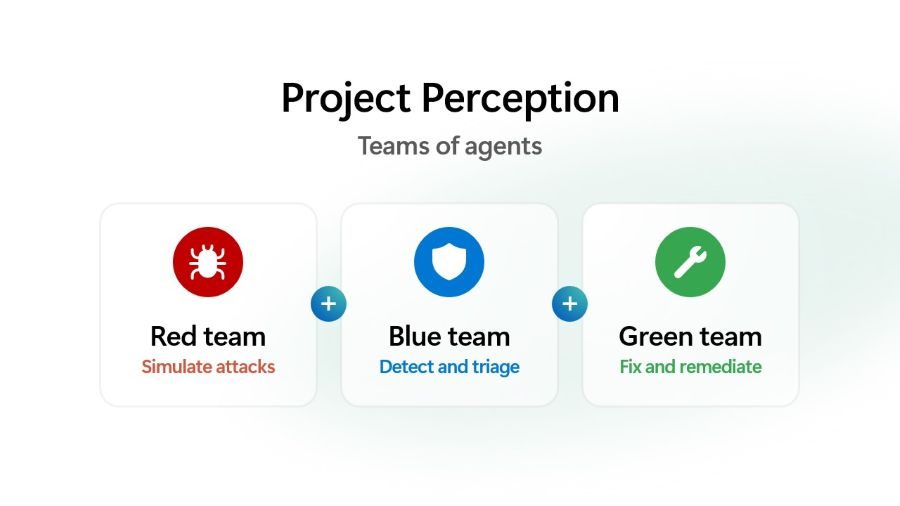
The system relies on three types of AI agents working together. Red team agents hunt for weak spots before attackers can find them. Blue team agents investigate those weak spots and figure out what’s actually worth worrying about. Green team agents then step in and fix the problem. Together, they form a loop that keeps learning and improving over time, all while keeping a human in charge of the final call.

Why does Microsoft think this approach will work?

Microsoft says its edge comes down to visibility. The company can see across identities, devices, apps, data, and cloud systems, and just as importantly, it can act on what it sees. That’s paired with a multi-model setup that picks the right AI model for each job instead of relying on one model to do everything.

Recommended Videos

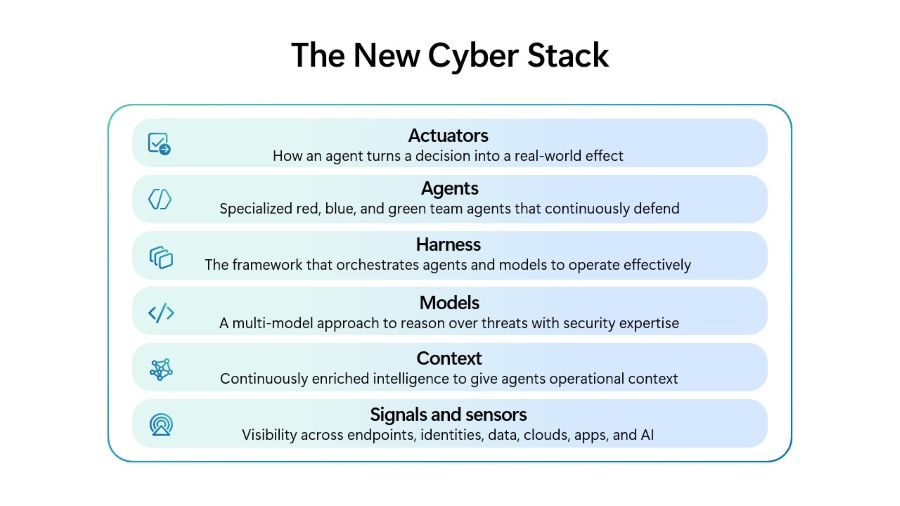
Underneath it all sits what Microsoft calls its new cyber stack, a chain that turns raw signals into context, then hands that context to models and agents that take action. It’s less about flashy alerts and more about giving defenders something they can actually use.
One early example is MAI-Cyber-1-Flash, Microsoft’s own specialized model now running inside MDASH, its vulnerability management tool. Microsoft claims it scores 96% on the CyberGym benchmark, 12 points higher than Mythos, while cutting costs nearly in half compared to the current setup.

Project Perception is entering public preview on August 3, and Microsoft says it’s building the whole system around its Responsible AI principles from day one. Cybersecurity has always been a cat-and-mouse game. Now that both sides have AI, the question is simply who learns to use it better and faster.


Rachit Agarwal
Rachit is a seasoned tech journalist with over ten years of experience covering the consumer technology landscape.
An AI company paid humans to climax with a bot. It now claims big stress and focus wins.
The Masturbation Lab Report claims that 37% of adults are open to AI-guided masturbation and that the method actually yields big wins.
Back, Body Part, Person

I recently had a chat with a couple of college-going students, and during my interaction, I discovered some fascinating ways students are using AI these days. From helping with research to deploying it as a last-minute cheating tool, the spectrum is wide, but what really piqued my interest was when one of them admitted to occasionally asking ChatGPT to roleplay as her boyfriend. Now, the trend is not exactly brand new or shocking.

There is a whole community out there that finds a sense of companionship or relief in virtual characters that act as a companion, partner, wife, friend, mentor, or whatever it is that they are seeking. The idea is pretty controversial, but it's here to stay. Joi AI, a company that offers AI companions as a service, recently conducted an experiment to find out if erotic sessions guided by an AI bot can be as rewarding as the usual act of self-pleasuring using conventional means such as pornography or fantasy thoughts.

Read more
Google Sheets can now turn your boring spreadsheets into mini-apps
Logo, Text, Clapperboard

I spend enough time inside spreadsheets to know how quickly they can get out of hand. What starts as a neat table can eventually turn into hundreds of rows, endless columns, and a whole lot of scrolling to find the one thing you actually need. Google thinks Gemini can make that experience a lot less painful.

The company is introducing Sheets canvas, a new Gemini-powered feature that can take the data sitting inside a Google Sheets spreadsheet and turn it into something closer to a custom mini-app. Instead of manually building charts, formatting cells, or figuring out complicated formulas, you can tell Gemini what you want to create. For example, you could ask it to turn a spreadsheet full of assignments into a visual study tracker. Gemini will then use the information already sitting in your sheet to build an interactive interface around it.

Read more
Heart X1 soars for the first time as the world’s largest electric aircraft, and the flight cost just $5 in electricity
Aircraft, Airplane, Transportation

Electric cars have become a pretty normal sight on the road, but replacing jet fuel with batteries gets considerably more complicated when you’re trying to lift thousands of pounds into the sky. Heart Aerospace has just shown that it can be done at a surprisingly large scale.

The company’s X1 demonstrator has completed its maiden flight, becoming what Heart says is the largest battery-electric aircraft ever flown. The X1 has a 106-foot wingspan, stretches 76 feet from nose to tail, and weighs more than 25,000 pounds at takeoff. The piloted flight took place on August 12 at Plattsburgh International Airport in New York and lasted 27 minutes. During that time, the X1 climbed to 1,100 feet above ground level, while its battery-powered propulsion system delivered more than one megawatt of power.

Read more