1. Home
  2. Emerging Tech
  3. Web
  4. News

This cool map of Mars means future space ramblers will never lose their way

Add as a preferred source on Google

Mention the words “Ordnance Survey” to any countryside-loving Brit and they’ll likely regale you with tales of idyllic Sunday morning hikes through remote lush landscapes, their trusty OS map guiding them along the way.

Ordnance Survey (OS) – the UK’s mapping agency – has been helping ramblers ramble for more than 200 years, and has stayed popular thanks to its ability to create incredibly detailed maps that don’t compromise on clarity.

Recommended Videos

OS, which also provides mapping products for governments and companies, has kept up with the times, too, for a long while offering iOS and Android apps alongside its famous printed maps.

And now, for the first time, the agency is looking beyond British shores, indeed beyond Earth itself, with a new map that details the surface of Mars.

Posted on its Flickr page, the map was built using NASA data and covers about 3.8 million square miles (about 10m sq km) of the Martian surface. Look closely and you’ll find among its many details the landing sites for NASA’s Pathfinder and Opportunity missions.

Created in the same style as the Ordnance Survey’s British offerings – though of course showing distinctly different features – the map’s creator, Chris Wesson, said it was always the intention to “treat the Mars data no different to how we would OS GB data or any other Earth-based geographic information or landscape.”

Challenges included getting his head around the red planet’s topography. “The surface is very bumpy but at such a large scale I had vast expanses of land that appeared flat relative to the craters each of several thousands of meters depth, hence the need for different lighting and surface exaggerations,” Wesson explained.

A one-off printed edition of the many will also be presented to University of London scientist Dr Peter Grindrod, who’s part of a team planning the landing of the European ExoMars rover in three years’ time.

Noting how private sector groups and space agencies are competing to land the first person on Mars, OS director of products David Henderson said in a release, “We were asked to map an area of Mars in an OS style because our maps are easy to understand and present a compelling visualisation, and because of this we can envisage their usefulness in planning missions and for presenting information about missions to the public.”

While it’s likely to be some considerable time before we see any space ramblers strolling across the dusty red surface of the faraway planet, imagine the kudos for the British mapping agency if the hikers have its Mars map in hand when they do.

Trevor Mogg
Contributing Editor
Not so many moons ago, Trevor moved from one tea-loving island nation that drives on the left (Britain) to another (Japan)…
Yet another study says AI is bad for elections, and the rabbit hole gets worse
AI may be an election bomb waiting for someone to light the fuse
Voters cast their ballots on Election Day

Another election, another study has concluded that asking an AI chatbot for political guidance is a spectacularly bad idea. Research conducted during Hungary’s 2026 parliamentary election found that ChatGPT and Google Gemini offered not just inaccurate but also inconsistent and unreliable voting advice. The chatbots misclassified voter profiles, overlooked relevant parties, recommended parties absent from the ballot, and sometimes produced materially different answers when given the same information repeatedly.

AI keeps failing the voter test

Read more
Samsung’s humanoid robot ambitions are real, but factories come first
Samsung’s new robotics division has humanoids in its sights, although its immediate business is far more practical factory automation
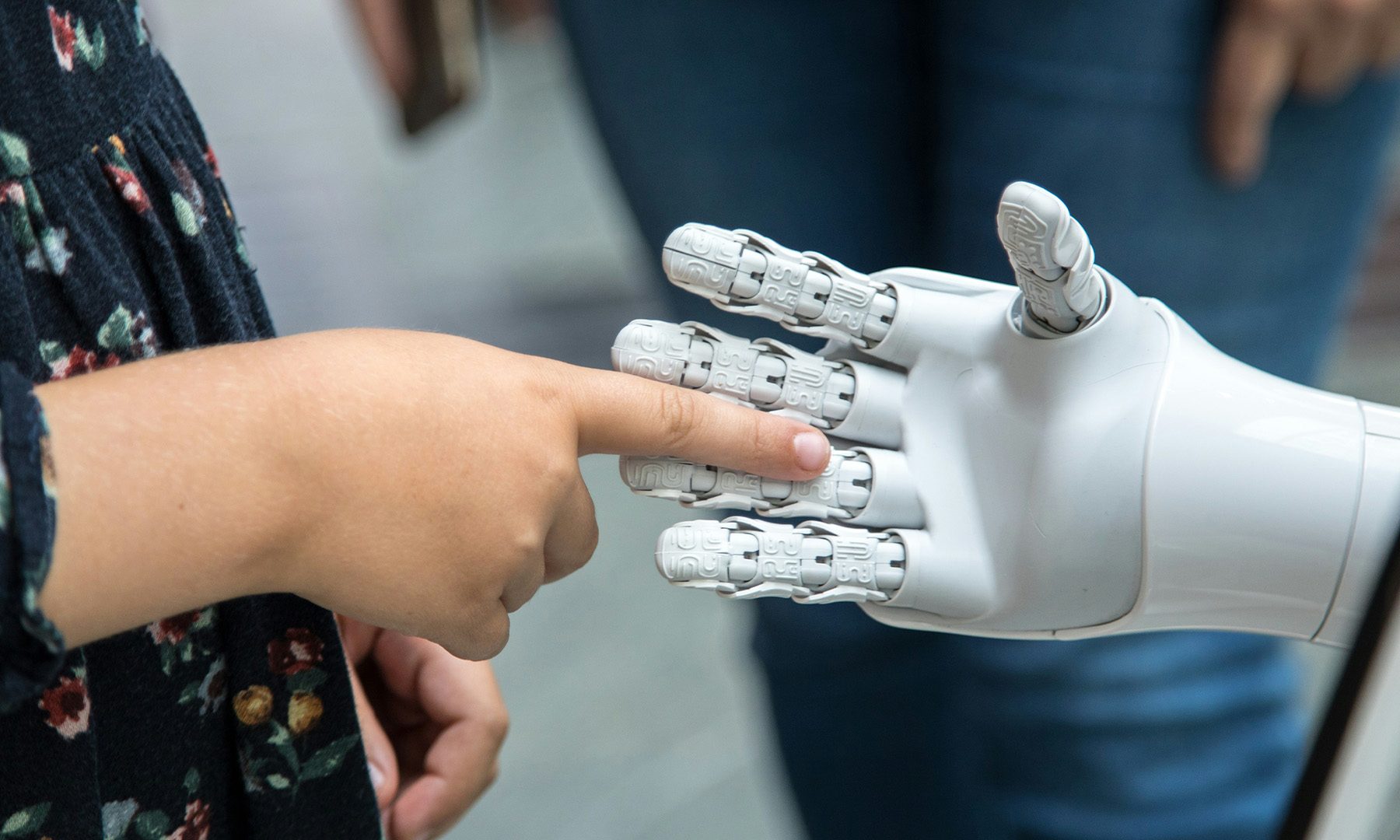
Robot Touch Human Finger

Samsung wants a place in the humanoid race, but its new robotics push begins with machines built for factories rather than homes.

The CEO-led RX robotics division will initially focus on manufacturing robots. Samsung has separately identified humanoids as a priority, although it hasn’t announced a commercial model or explained where one fits into the division’s immediate plans.

Read more
The future of AI may depend on this one behind-the-scenes change
Running Claude on Android.

Whenever a new AI model arrives, it's easy to get caught up in the bells and whistles. We talk about how much smarter it is, how quickly it answers questions, or how realistic its images have become. But here's the thing: none of that matters much if the AI can't reliably work with the apps and services people use every day.

That's why an upcoming update to the Model Context Protocol (MCP) caught my attention. It isn't a new chatbot or a fancy AI model. In fact, most people will never even know it's happening. But it could quietly make the AI ecosystem a lot healthier. If you've never heard of MCP before, don't worry. Think of it as a shared language that lets AI assistants safely talk to apps like Gmail, Slack, calendars, databases, and countless other services. Instead of every company inventing its own way to make those connections, MCP gives everyone a common rulebook.

Read more