  1. Home
  2. Emerging Tech
  3. News

The police may one-day patrol the streets with taser-equipped drones

Add as a preferred source on Google

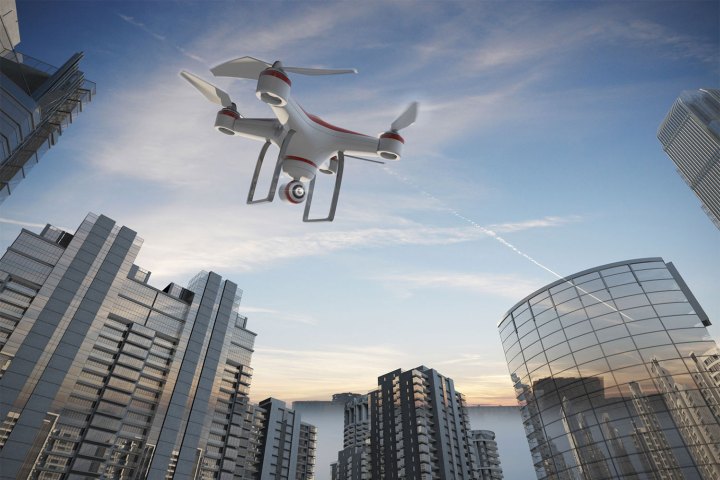
The idea of cops sending in drones to Taser suspects may sound far-fetched, but police in the U.S. are reportedly already discussing the possibility.

Talks have recently taken place between police officials and Taser International, a company that makes stun guns and body cameras for use by law enforcement, the Wall Street Journal reported on Thursday.

Recommended Videos

While no decision has yet been made on whether to strap stun guns to remotely controlled quadcopters, Taser spokesman Steve Tuttle said his team were discussing the idea with officials as part of broader talks about “various future concepts.”

Tuttle told the Journal that such technology could be deployed in “high-risk scenarios such as terrorist barricades” to incapacitate the suspect rather than kill them outright.

An indication of police willingness to explore high-tech solutions for challenging situations came in July when Dallas cops killed a violent suspect with a bomb delivered by a robot. In a similar situation, a Taser-equipped drone could enable law enforcement to incapacitate a suspect at a safe distance before moving in to make an arrest.

However, critics are likely to fear that such a plan would ultimately lead to the police loading up drones with guns and other weapons.

Portland police department’s Pete Simpson told the Journal that while a Taser drone could be useful in some circumstances, getting the public “to accept an unmanned vehicle that’s got some sort of weapon on it might be a hurdle to overcome.”

Simpson added that it’s nevertheless useful to discuss how technology can play a role in “improving officer safety, community safety, and suspect safety.”

The idea of a Taser-equipped quadcopter is actually nothing new, with at least one company already having built such a contraption. But police have so far only ever deployed stun guns on the ground, manually, and within close proximity of the target.

The day when U.S. citizens see cop-controlled weaponized quadcopters flying overhead may be a ways off, but take note, cops in India already have similar technology in their collection of crime-fighting tools. Several drones equipped with pepper spray canisters were delivered to police in the Indian city of Lucknow last year to allow officers to deal more effectively with unruly crowds.

At the time, Lucknow’s police chief described the modified quadcopter  as “brilliant,” adding that his specially trained pilots had “managed to work out how to use it to precisely target the mob in winds and congested areas.”


Trevor Mogg
Contributing Editor
Not so many moons ago, Trevor moved from one tea-loving island nation that drives on the left (Britain) to another (Japan)…
Scammers are teaching AI to sound like you, and research says our brains are falling for it
Has your accent just become a security vulnerability? AI scammers are getting too good at sounding local
Scammers are turning trusted news brands into investment traps

The next scam call you receive may not sound like a robot, a call center, or even someone pretending to be your relative. AI voice generators have become capable of reproducing regional accents and dialects that sound convincing enough that researchers are warning they could become a potent social-engineering tool.

For example, a scammer could use an accent familiar to a targeted community to make a suspicious call sound considerably more trustworthy.

Read more
Scientists found a way to turn plastic bottles into cookies you can actually eat
hand holding a cookie

Plastic bottles and cookies rarely show up in the same sentence, but a team of researchers just gave us a reason to talk about both together. According to Science Daily, scientists at Southern Illinois University Carbondale have engineered yeast that can turn waste from plastic bottles and old crop leftovers into real food ingredients and create cookies.

The work began as part of a NASA program exploring how astronauts might produce their own food during deep space missions, since resupply runs from Earth aren't exactly realistic that far out. The researchers' big insight was simple: plastic bottles are packed with carbon, and so, as it turns out, is food. That single connection became the foundation for everything that followed.

Read more
Students who use AI every day may be falling behind, while moderate users pull ahead
New global testing data suggests more AI in the classroom isn't automatically better.
Logo, Text

I assumed more AI access might help students learn faster. However, a new OECD study dispels that misconception for me and everyone else who gave their children a paid version of AI chatbots, thinking it would help them through their educational journey. 

According to PISA 2025 data from 760,000 students in 91 countries, students who use AI daily score meaningfully worse on standardized tests than their peers. The full picture is more complicated than a simple ban would fix.

Read more