It seems that no matter how new your smartphone is, battery life is never efficient. After all, when your phone is filled with features and apps, it’s hard to not use them all day long, but strapping a phone case with a built-in battery pack could make things too bulky for someone always on the move. It’s also not very eco-conscious, in honor of the recent Earth Day.
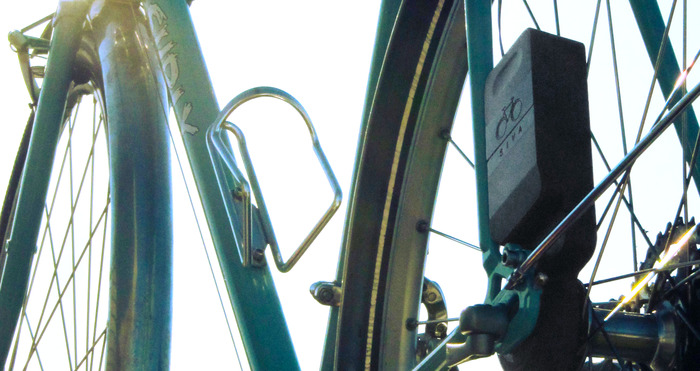
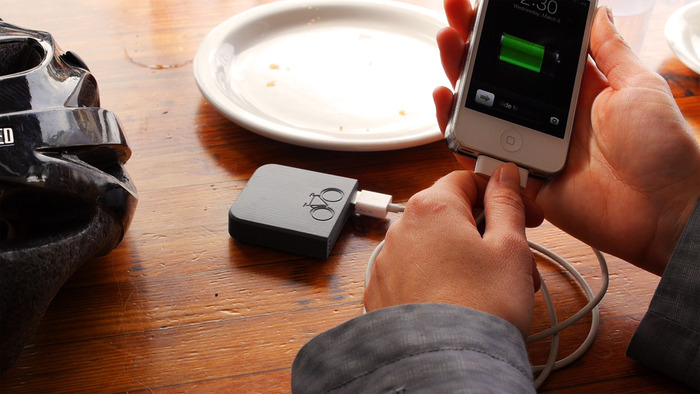
Instead, Siva Cycle is encouraging you to charge your battery with every bike pedal. Today, the bike accessories company is launching a Kickstarter project for the Atom, an add-on device that collects kinetic energy from bicycle pedals and convert them into electrical charge. Siva Cycle estimates that for every two minutes of cycling, it can boost an iPhone battery with one percent of charge. So if you’re one to use GPS navigation while biking, you could essentially start and end the trip without losing much of your phone’s battery life, if at all. Alternatively, you can also use the Atom to charge bike lights to ride safely after dark.
 “Power is a modern day necessity, and having juice for all of your devices is more than a convenience,” said Siva Cycle CEO and cofounder Dave Delcourt. “Over 1.5 billion people are without regular, consistent access to power, and many of them rely on bicycles as their primary means of transportation. Bigger picture, we believe the Atom will fundamentally change cycling, as well as the lives of people all over the world.”
The weatherproof Atom generator can be strapped onto the bike frame and harvest energy into the 1300mAh lithium polymer battery pack, or users can attach a USB 2.0 cable to charge devices directly. Power is also distributed evenly to avoid excess juicing, keeping gadgets protected from getting too much power when you’re riding downhill. Users can attach the Atom against the back wheel of the bike, so as long as they make sure to lock their bikes in a way where back wheels can’t be stolen, the Atom will stay with you as well.
The tiny gadget just launched on Kickstarter a few hours ago and already it’s garnered more than $16,000 and counting out of its $85,000 goal. You can own the Atom for $85 if you can snag the early bird pledge, otherwise the company is expecting it to retail for $105. The item is scheduled to ship this Fall.