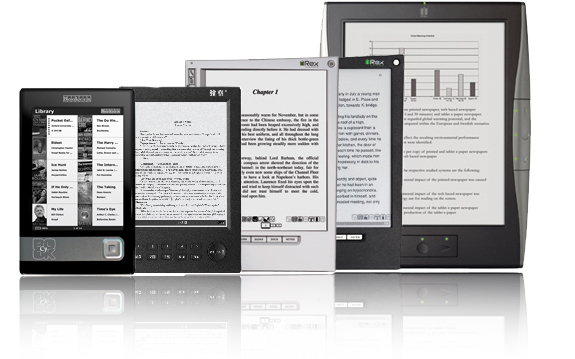
 The Taiwan government says it will spend 2 billion New Taiwan dollars ($65 million) to support its electronic-book industry and help makers cash in on the rapidly growing world market.
Companies can receive government subsidies of up to 40 percent of costs for programs developing related technologies, according to an Industrial Development Bureau report released Thursday.
Taiwan is already a leading player in the digital book market, being the exclusive supplier of e-paper displays for Amazon’s Kindle and Sony’s e-Reader through collaboration with foreign firms that hold cutting-edge electronic ink technologies, officials said.
Prime View International Co. currently supplies 90 percent of the e-paper displays to the world market, with the rest coming mainly from Taiwanese maker AU Optronics Corp., according to research firm Display Search.
Prime View has acquired Cambridge, Mass.-based E-Ink, and AU Optronics has an equity investment in SiPix Imaging, Inc., based in California’s Silicon Valley. The American firms hold various digital ink technologies.
According to Austin, Texas based Display Search, world e-book sales could surpass 4 million in 2009, a figure expected to at least double next year.
The Industrial Development Bureau report said at least 10 other Taiwanese firms are making related chip sets or assembling the digital readers.
Some analysts warn that many e-reading market forecasts may be too optimistic. E-books might not become as popular as cell-phones or laptops because the reading population has been shrinking in the Internet age, they warn.
But the Taiwan government report said mass production could help lower the 6-inch e-book retail prices from the current $300 to about $100, making them more appealing to consumers.
E-books are currently available only in black and white, but will be equipped with color and touch screens as early as next year, it said.
Taiwan is discussing with China about promoting a standard e-book format for the Chinese-language market, a step that could help Taiwanese makers sell their products to the mainland, the report said.
The Taiwan government will build one or two “smart towns” on the island, working with telecom carriers and content-providers to provide easy and affordable digital reading, the report said.