1. Home
  2. Emerging Tech
  3. Legacy Archives

Vizit PhotoFrame Promises Two Interaction and Wireless Connectivity

Add as a preferred source on Google

Isabella Products has been promising its Vizit photoframe for almost a year, and last we heard was due to land at retailers in “fall 2009.” Now Isabella has pushed the date back to “early 2010,” but it wants folks to know its touchscreen-enabled photoframe that’s supposed to offer fully interactive two-way connectivity is on the way…and the wireless connectivity will be provided by AT&T.
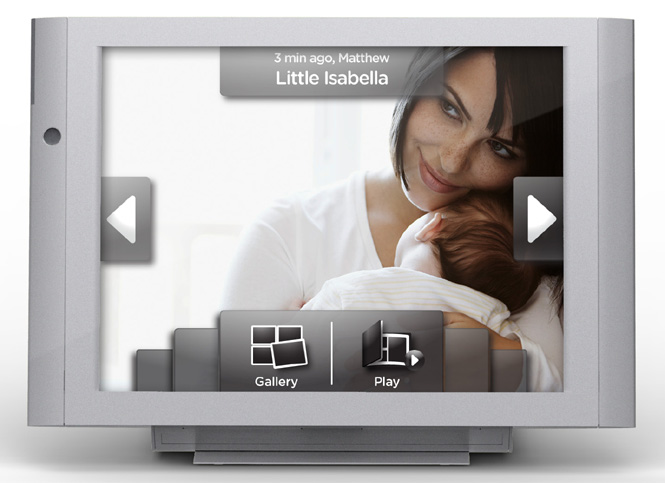
Vizit photoframe
Image used with permission by copyright holder

“Digital frames have been a great step forward in viewing convenience, but there has not yet been a single product that allows consumers to fully interact with their photos in a meaningful way,” said Isabella founder and CEO Matthew Growney, in a statement. “With Vizit, one can now interact with their photo collection, as opposed to only receiving photos to view. Vizit combines two-way capabilities with an attractive, innovative design and an interface that makes it simple for anyone to use.”

Recommended Videos

The Vizit will offer a 10.4-inch display, and enable users to see all their images in a gallery, rotate or zoom images, set up slideshows, and more. When new images arrive at the photoframe—via MMS or email using that AT&T wireless connectivity—users can send replies back to their friends an families without having to use a computer. Users will also be able to manage their photo collections remotely via a Vizitme online account, as well as invite friends to access their albums, set up captions, and more. The Vizit frame will also keep itself up to date automatically by downloading software enhancements over the air; Isabella plans to enable commerce capabilities too, potentially enabling users to order prints or photo albums directly from the photo frame.

But all this won’t come cheap: the Vizit photoframe will carry a suggested retail price of $279.99, and will also require a monthly or yearly subscription plan to keep the wireless goodness going. There’s no word whether one can opt out of the wireless connectivity and just latch the device onto an existing home network…but for folks looking for an easy-to-set-up solution they can just drop at the grandparents’ house and just work like magic (assuming they’re in an AT&T coverage area), the Vizit may bear some consideration when it ships next year.
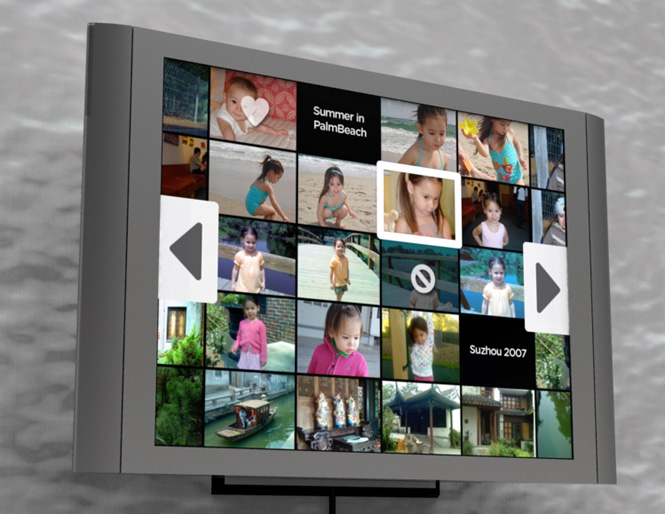

Vizit photoframe (wall mount)
Image used with permission by copyright holder
Geoff Duncan
Former Contributor
Geoff Duncan writes, programs, edits, plays music, and delights in making software misbehave. He's probably the only member…
Your future AR glasses might finally stop making the real world look weird
Researchers have developed a new display technique that keeps virtual objects realistic without dimming the real world.
Samsung AR Glasses

One of the biggest promises of augmented reality is blending digital objects seamlessly into the real world. Ironically, today's AR glasses often make the real world harder to see. Researchers at the Shibaura Institute of Technology (SIT) in Japan, led by Assistant Professor Xiaodan Hu in collaboration with Dr. Yan Zhang and Professor Xubo Yang from Shanghai Jiao Tong University in China, and Professor Kiyoshi Kiyokawa from Japan's Nara Institute of Science and Technology, have developed a new AR display technique that aims to make virtual objects look realistic without reducing visibility of the real world. The study was published in IEEE Transactions on Visualization and Computer Graphics.

The biggest AR problem isn't virtual objects; it's everything around them

Read more
Anti-surveillance clothing is getting cheaper, but don’t expect an invisibility cloak
Affordable shirts now claim to confuse facial recognition, although their protection depends heavily on the camera and software watching you
Chart, Plot, Adult

Anti-surveillance clothing is starting to look less like an art-school experiment and more like something you could actually wear outside. Shirts designed to confuse facial recognition systems now cost about as much as ordinary streetwear, although buying one won’t make you disappear.

The Guardian reports that designers are using face-like prints, unusual cuts and infrared lights to interfere with computer vision. These techniques target specific weaknesses, so their success depends on what happens to be watching you.

Read more
This spinning drone hides in plain sight using a visual illusion
This drone doesn't turn invisible. It tricks your brain into thinking it has.
Phantom Twist

For decades, engineers have chased the dream of an invisible drone. The usual approaches have involved transparent materials, camouflage coatings, or complex optical systems that bend light around an object. Researchers at Northwestern University decided to take a completely different route. Instead of hiding the drone itself, they chose to fool the human eye.

The result is Phantom Twist, an experimental drone that spins so rapidly it almost disappears into the background. It's not technically invisible, but to anyone watching, it looks more like a faint blur than a flying machine.

Read more