  1. Home
  2. Emerging Tech
  3. Legacy Archives

Wi-Fi enabled tooth sensor tracks your eating and smoking habits

Add as a preferred source on Google
tooth-sensor
Image used with permission by copyright holder

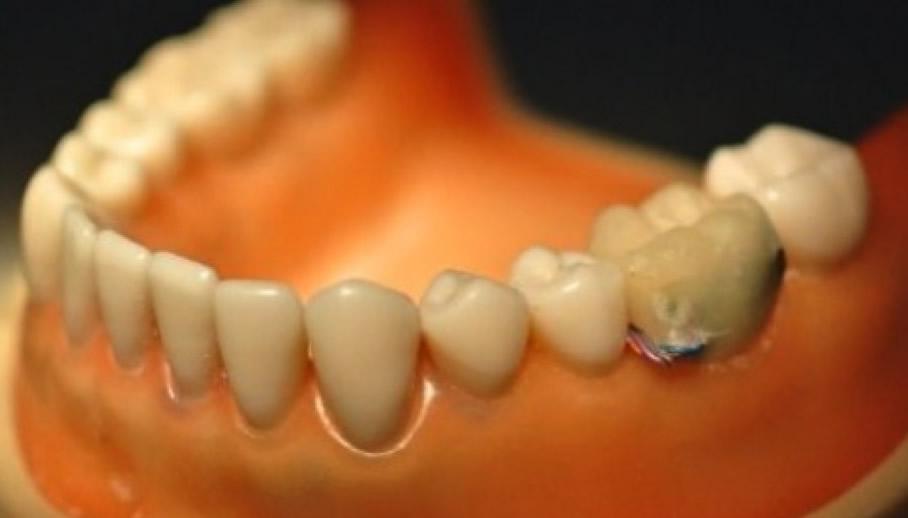
Published within a study conducted by researchers at the National Taiwan University, the team created a sensor designed to be embedded in your mouth in order to track and hopefully curtail bad habits like smoking or overeating. With an accuracy of nearly 94 percent in the current prototype, the sensor can differentiate between eating, speaking, coughing, smoking, drinking and breathing. All of this data is collected and can be sent to your medical professional in order to provide a more accurate history of your daily habits, both negative and positive.
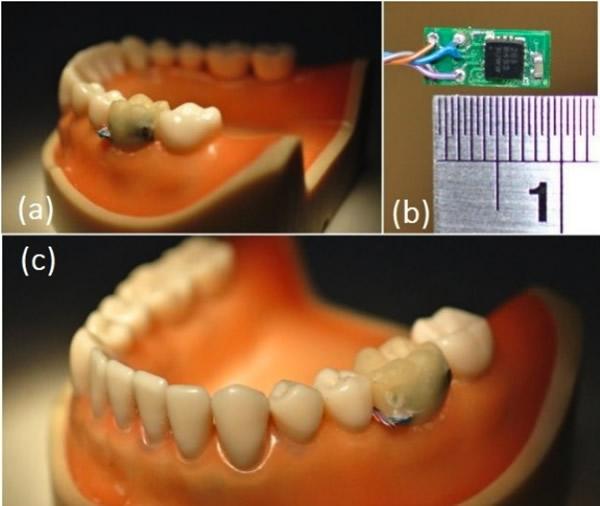
tooth-sensor-sizeWhile the current prototype currently uses an external wire for power, the team is looking into creating a version that uses an internal battery. At this point, the tiny circuit can be fitted between two teeth or mounted on oral hardware like dentures or braces.

Recommended Videos

However, the mount would have to be extremely secure in order to avoid the possibility of it becoming loose and potentially swallowed. In addition, the team has to make the device completely waterproof in order to avoid damage to the electronics.

In addition to pursing battery power, the team is also looking into the possibility of adding Bluetooth to the device. This could allow a doctor to download recent data to a smartphone or tablet when you arrive at the office rather than uploading the data to a server over Wi-Fi. However, the researchers want to test the safety of that type of technology being used within the mouth.

Beyond keeping tack of eating and smoking habits, the team believes that dentists could find this technology useful as well. In an interview with the New Scientist, Faculty of General Dental Practice vice-chair Trevor Johnson said “This could have a number of uses in dentistry, for example as a research tool, for monitoring patients who clench or grind their teeth, and for assessing the impact of various dental interventions.”

Mike Flacy
By day, I'm the content and social media manager for High-Def Digest, Steve's Digicams and The CheckOut on Ben's Bargains…
Yet another study says AI is bad for elections, and the rabbit hole gets worse
AI may be an election bomb waiting for someone to light the fuse
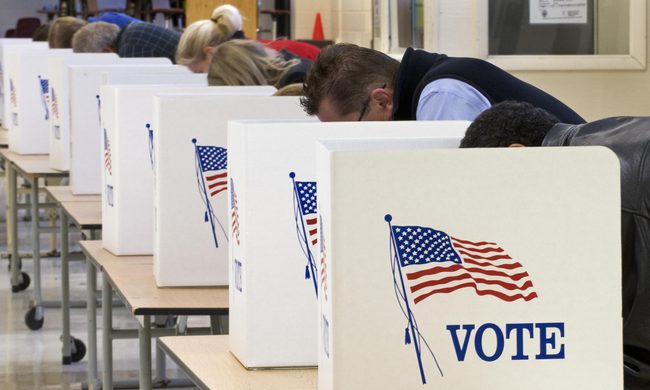
Voters cast their ballots on Election Day

Another election, another study has concluded that asking an AI chatbot for political guidance is a spectacularly bad idea. Research conducted during Hungary’s 2026 parliamentary election found that ChatGPT and Google Gemini offered not just inaccurate but also inconsistent and unreliable voting advice. The chatbots misclassified voter profiles, overlooked relevant parties, recommended parties absent from the ballot, and sometimes produced materially different answers when given the same information repeatedly.

AI keeps failing the voter test

Read more
Samsung’s humanoid robot ambitions are real, but factories come first
Samsung’s new robotics division has humanoids in its sights, although its immediate business is far more practical factory automation
Robot Touch Human Finger

Samsung wants a place in the humanoid race, but its new robotics push begins with machines built for factories rather than homes.

The CEO-led RX robotics division will initially focus on manufacturing robots. Samsung has separately identified humanoids as a priority, although it hasn’t announced a commercial model or explained where one fits into the division’s immediate plans.

Read more
The future of AI may depend on this one behind-the-scenes change
Running Claude on Android.

Whenever a new AI model arrives, it's easy to get caught up in the bells and whistles. We talk about how much smarter it is, how quickly it answers questions, or how realistic its images have become. But here's the thing: none of that matters much if the AI can't reliably work with the apps and services people use every day.

That's why an upcoming update to the Model Context Protocol (MCP) caught my attention. It isn't a new chatbot or a fancy AI model. In fact, most people will never even know it's happening. But it could quietly make the AI ecosystem a lot healthier. If you've never heard of MCP before, don't worry. Think of it as a shared language that lets AI assistants safely talk to apps like Gmail, Slack, calendars, databases, and countless other services. Instead of every company inventing its own way to make those connections, MCP gives everyone a common rulebook.

Read more