  1. Home
  2. Gaming
  3. Legacy Archives

Nintendo announces wider losses, lowers yearly forecast

Add as a preferred source on Google
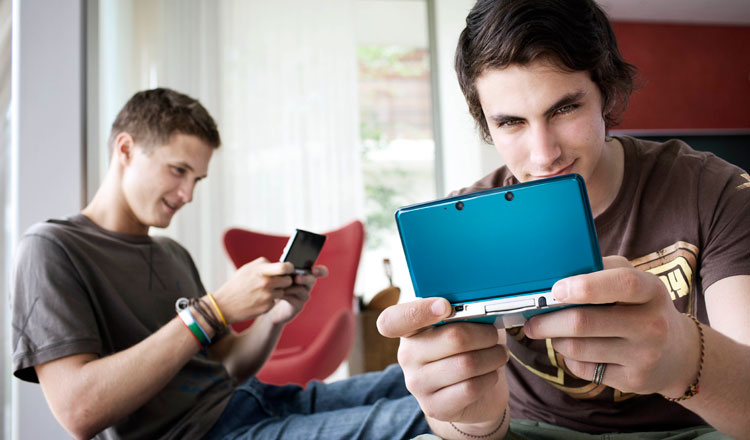
Nintnedo3DS
Image used with permission by copyright holder

A couple years ago Nintendo seemed to be riding an unstoppable juggernaut of sales based on the popularity of the Nintendo Wii, its DS series of handheld gaming devices, and (of course) its plethora of in-house titles like the Mario and Zelda franchises. But times have changed: today the company announced (PDF) it has lost some ¥70.3 billion—about US$925 million— in the six months ending September 2011.

Nintendo expects to be buoyed a bit by end-of-year holiday sales, a time that traditionally sees a strong uptick in both gaming hardware and software. However, where the company was previously forecasting it would make a ¥20 billion profit for its fiscal year, the company now expects to lose ¥20 billion for the year, or roughly US$264 million.

Recommended Videos

Nintendo is being hit by weaker-than-expected software sales. Nintendo America has published a revised sales forecast shows the company expects hardware sales to be roughly what they expected, but software sales for all its major platforms (Wii, DS, and 3DS) to be lower than expected. The company now believes sales of 3DS titles will be more than 28 percent off its original forecast, totaling 50 million units—although going forward Nintendo doesn’t plan to include software titles bundled with hardware in its forecast—it did for the first part of the year.

Nintendo—which owes some of its popularity to titles that appeal to casual and non-traditional gamers—has also been facing competition from the likes of Apple and Android device makers, whose tablets, smartphones, and media player often provide users access to a plethora of casual games via the iTunes App Store, Android Market, and similar venues. So far, Nintendo has ruled out porting any of its key franchises to iOS, Android, or other platforms, hoping their long-standing appeal will continue to draw customers to its platform. Nintendo’s financials have also been impacted by a relatively strong yen.

Although Nintendo had a strong hit with the Wii, sales have dropped off sharply due to market saturation, and the Nintendo 3DS handheld—which offers a 3D display that doesn’t require glasses—hasn’t resonated strongly with consumers, and Nintendo has admitted that no 3DS title has really taken off. For the first six months of its fiscal year, the company says it has sold 3.07 million 3DS units worldwide. At the same time, sales of its previous Nintendo DS handheld (and software titles to go with it) have dropped sharply from a year ago.

Geoff Duncan
Former Contributor
Geoff Duncan writes, programs, edits, plays music, and delights in making software misbehave. He's probably the only member…
Ayaneo’s new handheld revives the Game Boy Advance. Nintendo probably wishes it had done it first
If you missed the Game Boy Advance, this handheld is built for you
KONKR Pocket Advance

The Game Boy Advance is celebrating its 25th anniversary in the US, and while Nintendo has largely chosen to honor the handheld through its Switch Online library, another company has decided to recreate the hardware itself. Chinese handheld maker Ayaneo has unveiled the Konkr Pocket Advance, a modern reinterpretation of the iconic Game Boy Advance that updates almost every part of the original while preserving the horizontal design that made Nintendo's console so beloved.

Rather than building a nostalgia piece that simply looks like the original, Ayaneo is targeting the growing retro gaming market with modern hardware. The Konkr Pocket Advance features a higher-resolution display, additional controls, USB-C connectivity and wireless support, making it less of a replica and more of a contemporary handheld inspired by one of gaming's most influential consoles.

Read more
Sony’s 720Hz tandem WOLED gaming monitor is finally available worldwide
The INZONE monitor runs at 540Hz in QHD and 720Hz at 720p
Sony OLED high refresh-rate gaming monitor.

Sony’s ultra-fast OLED gaming monitor has finally made its way to store shelves. A few months after announcing the INZONE M10S II, the company has started shipping the esports-focused monitor across major global markets. Buyers in the US can purchase the monitor for $1,099.99. It costs £1,199 in the UK, while customers in supported Eurozone markets will have to fork out €1,349.

It uses a QHD Tandem WOLED panel that runs at a native 540Hz refresh rate. The monitor also has a 0.02ms response time and Sony’s Motion Blur Reduction technology. Sony worked with esports organization Fnatic on a separate competitive mode that trades resolution and usable screen size for an even higher refresh rate. (via Notebookcheck)

Read more
LG’s bonkers 1,000Hz gaming monitor is now available for $1,000
The UltraGear 25G590B reaches 1,000Hz without dropping below Full HD
LG UltraGear 1000Hz monitor featured.

LG’s insanely fast UltraGear 25G590B finally has a price and a US release date. The 24.5-inch esports monitor is now available to preorder exclusively from LG for $999.99, with free expedited shipping scheduled to begin on September 1.

The headline feature is a native 1,000Hz refresh rate at 1920 x 1080, making it the first Full HD gaming monitor to reach that speed without dropping to a lower resolution. The screen can update up to 1,000 times per second, or once every millisecond. LG also lets users overclock it to 1,100Hz.

Read more