
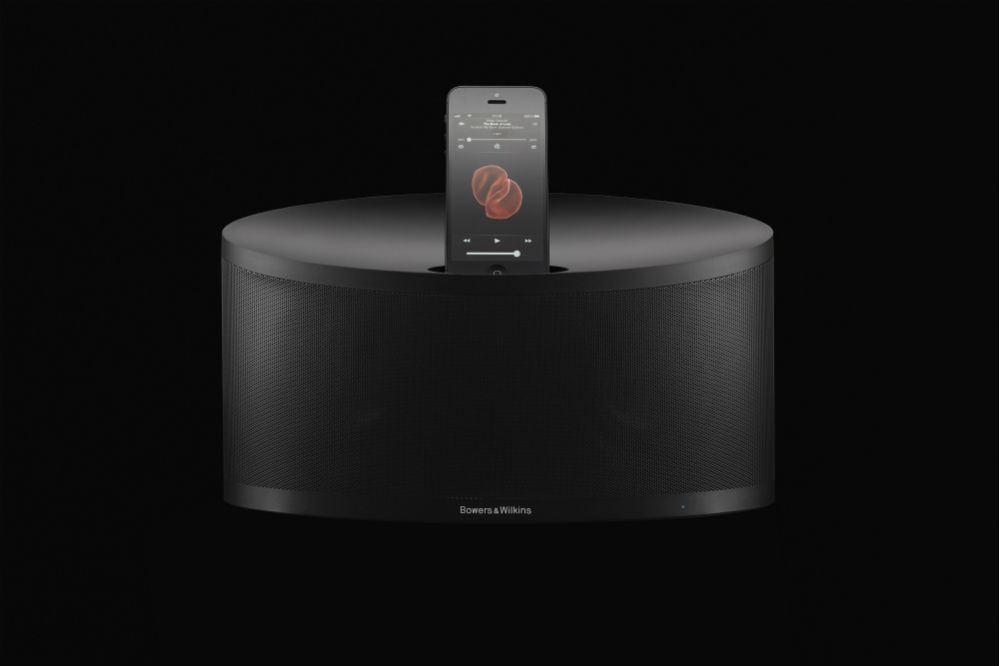
Check out our review of the Bowers & Wilkins Z2 speaker dock.
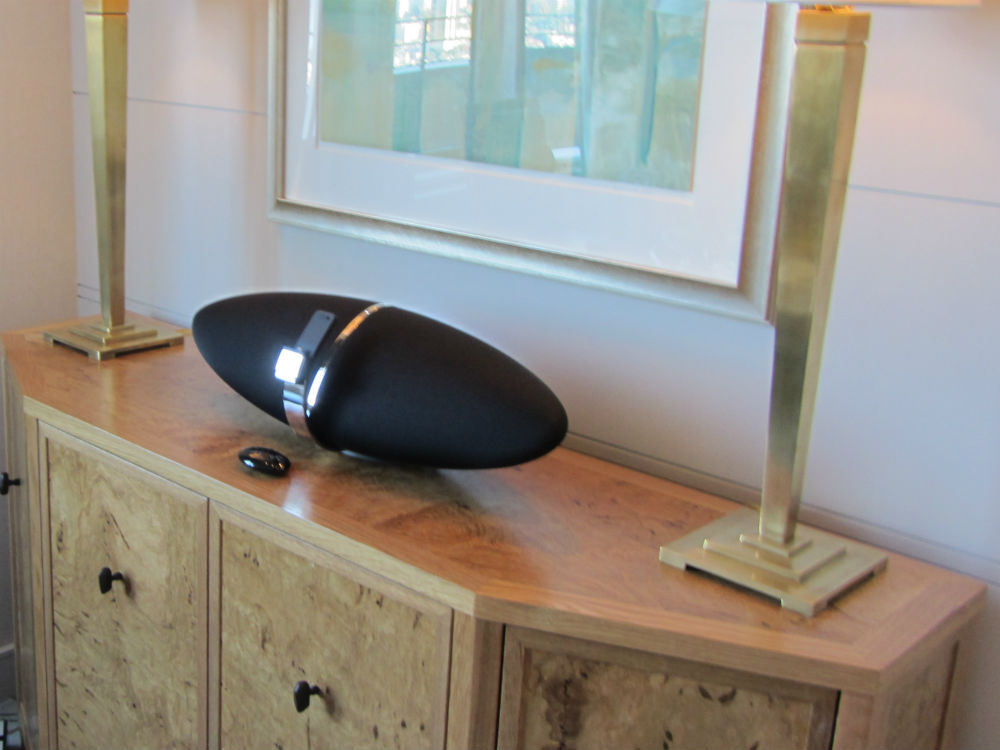
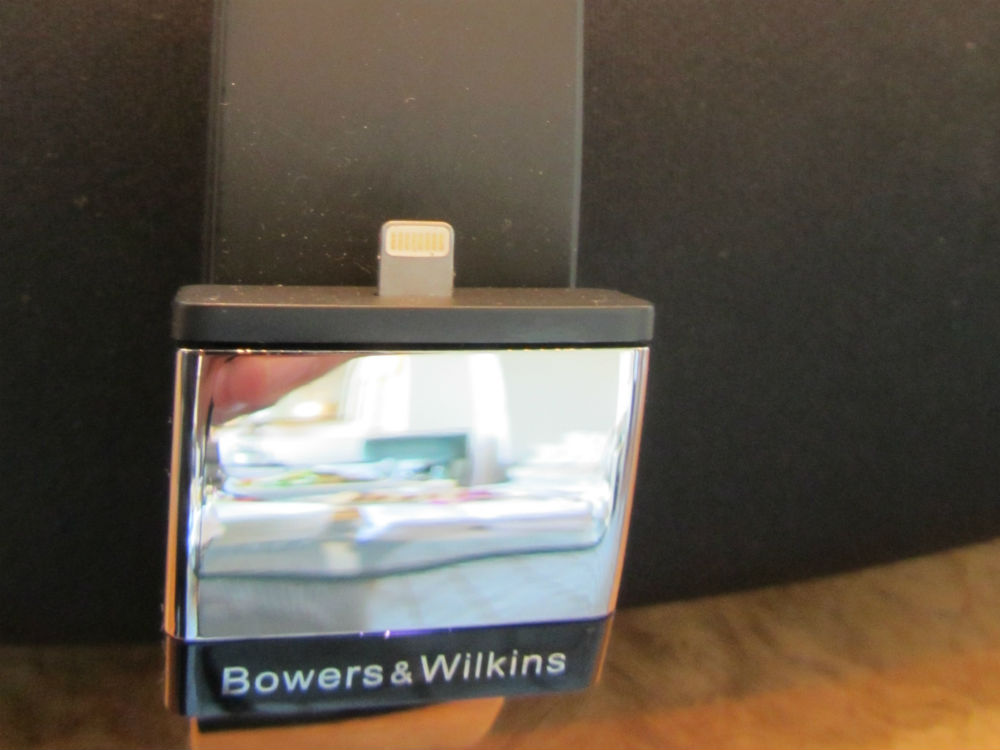
It might be taking things a bit far to refer to the Bowers & Wilkins Zeppelin, A5, and A7 AirPlay speakers as thunderous; but Lightning…now that fits. We’re talking Apple’s new Lightning connector, found on the iPhone 5, the latest iPod and iPad mini, and now the docking technology of choice for the new Zeppelin LCM (Lightning Connector Model) and Z2 speaker docks that the company showed last Monday here in San Francisco. Yes, B&W will continue to incorporate docks into their AirPlay speakers. No matter how convenient wireless is, wired works no matter the environment, and charging while you play is never a bad thing.
The Zeppelin LCM – priced at the same $600 as its predecessor – looks very much the same. The exceptions are of course the lightning connector pointing upwards in the middle of the faceplate, and a reworked status display that is easier to see from across the room. You might be able to dock an iPad Mini as well as the smaller iPhone 5 and iPod 7, though balancing the larger, heavier device could be an issue – Zeppelin LCM documentation doesn’t mention docking support for the Mini. As for the rest of the hardware, the LCM is identical to its 30-pin predecessor with Ethernet, USB, mini-stereo ports for connectivity and 3-inch woofers, 1-inch tweeters, and a 5-inch subwoofer handle audio output.
Realizing that the design of the Zeppelin is not for everyone, and that the $500 A5 and $800 A7 might be a bit pricey for many users, Bowers & Wilkins has delivered a similar, but less expensive product in the $400 Z2. It’s arguably more handsome than the A5 and A7. (Funny what adding a forward rake to the top of a cabinet can do.) The docking slot for the unit will accept Lightning connector Phones and iPods, but you’ll need an extender cable for an iPad Mini as the dock is recessed into the top of the unit. You can of course, still connect wirelessly with any AirPlay enabled device.
The Z2 has a single pair of 3.5-inch full-range speakers rather than the 1-inch tweeter/ 4-inch woofer combo found in the A5 that it most resembles. There’s no subwoofer as with the A7 and Zeppelins. However, the demo unit I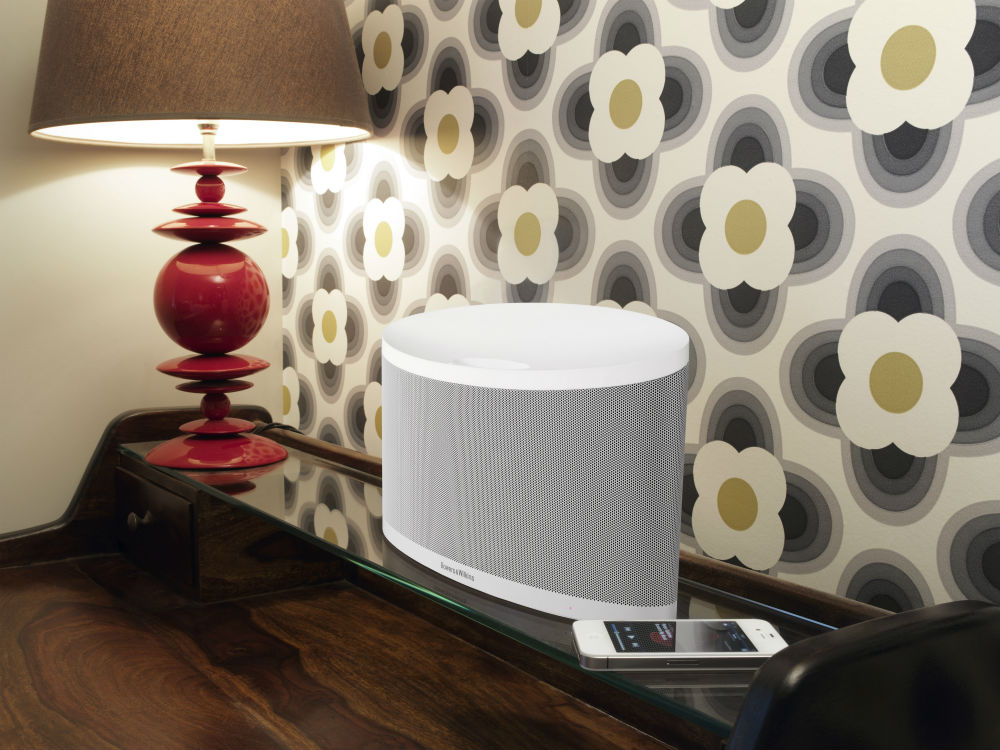 heard was producing prodigious amounts of bass. Some was undoubtedly due to acoustic coupling with the small wood desk it sat upon, but still. The Z2 has Ethernet and mini-stereo jacks, but no USB connection as with the A5.
In my brief ears-on, I found both the new Zeppelin and Z2 sonorous, though I would definitely hit up an EQ setting with less midrange on a long-term listening basis. Tastes vary. The new units sound good and they worked flawlessly during the streaming demo as we wandered from room to room switching to different units with the latest version of the iOS setup app. Plus, the Zeppelin is still the conversation starter it’s always been, Lightning or no.


