1. Home
  2. Emerging Tech
  3. Audio / Video
  4. Web
  5. Legacy Archives

Panasonic to cut 17,000 employees

Add as a preferred source on Google
Panasonic chairman and president
Image used with permission by copyright holder

Panasonic, Japan’s largest makers of consumer electronics, has announced a broad restructuring plan that will see the company shrink itself from five major divisions down to three, as well as cut some 17,000 jobs. The moves are intended to make the company more competitive with electronics manufacturers in South Korea and China, but also reflect Panasonic’s efforts to cope with the disruptions and devastation generated by last month’s massive earthquake and resulting tsunami, which have significantly dampened demand in an already-sluggish Japanese market.

Panasonic currently employs about 367,000 people, so the 17,000 job cuts represent a roughly 4.5 percent reduction in the company’s workforce. The cuts seem primarily targeted at integrating two recent acquisitions—Sanyo Electric and Panasonic Electric Works—into the larger company. At the same time, Panasonic is going to reduce the number of major business divisions within the company from five areas based on technology platforms to three new sectors based on business models: Consumer, Components & Devices, and Solutions. The Consumer group will comprise climate control and home appliances, along with Panasonic’s AV, home entertainment, and networkable products. The Components & Devices group will handle energy, automotive, and (apparently) smartphones, while Solutions will comprise four primary businesses centers on health care systems, environment and energy systems, communications, and factory systems.

Recommended Videos

In the consumer sector, Panasonic says it plans to increase purchases of LCD panels from other manufacturers and increase its own overseas production to compete with the likes of Samsung and LG, and also plans to reorganize its semiconductor business to lower dependencies on large-scale integrated circuits from other manufacturers.

Panasonic estimates the restructuring will cost about $2 billion, but says the changes should increase annual revenues by over $700 million a year, particularly as the company ramps up sales of solar cells, lithium-ion batteries, climate control equipment, and LED lighting.

Nonetheless, Panasonic will face many challenges: the comparative strength of the Japanese Yen has made Panasonic products more expensive than products from competitors, particularly in overseas markets.


Geoff Duncan
Former Contributor
Geoff Duncan writes, programs, edits, plays music, and delights in making software misbehave. He's probably the only member…
Google just canceled its AI Studio mobile app, and it’s not all bad news
Logo, Symbol, Disk

Google AI Studio was on track to make its way to Android and iPhone, giving developers and AI enthusiasts a dedicated place to build prompts and experiment with Google's latest models from their phones.

That's no longer happening. In a post shared by the official Google AI Studio account on X, Google confirmed that it's canceling the standalone AI Studio mobile app before launch. The announcement comes despite the company saying nearly 800,000 people had already pre-ordered the app across iOS and Android.

Read more
Google Earth’s AI misadventure lasted only a day. It was a tale of dangerous ignorance.
Nuclear reactors, tanks, and historical destruction on a life-like satellite map? Yeah, that's bad.
Nano Banana AI image generator representation.

Technology behemoths are clearly not reading the room, or they are just moving faster than they should when it comes to AI deployment. Google has already stuffed its Gemini AI in every corner of its software stack, from Android to daily productivity tools like Gmail that are used by hundreds of millions of users every day. AI is everywhere. Not all of it is bad, mind you. But in a few places, it just feels forced.

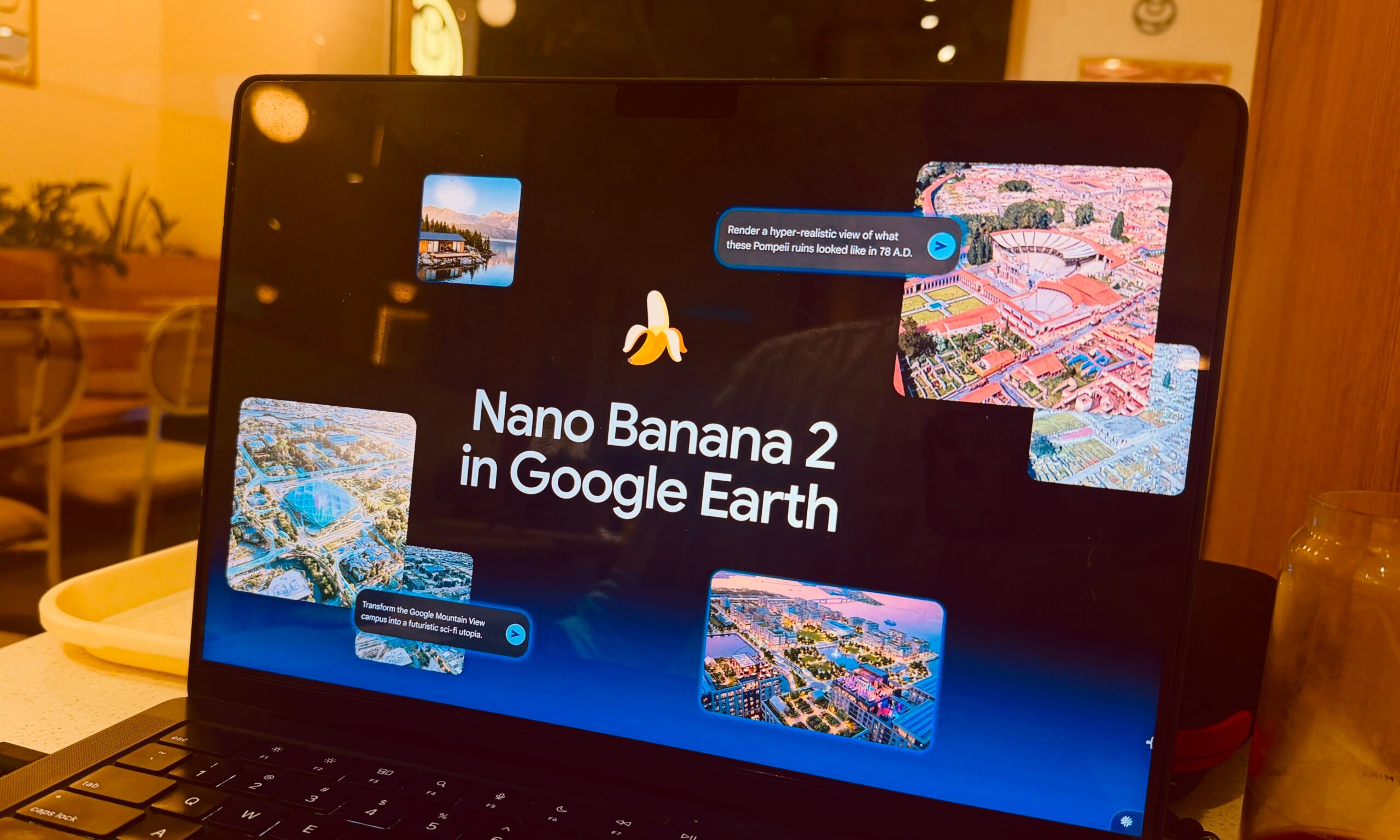
In its latest AI-fication experiment, the company targeted Google Earth. The idea was to let the audience use its Nano Banana 2 AI image generator and make images that can be placed on the map view. On paper, it's a cool idea. What would the Colosseum of Rome look like in your urban neighborhood? Yeah, fun stuff like that.

Read more
Google’s new AI gives robots better balance, smarter hands, and teamwork capabilities
Google just made robots a lot less clumsy and a lot more helpful.
Gemini robotics 2.0

Google DeepMind just brought sci-fi robots closer to reality, and it is very exciting. Building on its original Gemini Robotics model, the company has introduced Gemini Robotics 2, an AI system designed to help robots think, move, and even work together. Unlike most robots today, which rely on pre-programmed routines or someone controlling them remotely, this new system lets robots figure things out on their own when situations get unpredictable.

Can robots finally handle whole-body tasks?

Read more