  1. Home
  2. Audio / Video
  3. News

Pioneer upgrades A/V receivers, more with Chromecast, outs wireless speaker

Add as a preferred source on Google

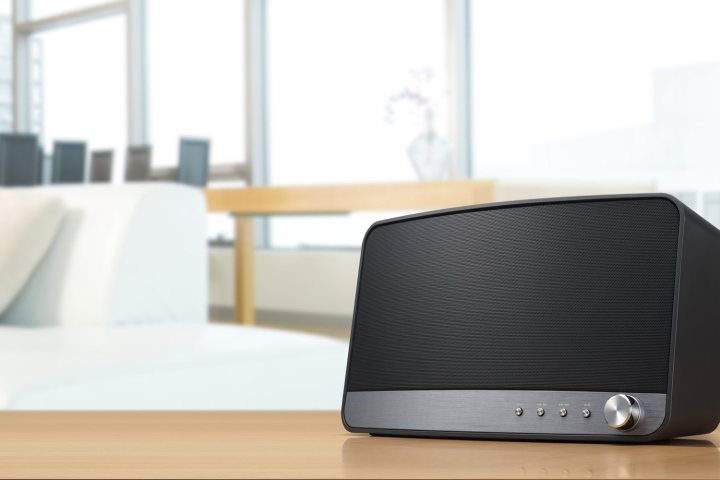
If you’ve been following announcements about Chromecast built-in and are feeling left out with your recently purchased Pioneer A/V receiver, you might be in luck. On Tuesday, the company announced that a total of 15 different products are receiving Chromecast built-in via a firmware update. The company also announced that its new MRX-3 Multiroom Wireless Speaker is now available for purchase.

The products getting Chromecast built-in include A/V receivers, home theater systems, and network speaker systems. If you’re wondering whether or not your Pioneer product is supported, there is one easy way to know: only products manufactured in 2016 or later will be getting the firmware update.

Recommended Videos

Specific models include the SC-LX901, SC-LX801, SC-LX701, SC-LX501, VSX-LX301, VSX-LX101, FS-EB70, and the SX-S30 models in Pioneer’s Elite line. The Pioneer VSX-1131, VSX-832, VSX-831, VSX-S520, XC-HM86, X-HM76, and new MRX-3 speaker are also getting the firmware upgrade. Pioneer has not said whether other models may see a similar update in the future.

Once the update is applied, you will be able to stream from a wide range of Chromecase-enabled apps and devices. This includes Google Home or other as-yet-unreleased devices that support Google Assistant. When using Google Assistant, you can easily select a streaming service, adjust volume, pause and resume playback, and more using just your voice.

While the company’s new MRX-3 Multiroom Wireless Speaker also features support for Chromecast built-in, it doesn’t stop there. The speaker features FireConnect wireless multiroom audio, as well as Wi-Fi and Bluetooth, with support for many internet radio and music streaming services built-in. This is all piped through the speaker’s dual 77mm woofers. A future firmware update will allow two speakers to pair via FireConnect and operate in stereo mode, and will also bring support for DTS Play-Fi.

The MRX-3 is available now via for a price of $350. The firmware update is also available now, though how you go about updating will depend on your hardware. For more information about Chromecast built-in, see its page on the Google website.


Kris Wouk
Former Contributor
Kris Wouk is a tech writer, gadget reviewer, blogger, and whatever it's called when someone makes videos for the web. In his…
Google Home Speaker (2026) review: Smarter and punchier, with a subscription pinch
Google's latest smart speaker pairs Gemini with better sound and deeper smart home integration. What's not to love without spending over a $100?
Sphere, Body Part, Finger

View at Amazon

Quick Recap

Read more
Razer dressed its gaming earbuds for PS5 and Xbox, then priced them surprisingly well
Razer's Hammerhead V3 X HyperSpeed now looks loyal to Xbox and PlayStation. But one pair cheats.
Razer Hammerhead V3 X HyperSpeed for PlayStation

Razer has refreshed the design of its affordable gaming earbuds in Xbox green and PlayStation white. Beneath the matching colors, however, one version has a compatibility advantage. The Razer Hammerhead V3 X HyperSpeed for Xbox and Hammerhead V3 X HyperSpeed for PlayStation are available now for $99.99 each, matching the price of the existing standard model.

The PlayStation edition combines white earbuds with blue Razer logos and a PS-branded case, while the Xbox model uses black earbuds, green logos, and a bright green case interior.

Read more
Your next song could soon carry an AI warning label, and the music industry is all for it
AI isn't the problem anymore. Knowing it's AI is.
AI tag imagined with AI

The music industry's battle with artificial intelligence is entering a new phase. After spending the past two years fighting AI companies in court and pushing back against unauthorized training on copyrighted music, record labels are now turning their attention to something far simpler: transparency. A coalition representing major record labels, artists, and music organizations wants streaming services such as Spotify and Apple Music to clearly tell listeners when a song has been created with artificial intelligence.

The proposal, first reported by The Wall Street Journal, comes as AI-generated music becomes increasingly difficult to distinguish from songs created by human artists. Rather than banning AI music altogether, the industry is arguing that listeners deserve to know what they're hearing before they hit play.

Read more