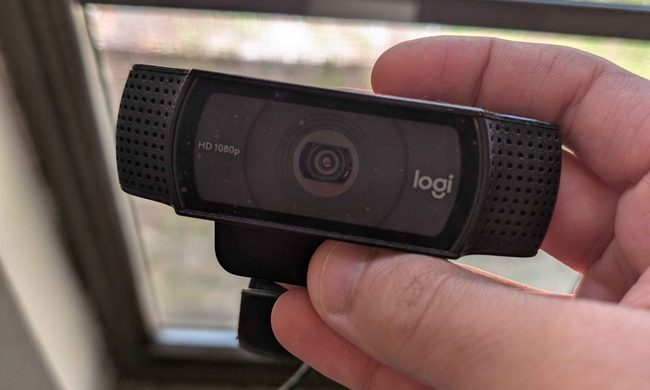
Wiim, the wireless audio company that has been making big inroads into a market once dominated by Sonos, quietly launched a version of its Wiim Home app for Apple TV owners earlier this month. Though not groundbreaking by any means, it’s yet another example of how this wireless audio upstart is moving at an incredible speed when compared to its main competitor.
Sonos and Wiim have a similar approach when it comes to the mobile apps for iOS and Android that are used to control their respective products. Sonos — despite its horrendously botched redesign that continues to plague owners with issues — has a more sophisticated set of features, but one thing it has never done is develop a version of its app for either tvOS or Android TV.

What’s even more striking is that none of Sonos’ soundbars that connect to a TV via HDMI ARC, leverage that connection to let you see a now playing screen when you use the soundbar for streaming music instead of TV content. When the company announced its updated flagship, the Sonos Arc Ultra, the press imagery included what looked like a now playing screen, but the company said it was not meant to reflect a feature of the Arc Ultra either at launch, or as a planned update.
Until March 2025, it was fully expected that Sonos would launch its own streaming video device to compete with the Apple TV. Codenamed Pinewood, the device was reportedly going to sport multiple HDMI connections and a lag-free wireless connection to Sonos speakers and soundbars. The device would, it could be assumed, have a full TV interface for controlling Sonos devices. And yet, on March 12, Sonos management informed employees that the product had been removed from the company’s roadmap, with no discussion of when or if it might return.
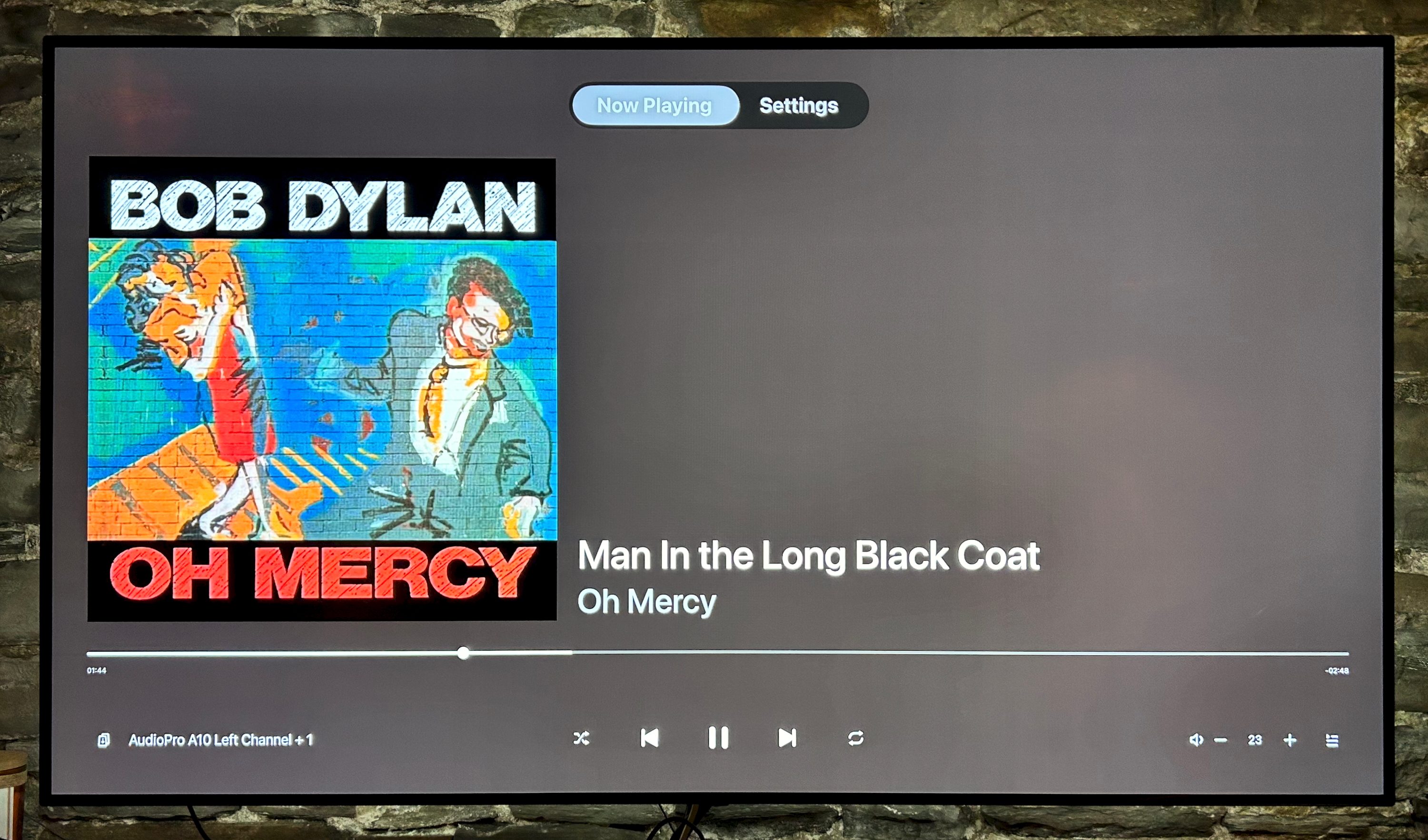
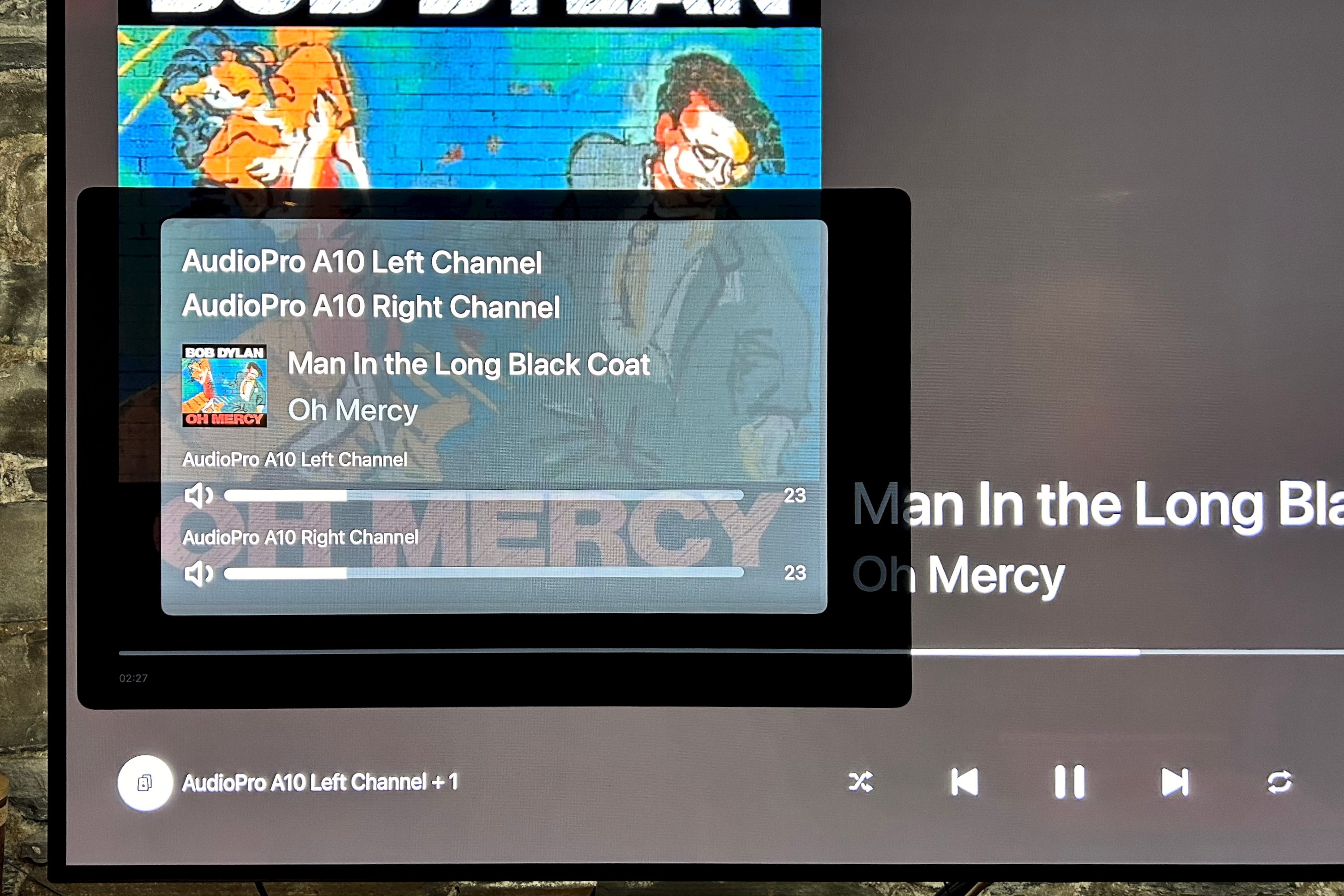
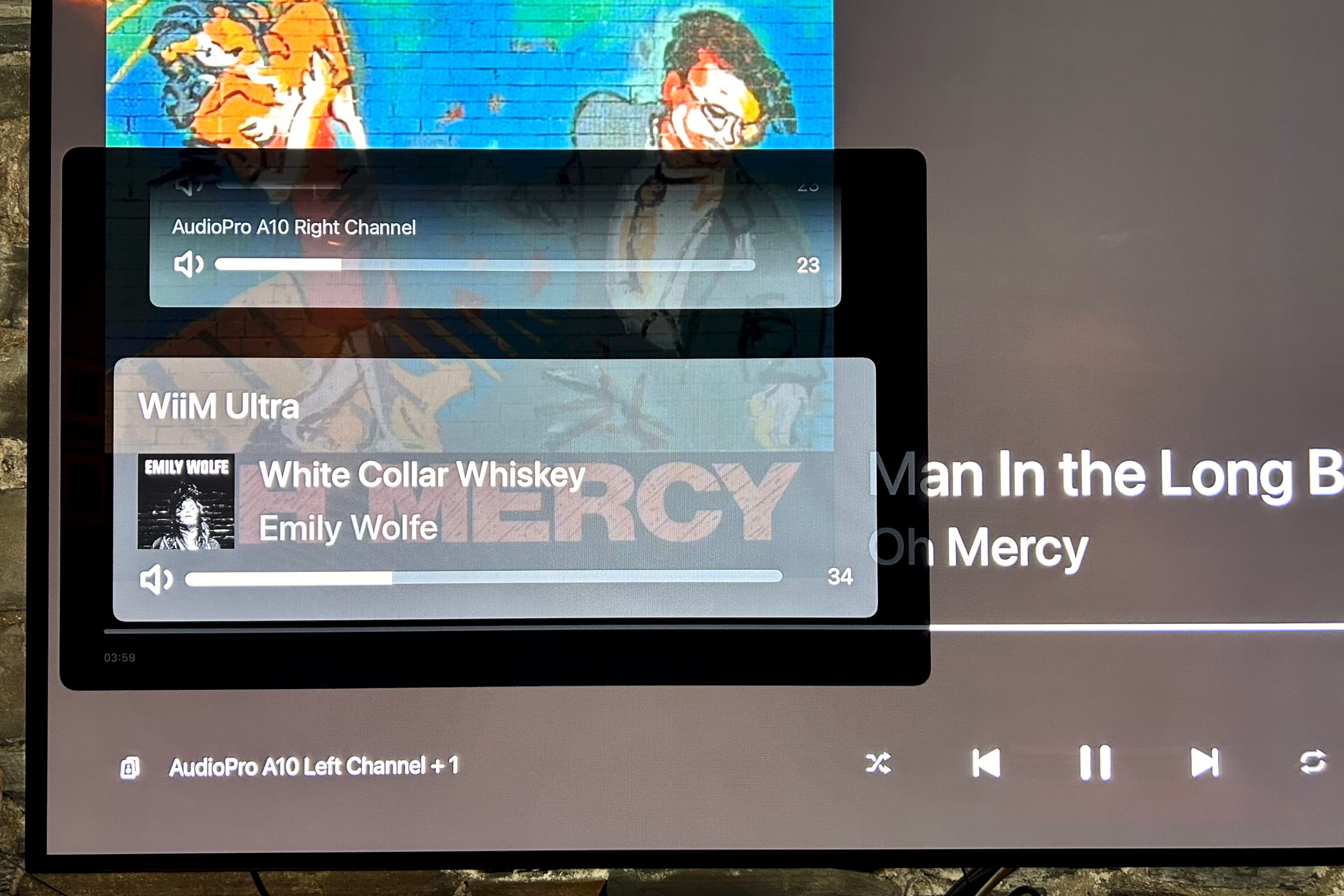
The Wiim Home for tvOS takes a simpler approach — at least for now. More than just a giant version of the song info displayed on the front of its Wiim Ultra network music streamer, the app is similar to native tvOS streaming services, like Apple Music or Tidal. It’s a mini player, giving you playback, volume, repeat/shuffle, and scrubbing controls for the currently playing song, as well as a way to switch between Wiim devices on your network.
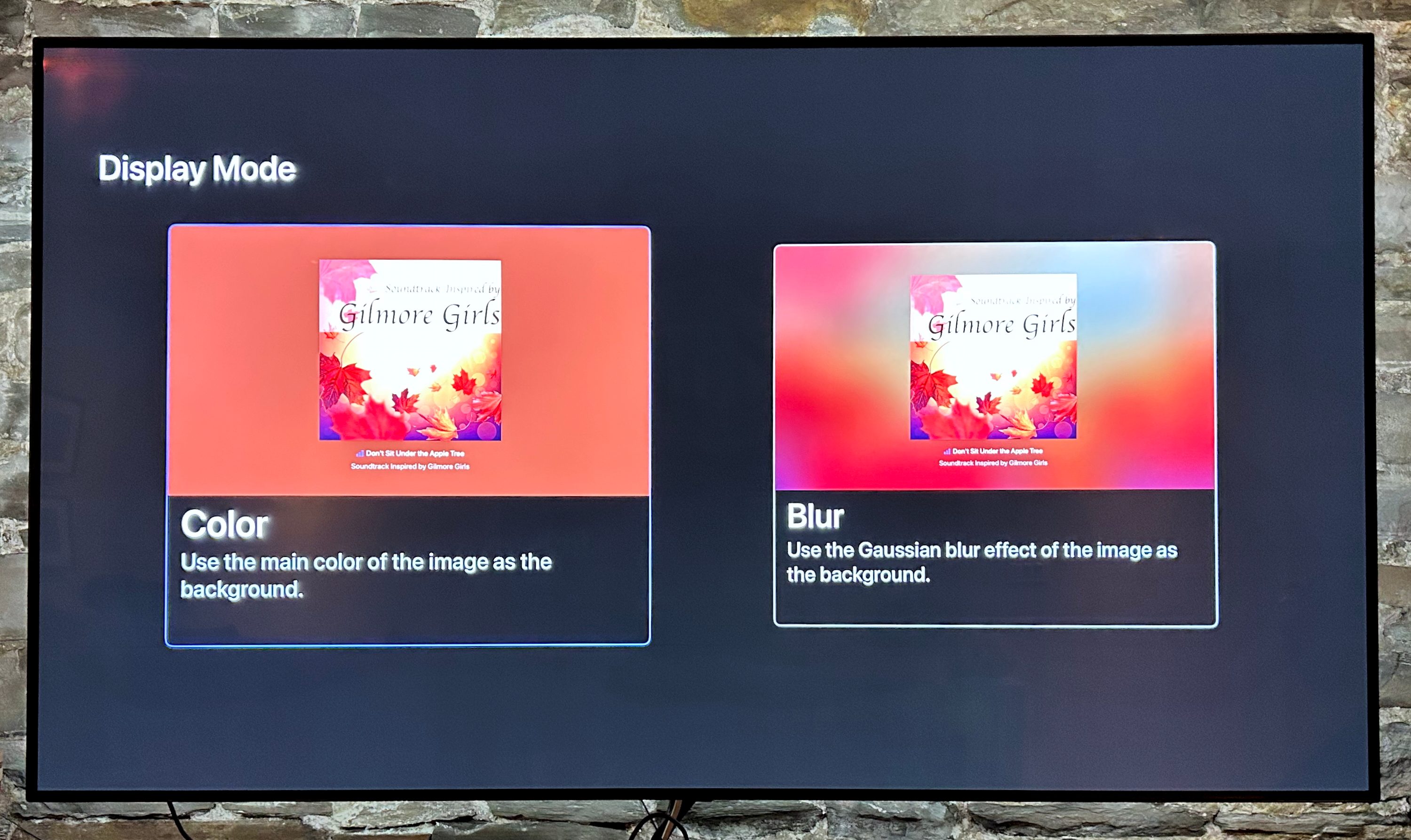
You can pick between two different song info screen treatments — a color block or a blurred background based on the album cover display.
John Darko performed some in-depth testing with the tvOS app and discovered it would display song info on Wiim device, even if he used music sources that didn’t originate from within the Wiim mobile app (like using AirPlay 2 or Tidal Connect). Some bugs were noted: the queue list didn’t populate correctly and the Apple remote’s own play/pause and forward/back buttons couldn’t be used for direct control (you need to use the d-pad to select the relevant on-screen controls).
There’s also no way to search for music to play the way you can in the mobile app, which almost makes the tvOS app the Apple TV equivalent of the top controls on an Audio Pro Wiim Edition speaker.
Wiim says it’s gathering feedback from users on the new app — and has already confirmed an Android TV version is coming — so I wouldn’t be too concerned about these minor issues. Plus, the current feature set may yet evolve.
Should the Wiim Home for tvOS app try to emulate every feature from the company’s mobile apps? I don’t think that’s necessary or needed. For most folks, simply being able to use the biggest screen in the house to show what’s playing, is already more than enough reason to download and install the free app. And as for Sonos? Let’s hope it’s taking notes. Lots of notes.