  1. Home
  2. Mobile
  3. Web
  4. Legacy Archives

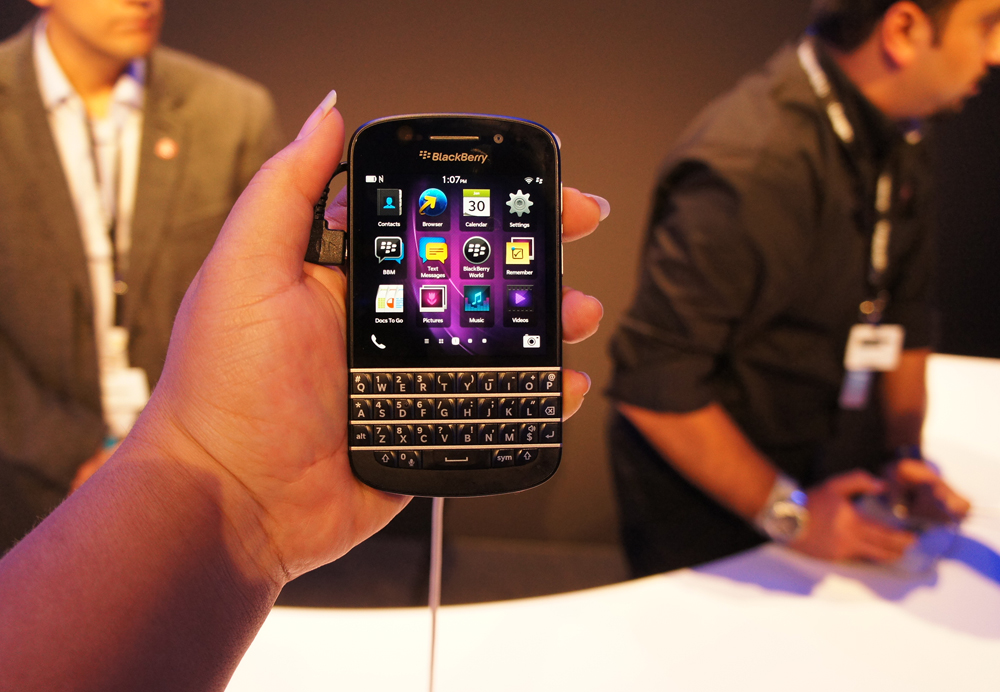
BlackBerry Q10 pops up as an unlocked pre-order, costs more than the Z10

Add as a preferred source on Google

BlackBerry-Q10Check our full review of the BlackBerry Q10 phone.

The BlackBerry Z10 goes on sale in the U.S. with AT&T on March 22, while Verizon will put its black and exclusive white model on the shelves a short while later, on March 28. As you’re no doubt aware, the Z10 is going to be joined by the BlackBerry Q10 later this year, a device differentiated by having a QWERTY keyboard. So far, other than U.S. networks confirming they will be selling the phone, information regarding its release date has been scarce.

Recommended Videos

UK retailer Clove Technology has changed this with the news the Q10 will be released there at the end of April, with pre-orders beginning now for £535, or $811, for the unlocked SIM-free version of the phone. Amazingly, this is more expensive than the Z10, which costs £515 through the company, as well as non-BlackBerry hardware such as the £510 HTC One.

Aside from the screen size and keyboard, the Q10 is almost exactly the same as the Z10 – both are powered by a 1.5GHz dual-core chip with 2GB of RAM, plus they each have an 8-megapixel camera – so the reason why it warrants a higher price escapes us for now. Perhaps it’s purely because it’s an unreleased phone, and the price will drop once it’s officially on sale. Let’s hope so.

If not, it’s not going to help the Q10’s chances of success, as a QWERTY phone doesn’t have the same cache as a touchscreen device, and a lower price point may have helped BlackBerry shift greater numbers of the potentially popular phone. Most buyers will chose to subsidize the price with a contract though, particularly in the U.S., and it has already been confirmed the on-contract cost is set to be the same as the Z10. However, we can’t help feel a $149 price tag with a contract would have made the phone more attractive. Perhaps BlackBerry, Sprint and the others will have a change of heart before putting the phone on sale.

Andy Boxall
Andy has written about mobile technology for almost a decade. From 2G to 5G and smartphone to smartwatch, Andy knows tech.
Snapchat Planets Meaning: Order, Rankings, and How Friend Solar System Works
Snapchat Planets turns your best friends list into a solar system, and yes, your orbit says a lot
Snapchat Planets being shown on the Snapchat app on iPhone.

Snapchat+ includes several exclusive features, but few have generated as much curiosity as Snapchat Planets. Part of the app's Friend Solar System, it transforms your Best Friends list into a planetary ranking, assigning each of your top eight friends a planet based on how often you interact.

From Mercury, which represents your closest friend, to Neptune, which represents your eighth closest, the system offers a quick visual snapshot of your interactions. But what do the different planets actually mean, and how does Snapchat decide who gets which one?

Read more
How to use WhatsApp Web
We'll show you how to use WhatsApp on your desktop or laptop
WhatsApp Web

As one of the most popular messaging services, you’ve already heard of WhatsApp. From its humble beginnings in 2009—two years before Apple introduced iMessage—to its acquisition by Facebook (now Meta) in 2014, WhatsApp has become the dominant messaging platform around the globe.

In recent years, it's grown even more potent with new features like video messages, self-destructing voice messages, the ability to edit sent messages, and more. We even finally got an WhatsApp iPad app in May 2025.

Read more
What is WhatsApp? How to use the app, tips, tricks, and more
From setting it up to mastering hidden features, here is your complete guide to WhatsApp.
WhatsApp app store listing open on iPhone

There's no shortage of messaging apps out there. The past decade has given us more options than we know what to do with, largely because smartphones demanded something better than plain old SMS.

Both the App Store and the Play Store are packed with apps that promise to revolutionize the way we communicate. Most of them didn't make it. The truth is, a messaging app is only as good as the number of people using it, and most apps never cross that threshold.

Read more