
Maybe mobile device makers are running out of ideas. There’s currently an arms race going on between companies as they race to be the first to do, well, pretty much anything. Samsung’s Galaxy Note broke out an old accessory and made it new with the S Pen, the fanciest stylus we’ve ever seen; Apple equipped its iPhone 5S with a fingerprint sensor, turning your finger into your password; and now Samsung has unveiled its latest phone with a first: the Galaxy Round has a curved display. Why a curved display? Hmm … why not? How do all these devices compare once you move past the gimmicks? We find out with a spec showdown.
|
iPhone 5S  |
Galaxy Note 3 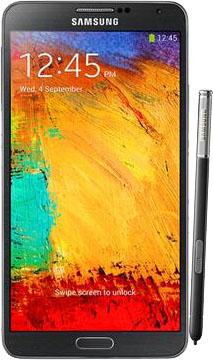 |
Galaxy Round 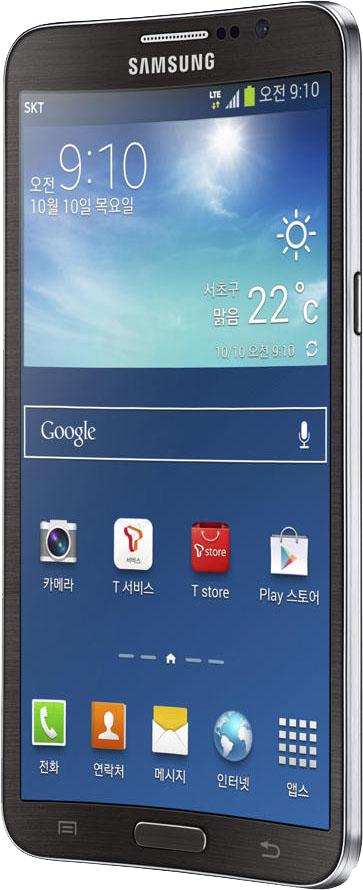 |
|
| Size | 123.8 x 58.6 x 7.6 (mm) | 151.2 x 79.2 x 8.3 (mm) | 151.1 x 79.6 x 7.9 (mm) |
| Weight | 112g | 168g | 154g |
| Screen | 4.0-inch LCD | 5.7 inch HD Super AMOLED | 5.7-inch HD Super AMOLED |
| Resolution | 1136×640 pixels | 1080×1920 pixels | 1080×1920 pixels |
| OS | iOS 7 | Android 4.3 with TouchWiz UI | Android 4.3 with Sense UI 5 |
| Storage | 16/32/64GB | 32GB | 32GB |
| SD Card Slot | No | Yes | Yes |
| Processor | 64-bit A7 chip (M7 motion processor) | Quad-core Snapdragon 800 | Quad-core Snapdragon 800 |
| RAM | 1GB | 3GB | 3GB |
| Connectivity | Wi-Fi, 4G LTE, HSPA+ | Wi-Fi, 4G LTE, HSPA+, NFC | Wi-Fi, 4G LTE, HSPA+, NFC |
| Camera | Front 1.2MP, Rear 8MP | Front 2MP, Rear 13MP | Front 2MP, Rear 13MP |
| Bluetooth | Yes, version 4.0 | Yes, version 4.0 | Yes, version 4.0 |
| Gimmick | Fingerprint Sensor | S Pen | Flexible display |
| Battery | 1570mAh | 3200mAh | 2800mAh |
| Charger | Lightning connector | Micro USB | Micro USB |
| Marketplace | Apple App Store | Google Play Store | Google Play Store |
| Ave. Price | $200+ (with 2-year contract) | $300 (with 2-year contract) | $1,000+ off contract (estimate) |
| Availability | Sept. 20 on AT&T, Sprint, Verizon | AT&T, Sprint, T-Mob, Verizon | Korea (for now) |
You’ll notice the Galaxy Note 3 and Galaxy Round are very similar, as if the Round is just a Note 3 that someone sat on. The Round has a slightly smaller battery, likely because of the concave screen, but that saves it a bit of weight it won’t have to carry. Other than that, it features the same camera on the front and back, the same processor, RAM, internal storage, and display size. The Note 3 does come with the S Pen, something the Round currently lacks. The iPhone lags behind in the screen, looking shrunken along side the two huge Samsung devices. But it keeps the pixel count up and competitive. Its internals appear to lag behind a bit, but the powerful A7 processor and M7 motion processor make up for the lower RAM and Apple optimizes its machines far better, so weaker specs go further.
Which special power do you want?
- iPhone 5S Touch ID button: Apple’s fingerprint sensor works really well. It doesn’t do much except unlock your phone and let you pay for App Store purchases, but we imagine Apple will open it up down the line.
- Galaxy Note 3 S Pen: Samsung has filled the Note 3 with so many pen-based gestures, you’ll be hard-pressed to use it without the S Pen. The handwriting recognition is still slow, but the S Pen is the most accurate stylus on the market.
- Galaxy Round: We can’t think of a good reason why this exists. You can rock the phone to one side to show the time, but non-curved phones like the Moto X already have this feature (and it works better). We don’t get it.
We’re not sure what the price will be for the Galaxy Round – aside from an off-contract price of 1.09 million won ($1017) in South Korea – or when it will become available in the US or UK. What we do know is its a device you’re going to want in your hand before you make a decision about it. It’s going to be all about the feel with the curved screen. Playing around with all of these devices, especially with their unique gimmicks that aim to set them apart from competitors, will give you a better feeling for which is right for you.


