“In its search for the extreme, Sony’s XB800 headphones cross the line from playful to painful.”
- Flashy styling
- Thunderous bass
- Severe lack of balance
- Anemic midrange and treble
- Absent of detail or clarity
“Why you can trust Digital Trends – We have a 20-year history of testing, reviewing, and rating products, services and apps to help you make a sound buying decision. Find out more about how we test and score products.“
Not long ago we reviewed the Sony X (MDR-X10) headphones, a glitzy “hi-fi” headset endorsed by none other than X Factor star and general loudmouth, Simon Cowell. We had high expectations for the X, in part because they are made by Sony – a company with an excellent reputation in the headphone space – but also due to the former record producer’s assertion that the headphones presented sonic clarity reminiscent of being in a recording studio. Unfortunately, what we experienced was ear-pounding bass coupled with acutely sharp treble. If that’s what Cowell was hearing in the studio, it’s no wonder he transitioned to TV.
When Sony sent us its XB800 – part of its “heavy bass” series – we experienced some serious deja vu. To use a geek analogy: The XB800 is the “War Machine” to the X’s “Iron Man.” All of the familiar exterior features are there, but rendered with a bit less panache.
With a design so comparable to the X, and “Extra Bass” stamped right on the box, we had a pretty good idea of what we were in for with the XB800, even before we slipped them on. Still, though it’s not our bag, we realize many people seek out headphones in search of that monster thump, so we tried to remain as objective as possible during our evaluation. Here’s what happened.
Out of the box
At $149, we weren’t expecting the XB800 to duplicate the frills that were applied to the $300 X headphones, but we were surprised at how bare-bones the packaging was. We opened the lid of the XB800’s black box to find the silver and black headset collapsed into a neat package in a plastic inset, along with a small booklet of instructions. We did not find a ¼-inch (TRS) adapter, a carry pouch, or anything else.
Features and design
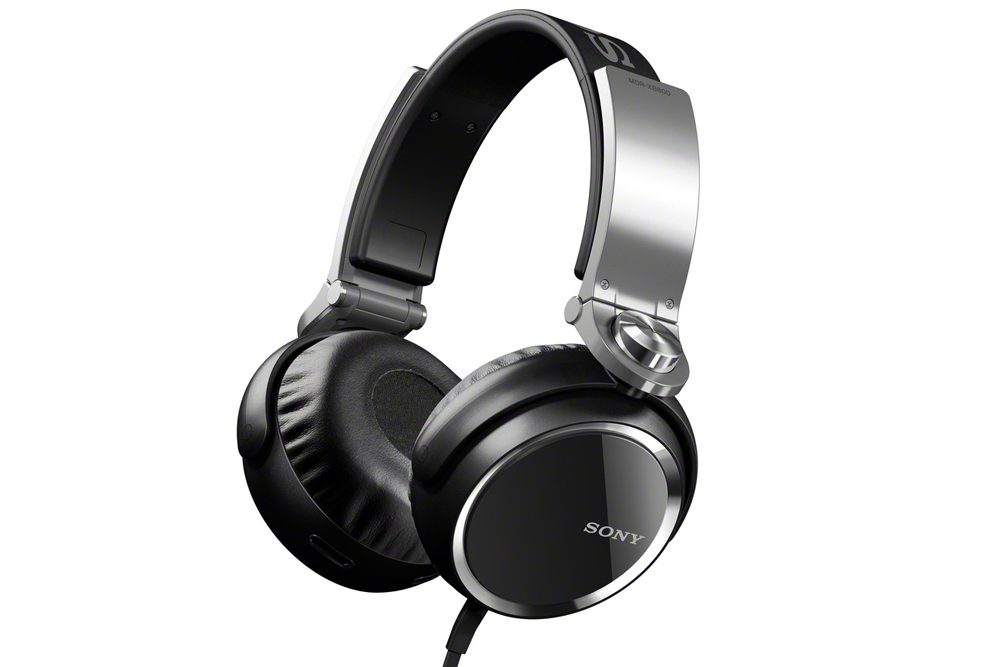
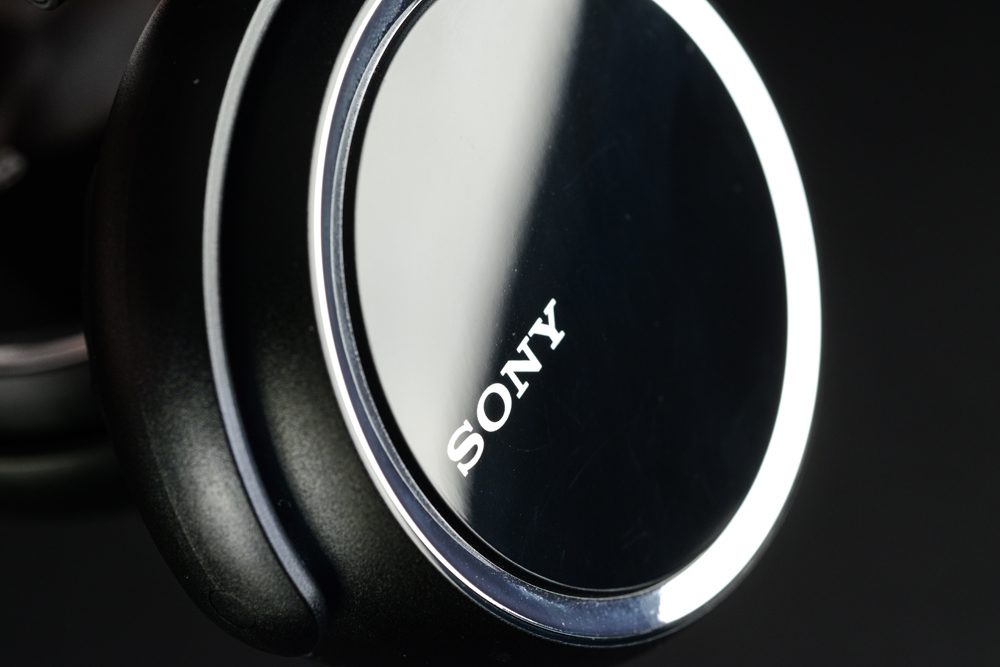
Though less flamboyant than the X, the XB800 still a sports a bit of flash. The exterior of the ear cups are layered in black enamel, with mirrored lines of silver running along the circumference, and a small grey Sony logo in the center.
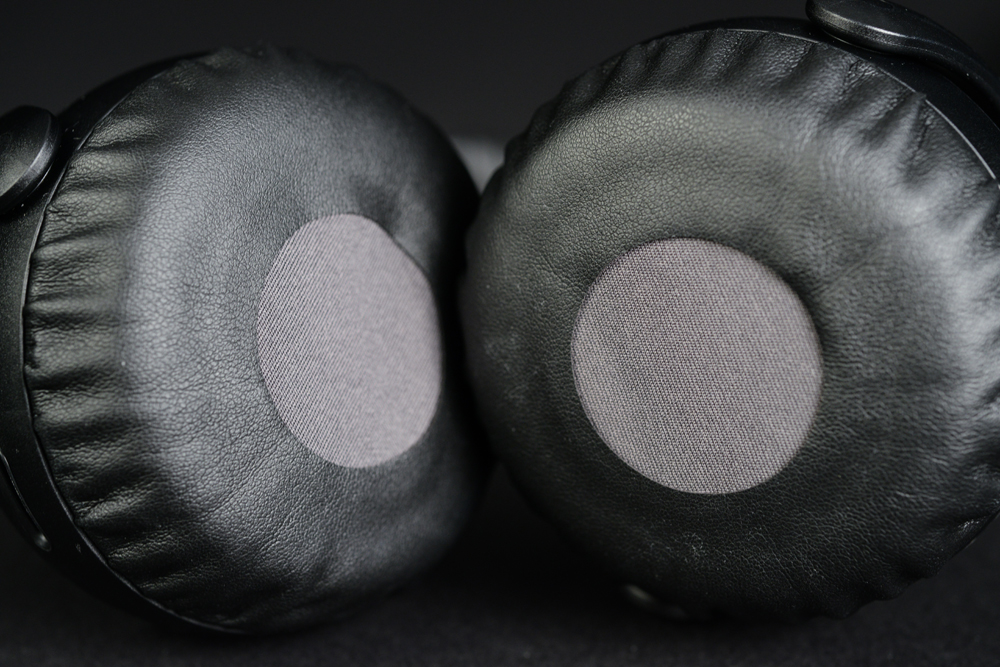
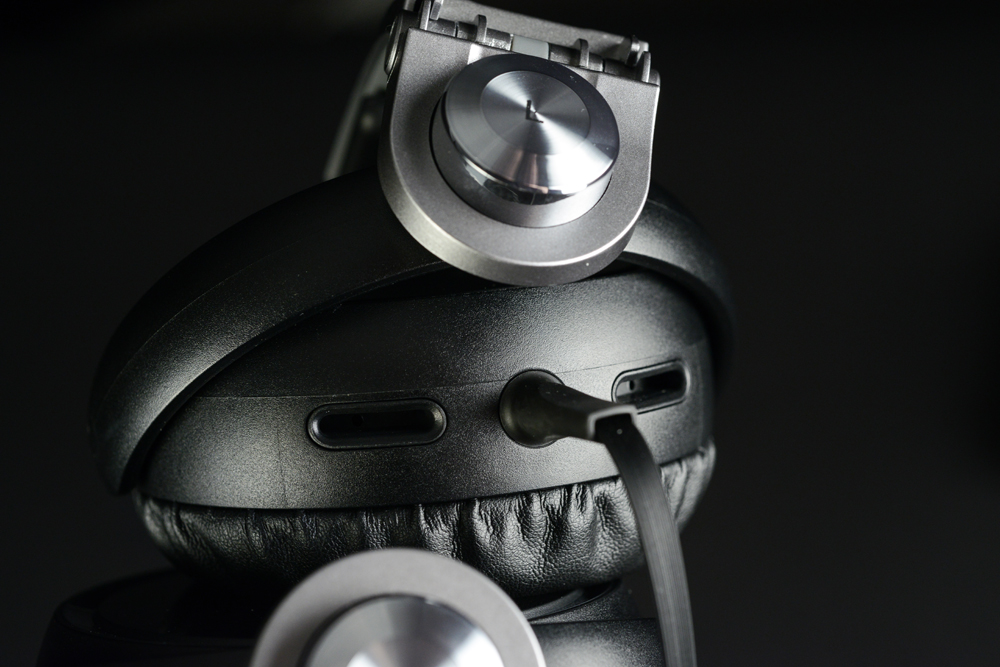
The XB800’s oversized ear pads are covered in black leatherette material and filled with thick foam which conforms to the ear. At the center of each ear pad is a small, circular screen of grey cloth which allows the XB800’s 50mm drivers to blast sound into the listener’s ears.
 |
 |
 |
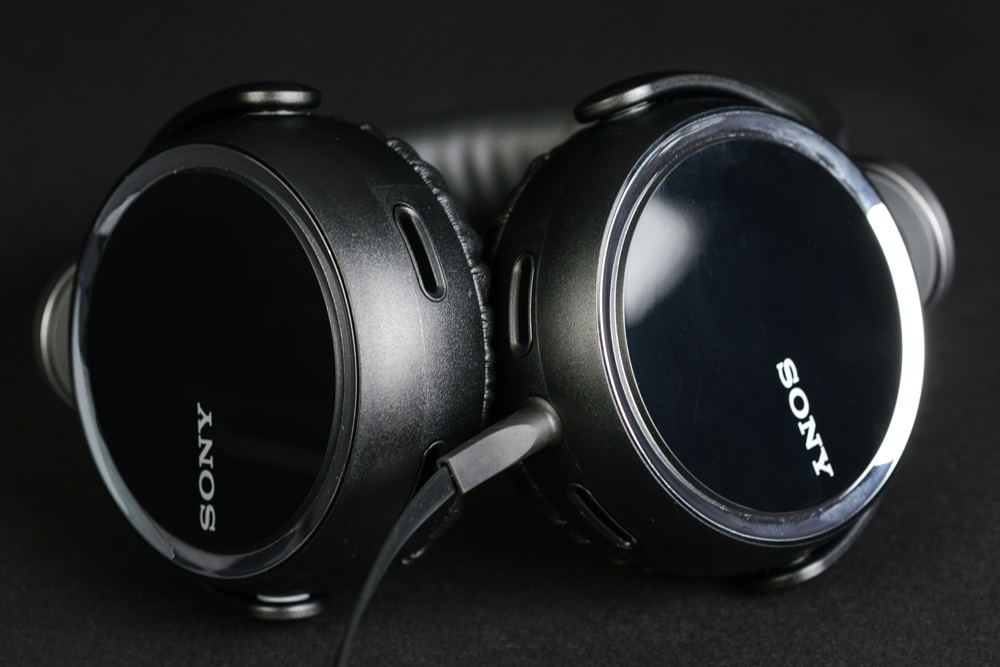 |
The XB800’s headband is made of black plastic, with just enough of a thin leatherette-covered pad wrapped around the center to cushion the top of the head. The black headphone cable is flattened to prevent tangling, and extends 3.9 feet from the left ear cup.
The XB800 feature three hinged sections to allow for compact storage and flexibility in positioning. The ear cups are mounted to black arcs, which allow 180 degrees of swivel along the horizontal axis. Those arched pieces are connected to large, silver knobs that allow 90 degrees of swivel on the vertical axis, which should make DJs happy. Finally, hinges at the base of the headband allow the ear cup assembly to swing in toward the headband for tight storage.
Comfort
Our favorite part of the X was its ergonomic design, and the XB800 continues that tradition.
The XB800 are relatively light for their size and provide a fairly comfortable fit. Foam ear pads collapse snuggly against the head, creating a good seal around the ears with very little pressure.
Audio performance
We auditioned the XB800 with our iPhone 5 and iPhone 3GS using a wide variety of music from our catalog; but frankly, the music we played didn’t make any difference. Try as we might to find positive attributes to explore within the XB800’s extreme sound signature, it all came out pretty much the same: boom, boom, boom. What little there was of a center image was filled with a murky swamp of unrelenting low end which stifled vocals, and pushed all remnants of midrange and treble out to the perimeter.
As one can imagine, our best moments with the XB800 came when listening to hip-hop. Cuing up tracks from low-end monsters like Too Short, Notorious BIG, and Lil Wayne, we found the bass to be fairly tight and well rounded. It was impressive to hear a robust, 60Hz pounding of groove come through with such authority.
 However, there is such a notion as too much of a good thing. The bass was so loud and over-powering, we were frequently forced to reduce the volume, and thus were robbed of whatever treble and midrange had remained audible over the thundering low end. The result was akin to being locked in the trunk of a car with a subwoofer. Vocals, snare snaps, and percussion hits were all distant and weak, greatly reducing the excitement of the music – a tragic irony, since we think the point of big bass headphones is to generate excitement.
As we explored other genres, the persistent theme of exaggerated bass was inescapable. From Bob Dylan, to Muse, we were hard pressed to find anything remotely resembling balance or clarity. Kick drums and bass lines were overpowering, which we expected. But more troubling was the deluge of low-end from guitars, synth patches, and even piano. It seemed the low frequency output of every instrument was boosted in a wide swath, resulting in a mass of low frequencies that took all precedence. String clicks and sharp cymbal attacks were skeletal reminders of the missing instrumental tone that lay beneath the muddled mess of bass.
Conclusion
To be clear, Sony does make a wide variety of well-balanced headphones, suitable for a myriad of applications. And, though not our cup of tea, we can see why the Sony X might be popular with some listeners for its intense sound signature. But in its search for the extreme, Sony’s XB800 headphones cross the line from playful to painful. If you want to hear what the edge sounds like, and all you care about is low end, the XB800 may be for you. However, if you place value on midrange, treble, or general musicality in a headphone, we suggest you look elsewhere.
Highs
- Flashy styling
- Thunderous bass
Lows
- Severe lack of balance
- Anemic midrange and treble
- Absent of detail or clarity