1. Home
  2. Space
  3. News

How Perseverance is dealing with its pebble problem

Add as a preferred source on Google

The Perseverance rover, currently exploring Mars’s Jezero Crater, has run into a challenge when collecting samples from the planet. It recently attempted to collect a sample from a rock called Issole, but sensors detected an anomaly during the collecting process and the rover had to pause its activities.

“This is only the 6th time in human history a sample has been cored from a rock on a planet other than Earth, so when we see something anomalous going on, we take it slow,” wrote Louise Jandura, Chief Engineer for Sampling & Caching at NASA/JPL, in an update.

Image of rock dubbed Issole on Mars captured NASA's Mars Perseverance rover.
NASA’s Mars Perseverance rover acquired this image using its onboard SHERLOC WATSON imager. The camera is located on the turret at the end of the rover’s robotic arm. The image was acquired on January 13, 2022 (Sol 320). NASA/JPL-Caltech

The team found that the issue occurred in a part of the sample collection process called the Coring Bit Dropoff. This is after the rover has drilled into the rock and removed a sample. The drill bit and sample tube then need to be guided from the drill at the end of the rover’s robotic arm and into its carousel, inside the rover chassis. During this movement when it came time to put the sample in the carousel, the rover’s sensors detected more resistance than expected and paused for investigation.

Recommended Videos

When the team examined images of the carousel, they saw that there were some pebbles inside it which likely fell out of the sample tube. It is these pebbles that are preventing the sample tube from slotting neatly into the carousel, so they began their next task of clearing this debris. This involved using the robotic arm to pour the sample back onto the ground.

“I imagine your next question is, ‘Why are you dumping out the contents of the sample tube?’,” wrote Jennifer Trosper, Project Manager at NASA’s Jet Propulsion Laboratory in a further update. “The answer is that, at present, we are not certain how much cored rock continues to reside in Tube 261. And while this rock will never make my holiday card list, the science team really seems to like it. So if our plans go well with our pebble mitigation (see below), we may very well attempt to core ‘Issole’ (the rock from which this sample was taken) again.”

Next, the team will perform tests by rotating the carousel twice and seeing if this moves or dislodges the pebbles. “We expect the data and imagery from these two rotation tests to be sent to Earth by next Tuesday, January 18,” Trosper wrote. “From there, we’ll analyze and further refine our plans. If I had to ballpark it, I would estimate we’ll be at our current location another week or so — or even more if we decide to re-sample Issole.”

Georgina Torbet
Georgina has been the space writer at Digital Trends space writer for six years, covering human space exploration, planetary…
Space is becoming Bezos and Musk’s next data center site, and we have every reason to worry
The AI boom is coming for the night sky
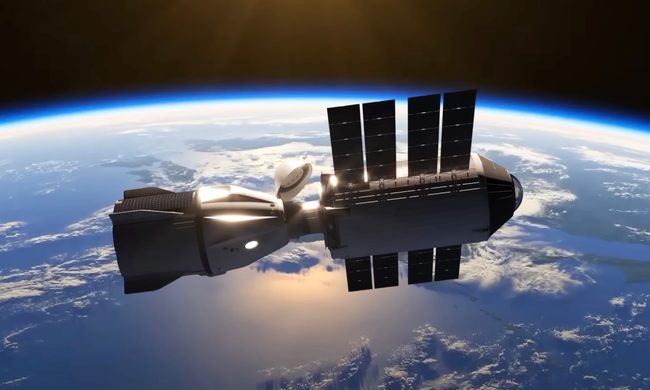
How Vast's space station will look in orbit.

AI data centers already consume vast amounts of electricity and water on Earth, so Silicon Valley has begun looking somewhere considerably more spacious... literally.

Elon Musk's SpaceX and Jeff Bezos' Blue Origin, along with several other companies, have proposed enormous constellations of satellites designed to operate as orbital data centers. However, environmental groups and former space officials are now warning that putting them into orbit at the proposed scale could have severe consequences for Earth's atmosphere and the night sky.

Read more
The first possible exomoon is here, and it makes our Moon look hilariously tiny
Scientists may have found the first exomoon, except this one is the size of Jupiter
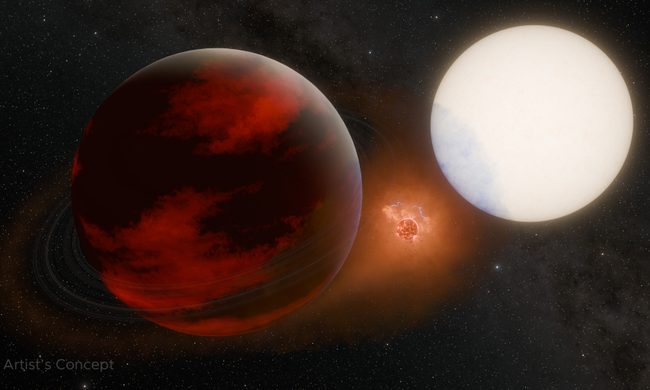
This artist’s concept depicts a potential volcanic moon between the exoplanet WASP-49 b, left, and its parent star. New evidence indicating that a massive sodium cloud observed near WASP-49 b is produced by neither the planet nor the star has prompted researchers to ask if its origin could be an exomoon.

We have already discovered more than 6,000 planets outside of our immediate neighborhood. Yet, finding a moon orbiting one of those distant worlds has proved considerably harder. Astronomers may finally have something close to the real deal, but this particular object stretches the word “moon” almost beyond recognition.

Using the European Southern Observatory’s Very Large Telescope in Chile, researchers detected strong evidence for a moon-like object in the CD-35 2722 system. Further observations are still necessary to confirm the discovery, but it could become the first confidently detected natural satellite outside our solar system. There is still one tiny complication though. This moon is apparently massive.

Read more
China’s answer to SpaceX’s reusable rockets literally catches boosters in a net
SpaceX catches boosters on legs. China just used a net.
Ammunition, Missile, Weapon

SpaceX's playbook for recovering a rocket booster generally involves legs, a precisely controlled vertical landing, and either a concrete pad or a drone ship. 

China just managed to pull off something similar, but in a slightly different way, and on July 10, it tested the method as well.

Read more