It’s almost clockwork now. You get a smartphone, and there are multiple options with differing numbers of cameras. Almost every phone comes with an ultrawide lens, but if you want the best zoom, you need to have the best, largest, and most expensive phone in a particular line.
Ultrawide cameras are fun. They’re great for capturing wide-ranging scenery photos or goofy meme pics, but zoom cameras are great too — and for many reasons. Parents with young kids, people with pets, or just smartphone photographers who want to frame pictures in interesting ways would appreciate having one. It’s time to unshackle the zoom lens from expensive phones
The Apple effect and the SuperRes Zoom solution
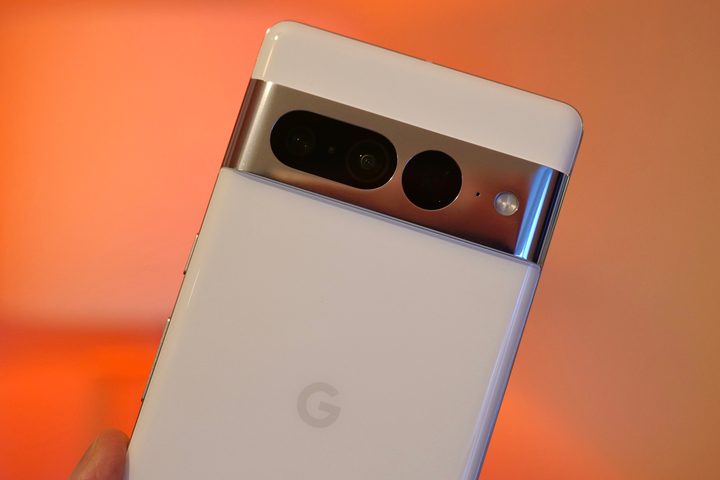
Though Google has named its phones the Pixel line and has heavily pushed its camera technology, it doesn’t equip its phones with as many physical camera options as, say, Samsung. There are a couple of reasons for this.
Once Apple decided the ideal layout was the main camera paired with an ultrawide camera, the whole market followed suit shortly after.
First, cheaper phones are often smaller. As a society, we’ve decided we like our phones to be massive,and unwieldy. This is why Apple decided to opt for the iPhone 14 Plus over a third Mini model. For big-handed people who love to spend time staring at screens for far too long, this is great. For others, not so much. More importantly, it allows phone makers to put more stuff in simply because they have more space! The base Pixels are smaller than the Pixel Pro models, so Google equips them with one fewer camera.
The second reason is essentially down to Apple. When phones initially offered a selection of cameras, it varied between monochromatic lenses, macro lenses, zoom lenses, and so on. Once Apple, with the iPhone 11, decided the ideal layout was the main camera paired with an ultrawide camera, the whole market followed suit shortly after — Google included.
Google has worked around this somewhat with SuperRes Zoom, which is “a computational photography technique traditionally used for astronomy and scientific imaging that produces sharp details when you zoom,” Google explained when it introduced the feature. Taking advantage of its AI magic, users can zoom up to 8x on the Pixel 7 (slightly less on previous models) and capture images from afar. It’s a far cry from the 20x on the Pixel 7 Pro, and it’s important to point out that the Pixel’s 8x zoom isn’t optical — it’s a crop. Google started to get better at doing the whole crop thing with the Pixel 6. That’s one of the advantages of using a large camera. Rather than having to crop 12 megapixels worth of data, as you would on the Pixel 5 and earlier, there’s 50MP available to play with.
Still, it’s not an ideal solution. Comparing optical zoom to digital zoom, as this Android Police piece did, shows a noticeable difference when comparing the Pixel 5 to the 4 XL. In personal experience, the Pixel 6 Pro’s optical zoom was one of its most fun features. The Pixel 7’s zoom doesn’t stack up as well despite its improvements.
All Pixels should have the best cameras
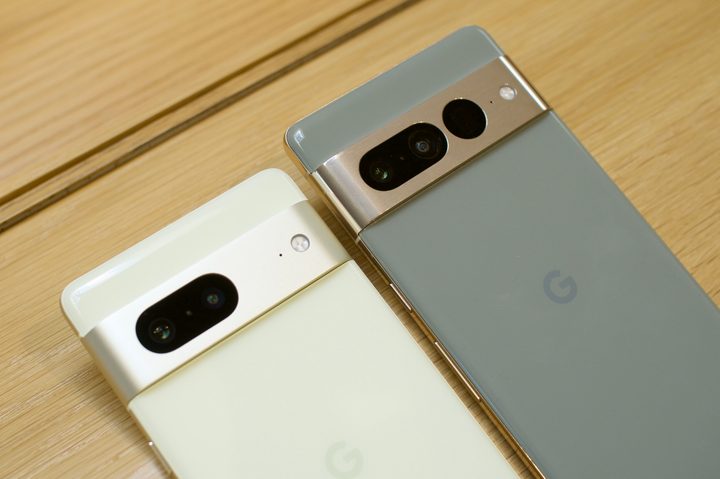
Right now, Google sells at least three Pixels in each generation absent the Pixel 5 (which emerged in a really weird year that we’d all like to forget for many reasons). Starting with the Pixel 8 and Pixel 8 Pro, Google should equip all new phones with the same species of cameras. The space difference between them is not so large that the same camera setup can’t fit in all of them. And, of course, not everyone likes the biggest phones — even if they can afford them. Apple recognizes this with the iPhone 14 Pro, as does Samsung with the Galaxy S22, to a lesser extent. It’s time Google did, too, as it continues to expand its addressable market beyond enthusiasts.
Rather than letting the cheaper model cannibalize the smaller model, Google should make the regular Pixel a better value in its own right.
Certainly, there are arguments that Google would be devaluing its own Pixel Pro line if it makes the base Pixel better. However, the Pixel A-series exists. With the Pixel 6a, the gap between the Pixel A and the base Pixel has diminished. The camera isn’t as good, and the screen is 60Hz, but it’s very similar to a Pixel 6 in use. According to rumors, that gap is set to get much smaller in the following months with the forthcoming Pixel 7a. Rather than letting the cheaper model cannibalize the smaller model, it should make the regular Pixel a better value in its own right.
There’s a lot to be said about smartphone makers slapping weak and useless cameras in phones to bump up numbers. And yes, it’s great for Google and Nothing to ship two thoughtful and good cameras rather than one good one and four meh ones, as we see from Samsung and Xiaomi. At the same time, we’ve been allowed them to hoodwink us a little. The choice isn’t a binary one between the bare minimum of two good cameras or three average ones.