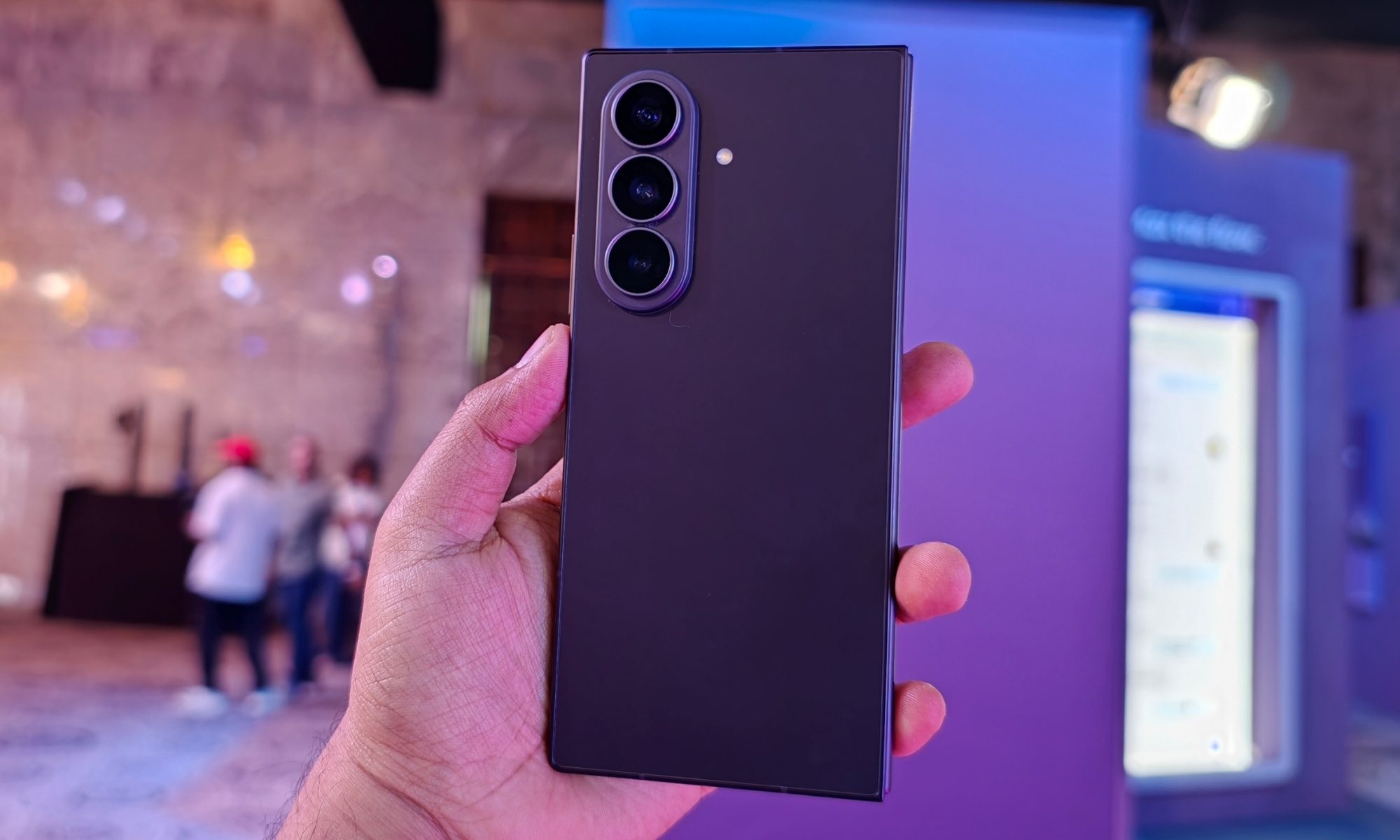
I’ve always been extremely paranoid about magnets getting anywhere near my electronics. I have a vision of screens warping, precious files vanishing into the ether, and my smartphone shutting down forever.
When my son received some magnets as a gift recently, it only took an hour before he’d waved them close enough to my phone that I felt compelled to confiscate them. They’re now gathering dust on the forbidden shelf, along with the glow-in-the-dark gloop, and fake dog poo.
But, as I confined them to toy limbo, I wondered if my fear was irrational. Do magnets actually pose a terrifying risk to our gadgets, and where did we get the idea that they’re dangerous in the first place? Let’s find out.
“This more than likely stems from old electronic devices, such as CRT monitors and televisions, which were susceptible to magnetic fields,” explains Matt Newby from first4magnets, “When placing a strong magnet near one of these you could distort the picture. Thankfully, modern televisions and monitors aren’t susceptible in this way.”
Most modern electronics, like our smartphones, are not going to be adversely affected by small magnets; but is that all there is to it?
How do magnets affect smartphones?
“The vast majority of magnets that you come across day to day, even many of the super-strong ones on the market, will have no adverse effect on your smartphone,” says Matt, “In fact, within the device there will be a number of very small magnets which perform important functions. For example, the new Apple Watch uses a magnetic inductive wireless charging system.”
However, before you get carried away and start rubbing magnets all over your smartphone, there is something else to consider. Matt warned that magnetic fields can temporarily interfere with the digital compass and magnetometer inside your smartphone, and that’s more serious than you may think.
The engineers over at K&J Magnetics actually experimented with an iPhone to show how the sensors inside can be affected by a magnet.
“The problem we found is that a nearby magnet will affect the internal magnetic sensors inside the phone. The compass won’t read correctly,” explained Michael Paul, an engineer at K&J, “What’s worse, if you stick a strong magnet to the phone, you could slightly magnetize some steel components inside, making them act like weak magnets. This can make it difficult to properly calibrate the compass.”
You might think it’s unimportant because you never use the compass app, but that doesn’t mean other apps aren’t relying on the same sensor. Google Maps, for example, uses the sensor to detect which way the phone is facing, and a number of games also rely on it to work out your orientation.
Magnets aren’t likely to kill your smartphone, but there’s a possibility they’ll mess some pretty important aspects up.
This is something that Apple considers in case and accessory design. In Apple’s Case Design Guidelines, there are sections on Sensor Considerations and Magnetic Interference, including the line, “Apple recommends avoiding the use of magnets and metal components in cases.”
Manufacturers have to ensure that the built-in magnetic compass is not affected by their cases. There’s also specific mention of the iPhone 6 Plus, because of potential problems magnets can cause for the autofocus rear camera with optical image stabilization.
It seems as though magnets aren’t likely to kill your smartphone, but there’s definitely a possibility they’ll mess some pretty important aspects up, so why take the risk?
What about hard drives?
The idea that magnets can erase hard drives is pretty popular, especially in the world of entertainment. Walter White infamously used a massive electromagnet to try and wipe evidence off a hard drive in Breaking Bad, for example. Are our fears about magnets erasing hard drives also based on old tech?
“Magnetically recorded data could also be corrupted using magnets – including things like cassettes, floppy disks, VHS and credit cards,” says Matt, “If the data is recorded magnetically, it is possible to corrupt it with magnets.” Fine, but where does this leave Walter White and his hard drive?
“It is theoretically possible that an incredibly strong magnet can corrupt a hard drive if it is wiped directly over the surface of the drive,” Matt explains, “However, hard drives include neodymium magnets inside them to operate the read/write arm and to record data, so again, they aren’t going to be affected by regular sized magnets. If you were to stick magnets to the outside of your PC tower for example, it would not have any effect on the hard drive.”
There’s even better news if you have a flash or a solid state drive. “Flash drives and SSDs are not really affected by a strong, static magnetic field,” according to Michael.
The engineers at K&J actually tried to use neodymium magnets for hard drive destruction, but the results were disappointing. They placed large magnets either side of a running hard drive until mechanical rubbing sounds were audible, indicating the magnets were bending parts inside. Despite this, the files on the drive remained 100-percent intact.
Larger magnets were also used with the drive powered down, but when it was turned back on, the files were still completely unaffected. Apparently, most companies nowadays shred hard drives to physically destroy them, because magnets cannot be relied upon to wipe data.
Do we need to worry about magnets?
“At home you will be surrounded by magnets – they are in every computer, speaker, TV, motor, smartphone, to name just a few applications,” says Matt, “Modern life would simply not be possible without them.”
It seems that magnets have unfairly gotten a bad press, but it’s still important to exercise caution when wielding the strongest magnets.
“Strong neodymium magnets aren’t toys,” explains Michael, “You may have read in the news about how recently, some magnet toys were getting swallowed by very young kids. This is a very, very serious health risk, since multiple magnets can attract to one another through intestinal walls. We’re talking peritonitis, which means immediate surgery is required to remove them.”
Perhaps I’ll leave those magnets on the forbidden shelf after all.