Sometimes, it feels like we’re living in the future. We have self-driving cars, humanoid robots, and tiny computers on our wrists. Now, you can add vertical app drawers on Samsung phones to that list.
Samsung recently rolled out the One UI 7 beta to the Galaxy S24 lineup. Included in that update — something that wasn’t mentioned in any press release or leak leading up to the beta’s release — is a massive change to how the app drawer works.
For the last several years, almost every Android smartphone, regardless of manufacturer, has had an app drawer with a pretty rigid design: swipe up from your home screen to see a vertically scrolling list of your apps. There’s nothing particularly special about it. Swipe up to view your apps and then keep swiping up to scroll through them. It’s quick, simple, and makes sense.
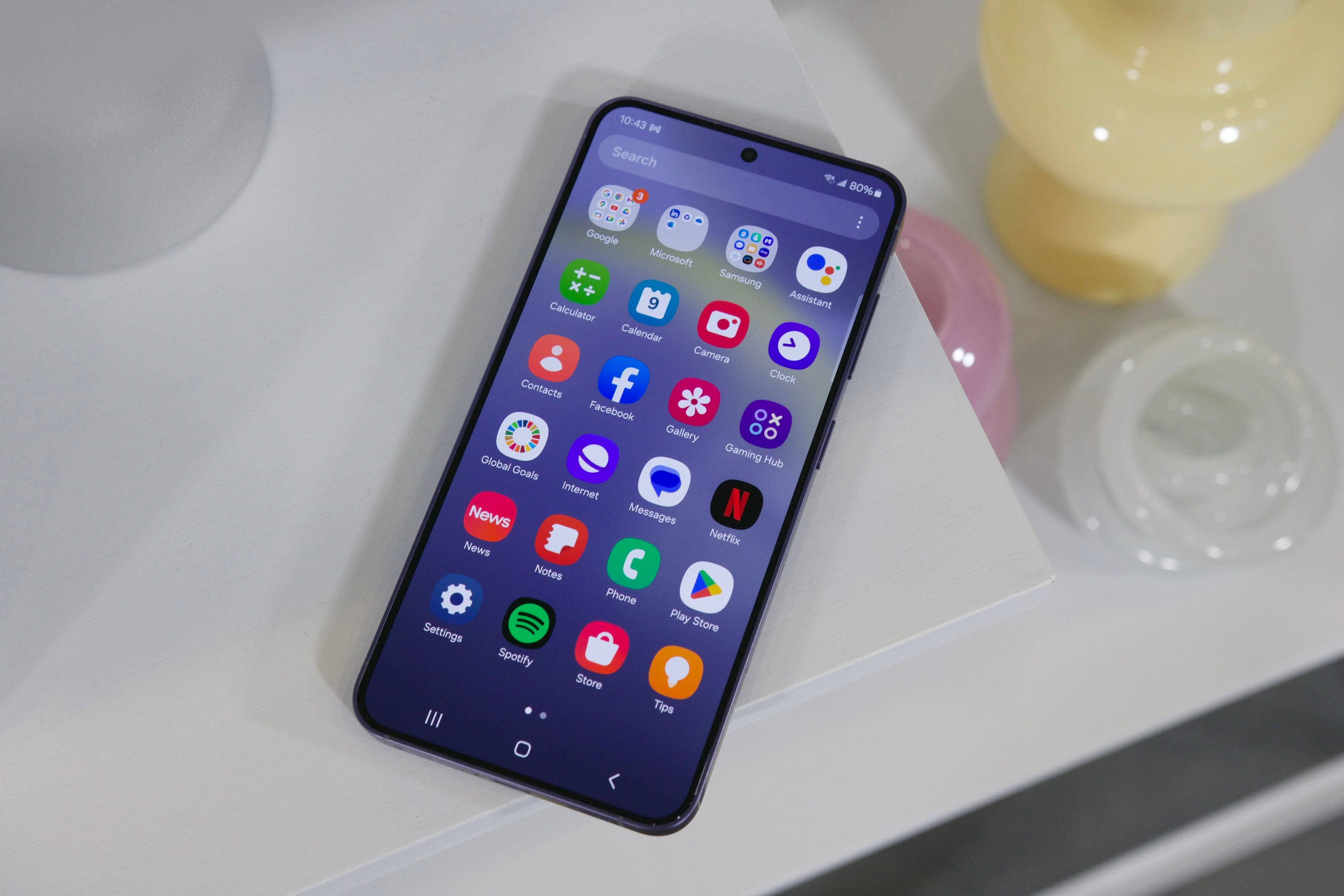
Samsung, however, has consistently ignored this unwritten rule of app drawer design. For years, it’s gone with an opposite approach on its phones. You still swipe up to open your app drawer, but you then swipe horizontally to navigate between app pages. Is this a deal-breaker? No. Is it a silly thing to complain about? Perhaps. But it’s also a bad interface that felt like it was being different just for the sake of it.
With the One UI 7 beta, that issue disappears.
After you download One UI 7 onto your Galaxy S24, swiping up from your home screen now shows — you guessed it — a vertical app drawer. You swipe up to view your apps and keep swiping to scroll through them.
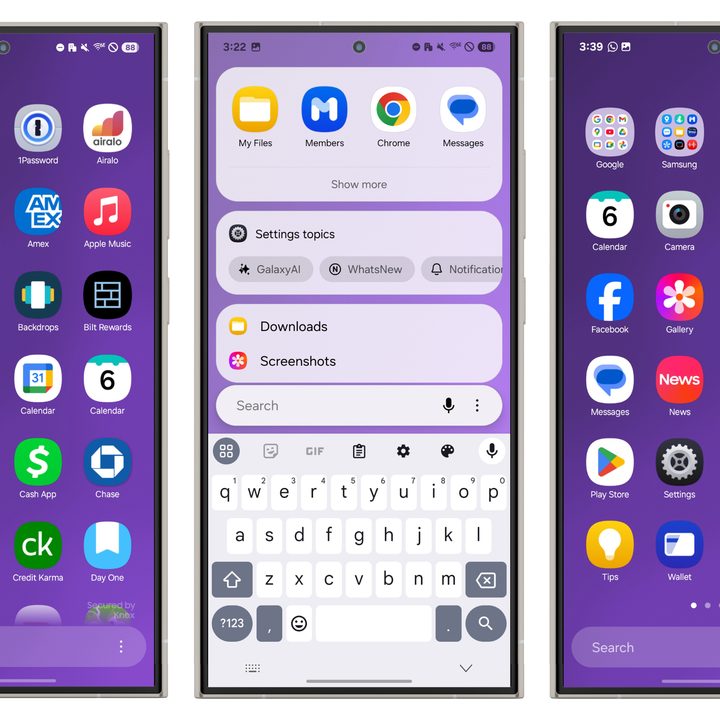
As someone who frequently bounces back and forth between multiple Android phones, most of which use a vertical app drawer, it’s always jarring to go back to a Samsung phone and readjust to the horizontal layout. I’ll also be the first to admit that I have a very weird job, and most people aren’t using phones like I do.
However, I still think this is a positive overall move. Not just for nerds like me who interact with over a dozen different Android phones in any given year, but for everybody. You use a vertical app drawer if you’ve used an Android phone from Google, OnePlus, or Motorola, or even an iPhone. If you switch to a Samsung phone, that change to a horizontal app drawer. While it’s not the end of the world, it is annoying. It’s an unnecessary bit of friction, and thanks to the One UI 7 beta, it’s now gone.
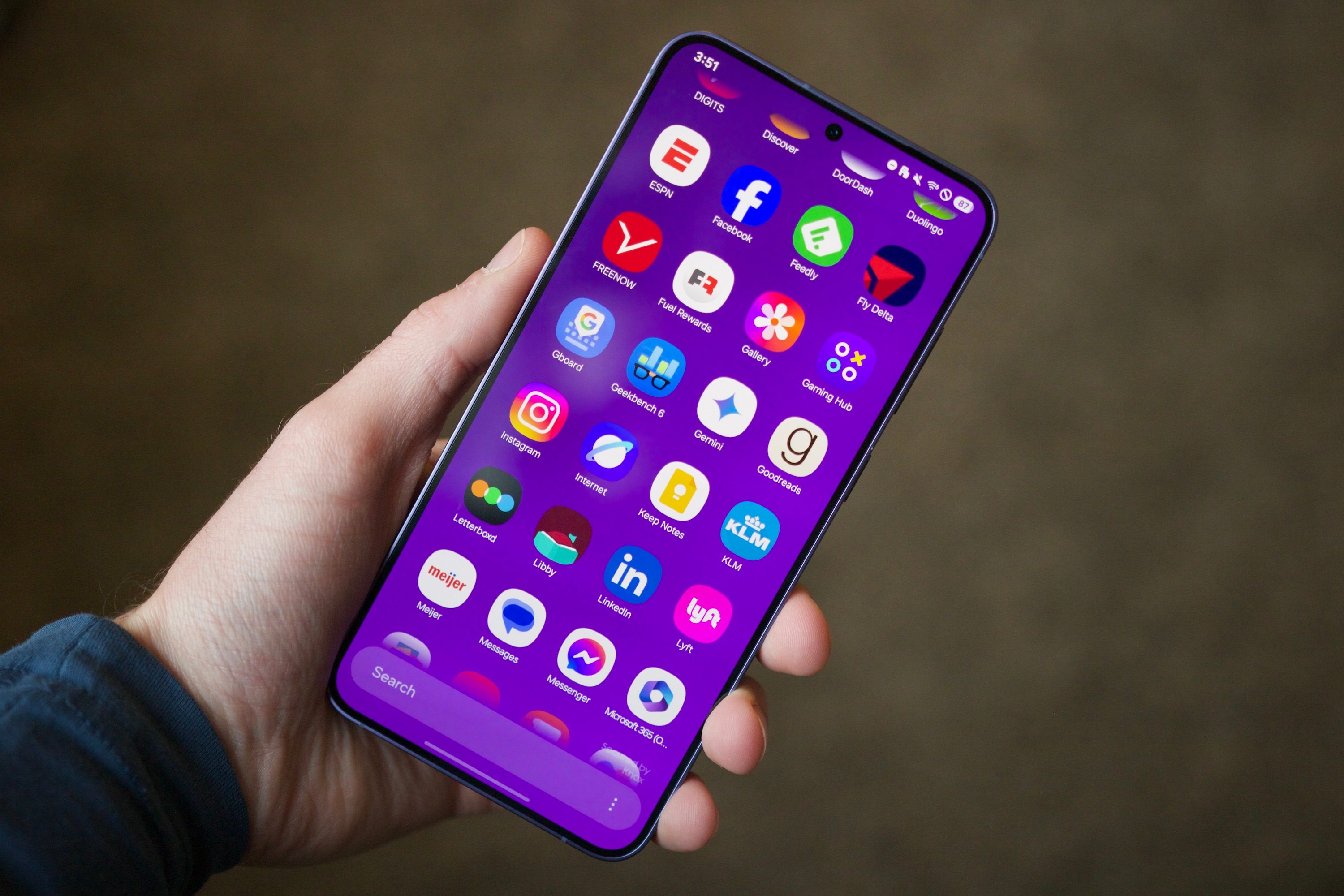
And as far as vertical app drawers go, this is a good one. You can swipe on a right-mounted bar to jump to apps starting with a specific letter, while a search bar on the bottom lets you search for apps and files or do a Google search. And if you prefer the horizontal app drawer (I have many questions for you), just open the app drawer, tap the three dots in the bottom-right corner, tap Sort, and tap Custom order to go back to the horizontal layout.
There’s much more to dig into with One UI 7, including new Galaxy AI features, a redesigned lock screen, updated app icons, and more. It’s available now for the Galaxy S24, Galaxy S24 Plus, and Galaxy S24 Ultra and can be found in the Samsung Members app. It’s still a beta and may not be perfectly suited for daily use, but for the vertical app drawer alone, it might be worth it.