1. Home
  2. Phones
  3. Android
  4. Mobile
  5. News

Samsung’s Galaxy A8 didn’t change much on the outside, but inside’s another story

Add as a preferred source on Google

Samsung took to its home country of South Korea to announce the Galaxy A8 (2016), the successor to last year’s effort that might look similar on the outside, but has been changed around quite a bit on the inside.

Beginning with the design, the most notable change seems to be the increased thickness, with the Galaxy A8 (2016) opting for a 7.2mm all-metal body. By comparison, the original Galaxy A8‘s 5.9mm profile made the phone the slimmest in Samsung’s handset portfolio, but the newer phone’s increased thickness allows Samsung to include a larger 3,300mAh battery than the 3,050mAh power pack found in the original.

Recommended Videos

Taking a peek under the hood, Samsung opts for its octa-core Exynos 7420 chipset and 3GB RAM, the same combination of chipset and RAM found in the Galaxy S6 family of phones. Performance was the least of our concerns on the Galaxy S6, so we expect the same to be true of the Galaxy A8 (2016).

Elsewhere, the phone features an 8-megapixel front-facing camera and 13MP rear sensor. Below that selfie shooter is a 5.7-inch, 1,920-by-1,080 resolution Super AMOLED display, with the Galaxy A8 (2016) supporting Samsung’s Always-On Display technology. This allows the phone’s display to display specific information, such as notifications and the time, when the phone is not being used.

Continuing our tour, the Galaxy A8 (2016) runs Android 6.0.1 Marshmallow under Samsung’s Grace UX, the same software found on the Galaxy Note 7. The phone also supports Samsung Pay, which means the home button under the display doubles as a fingerprint sensor. Finally, the 32GB of native storage can be expanded by up to an additional 256GB through the MicroSD card slot.

If there is enough here to pique your interest, you will need to be comfortable with importing, since the Galaxy A8 (2016) was only announced for release in South Korea so far. Furthermore, the phone carries a 640,000 won (around $590) price tag, so importing the phone will jack that price up a bit. Pre-orders have already started, with the phone going on sale sometime soon.

Williams Pelegrin
Williams is an avid New York Yankees fan, speaks Spanish, resides in Colorado, and has an affinity for Frosted Flakes. Send…
Samsung finally switched to silicon-carbon battery on Galaxy Z Fold 8. What’s so special about it?
One of Galaxy Z Fold 8’s biggest upgrade is hiding inside
Galaxy Z Fold 8 Ultra with Fold 8

Samsung has finally joined the silicon-carbon battery race with its latest batch of premium foldables packing the new battery tech. But details for this change were rather hard to spot on the spec sheets. The company has confirmed during media briefings that the Galaxy Z Fold 8 Ultra, Galaxy Z Fold 8, and Galaxy Z Flip 8 all use silicon-carbon batteries.

Even then, the resulting capacities are hardly record-breaking. The Fold 8 Ultra carries a 5,000mAh battery, the regular Fold 8 gets 4,800mAh, and the Flip 8 has 4,300mAh. Rivals from Honor and Motorola have already crossed the 6,000mAh mark. But the figures only tell part of the story.

Read more
I’ve used foldable phones for years. Here’s how to pick the right one between the Galaxy Z Fold 8 and Flip 8
Samsung’s three new foldables solve very different problems
Galaxy foldables with its screen visible

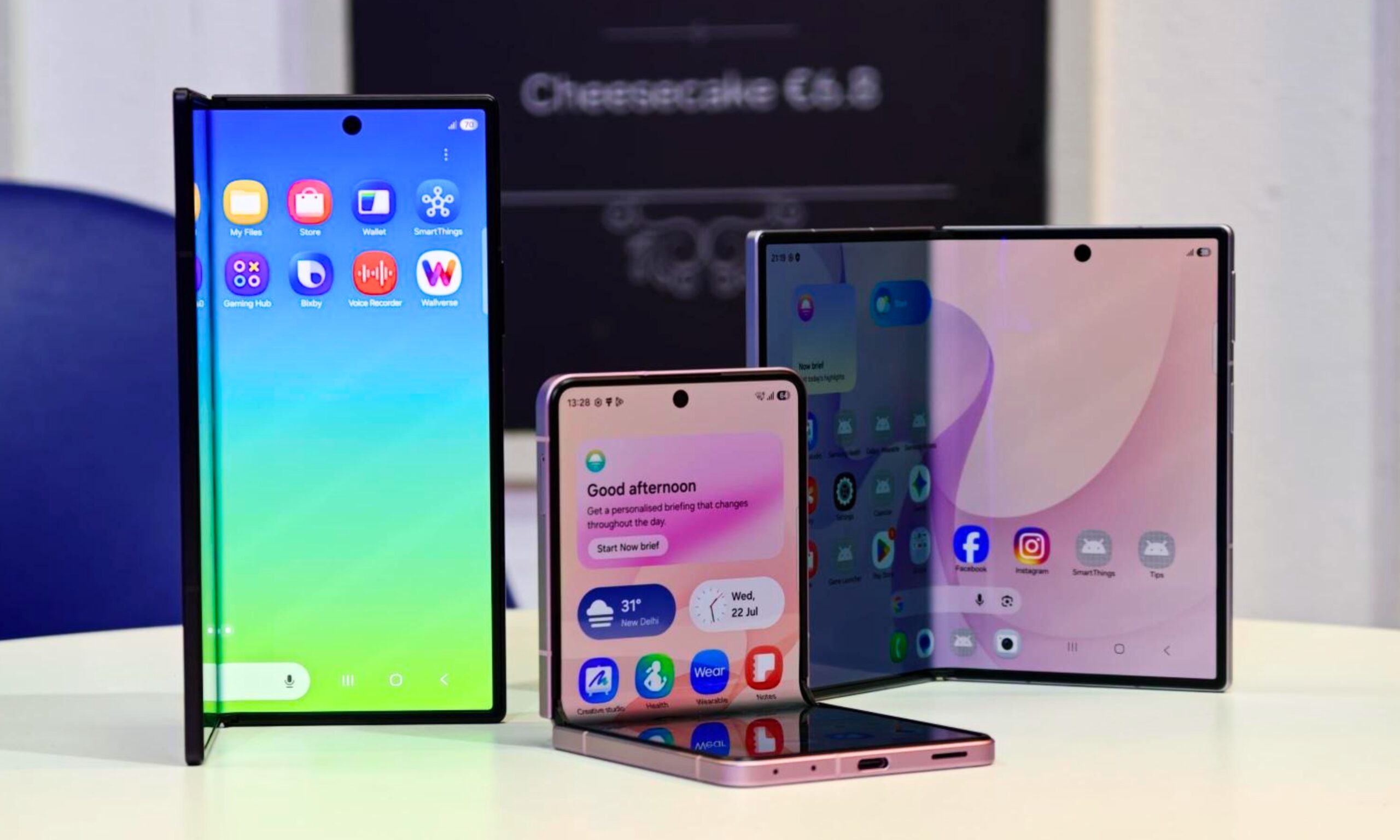
After years of reviewing foldable smartphones, I have learned that choosing one involves much more than what looks pretty or how large you want. Book-style foldables are usually sold as productivity machines, while flip phones cater to people who value portability. Samsung’s latest lineup complicates that choice by introducing two very different book-style models alongside its familiar clamshell.

Most of their shared specifications fade into the background once you start using them. Their shapes and screens have a much greater impact on daily life. So here's how I'd make a decision when choosing between the new Galaxy Z Fold 8 Ultra, Galaxy Z Fold 8, and Galaxy Z Flip 8.

Read more
How to set up selfie video sign-in for your Google account
Your face can now serve as a way to get back into your Google account. Here's how to set it up.
Google account selfie sign in tutorial featured

Losing access to a Google account is rarely a quick fix, but Google has been actively working to make things easier. Last year, the company introduced a feature called Recovery Contacts that lets you designate a trusted friend or family member to verify your identity if you ever get locked out. Now, Google has introduced a new option, one that uses your face to get you back in instead of a phone call to a friend.

Like Recovery Contacts, the new selfie video authentication feature requires some setup before you can use your face to sign into your Google account. This involves recording the reference video that Google will use to verify your identity whenever you attempt to log in this way. Here's how to set up selfie video sign-in for your Google account.

Read more