1. Home
  2. Phones
  3. Emerging Tech
  4. Health & Fitness
  5. Mobile
  6. News

Drop that iPhone! Researchers suggest limiting kids’ screen time to 2 hours a day

Add as a preferred source on Google

Apple’s late co-founder and former CEO Steve Jobs controlled how much his kids used screen-based technology. So did Microsoft’s Bill Gates. But how much of our concern is well-founded, and what impact does screen usage really have on the younger generation? Researchers from Canada have attempted to answer that question with a recent analysis of lifestyle data from questionnaires by 4,520 American kids, ages 8 to 11. It concludes that, at least as far as good cognitive health may be concerned, parents may do well to limit their offspring to two hours of screen time per day, while ensuring that an additional hour is spent being physically active. That should all be topped off by a good night’s sleep of 9 to 11 hours.

“The main findings from this study were that, [firstly], children who met all three of the recommendations had significantly higher measures of cognition compared to children who did not meet any recommendations,” Jeremy Walsh of the Children’s Hospital of Eastern Ontario Research Institute in Ottowa, Canada, told Digital Trends. “[Secondly], meeting the sleep and screen or the screen-only recommendations had the strongest favorable relationship with cognition. [Finally], only 5 percent of the children in this sample met all three recommendations, whereas nearly 30 percent of the children did not meet any of the recommendations.”

Recommended Videos

The study isn’t perfect. Notably, it doesn’t break down what kids are doing with their screen time. There may be (and, we’d guess, probably is) a big difference between playing Call of Duty and using educational apps, but this is not examined by the researchers. Not yet, at least. “The next steps for this research will be to investigate the relationship between screen type and screen content — [for example] educational versus video game versus social media — in these children,” Walsh said.

Ultimately, this snapshot study is just one more piece in a much larger, more complex puzzle concerning the relationship between kids and technology. It’s by no means the definitive study, although conclusions like the ones reached by the researchers will certainly be helpful for later follow-up work. Now if you’ll excuse us, we’re off to get some exercise and an early night’s sleep!

A paper describing the study was recently published in The Lancet Child & Adolescent Health.

Luke Dormehl
I'm a UK-based tech writer covering Cool Tech at Digital Trends. I've also written for Fast Company, Wired, the Guardian…
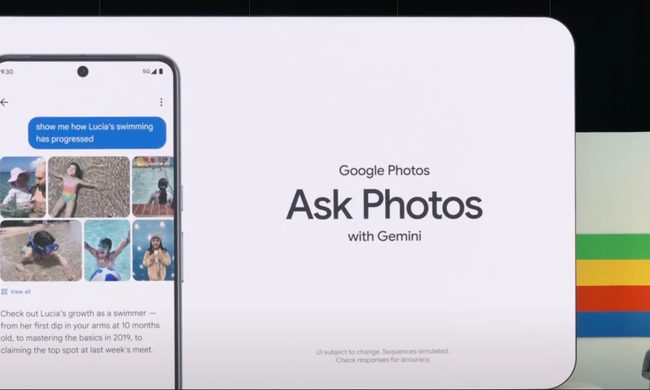
Google Photos adds a quick toggle between AI and classic search
Classic search is finally easier to reach for people who enabled Ask Photos
Google's Ask Photos debut.

Google Photos is giving users an easier way to leave its Gemini-powered search when a simple keyword would do. A new toggle now sits at the top of the results page, letting users switch between Ask Photos and classic search without digging through settings.

The change appears to address feedback from people who opted into Ask Photos but wanted a quicker way to return to classic search when Gemini was slower or less useful for a straightforward query.

Read more
Snapseed Camera now lets Android users save original photos and add geotags
Google updates Snapseed Camera with geotag support and non-destructive photo editing
Snapseed App

Google appears to be quietly turning Snapseed into something more than just a photo editing app. Over the past few weeks, the company has been steadily adding new capabilities to Snapseed Camera, its standalone camera app for Android. The latest update introduces two practical features that many smartphone users have come to expect from modern camera apps: the ability to save an untouched copy of every image for future editing and support for embedding location data directly into photos.

Neither feature is flashy, but together they make Snapseed Camera a more capable photography tool, particularly for users who like experimenting with filters without permanently altering their original shots. According to a report by 9to5Google, the features are rolling out with Snapseed Camera version 4.1.1.x on Android.

Read more
Samsung unveils Galaxy credit card ahead of Galaxy Unpacked
Samsung launches Galaxy Card with cashback on Galaxy purchases
Galaxy credit card

For years, Samsung has worked to turn Galaxy into more than a smartphone brand. Today, the company's ecosystem stretches across foldables, smartwatches, televisions, home appliances, smart home products and digital services. Now, it's adding another piece to that puzzle, one that has little to do with hardware.

Samsung has officially introduced the Samsung Galaxy Card, its first branded credit card in the U.S. Designed in partnership with Barclays US Consumer Bank and operating on the Visa network, the card rewards users for everyday spending while offering significantly higher cashback on purchases made directly through Samsung.

Read more