1. Home
  2. Phones
  3. Business
  4. Mobile
  5. News

South Korean government bolsters battery safety requirements — and we know why

Add as a preferred source on Google

South Korea has no interest in allowing history to repeat itself. On Monday, the nation announced that it would bolster lithium-ion battery safety requirements and carry out regular inspections in order to avoid a repeat of the Galaxy Note 7 debacle, in which mobile handsets would spontaneously combust as a result of faulty batteries.

According to a statement from the Ministry of Trade, Industry, and Energy, lithium-ion battery manufacturers would be “subjected to greater oversight and regular inspections.” And given that these batteries are often found in portable, mobile devices (like smartphones and tablets), these pieces of technology would also have to undergo more consistent safety tests, the Ministry noted.

Recommended Videos

“We ask that the industry shares the view that making efforts to ensure safety is equally as critical as developing new products through technological innovation,” Vice Minister Jeong Marn-ki said in the statement.

Samsung recently determined that battery issues from two distinct suppliers — Samsung SDI Co. Ltd. and Amperex Technology Ltd. — were the cause of the Galaxy Note 7 fires. Ultimately, the South Korean phone maker was forced to recall all shipments of the phone, resulting in a loss of around $5.4 billion in operating profit over the course of three quarters.

To ensure that Samsung learns from its mistakes, the South Korean government has also noted that it will keep a close watch on the company’s attempts to improve battery safety. Included in this strategy are tactics like x-ray testing and more robust standards in the design process.

Moreover, the government says it plans on expanding the sorts of “serious product defects” that companies ought to report to regulators, and will also implement legal changes to allow officials to warn customers not to use potentially dangerous devices, even if they haven’t been recalled.

So here’s hoping that the great Galaxy Note 7 disaster of 2016 is solidly in the past.

Lulu Chang
Fascinated by the effects of technology on human interaction, Lulu believes that if her parents can use your new app…
Samsung finally switched to silicon-carbon battery on Galaxy Z Fold 8. What’s so special about it?
One of Galaxy Z Fold 8’s biggest upgrade is hiding inside
Galaxy Z Fold 8 Ultra with Fold 8

Samsung has finally joined the silicon-carbon battery race with its latest batch of premium foldables packing the new battery tech. But details for this change were rather hard to spot on the spec sheets. The company has confirmed during media briefings that the Galaxy Z Fold 8 Ultra, Galaxy Z Fold 8, and Galaxy Z Flip 8 all use silicon-carbon batteries.

Even then, the resulting capacities are hardly record-breaking. The Fold 8 Ultra carries a 5,000mAh battery, the regular Fold 8 gets 4,800mAh, and the Flip 8 has 4,300mAh. Rivals from Honor and Motorola have already crossed the 6,000mAh mark. But the figures only tell part of the story.

Read more
I’ve used foldable phones for years. Here’s how to pick the right one between the Galaxy Z Fold 8 and Flip 8
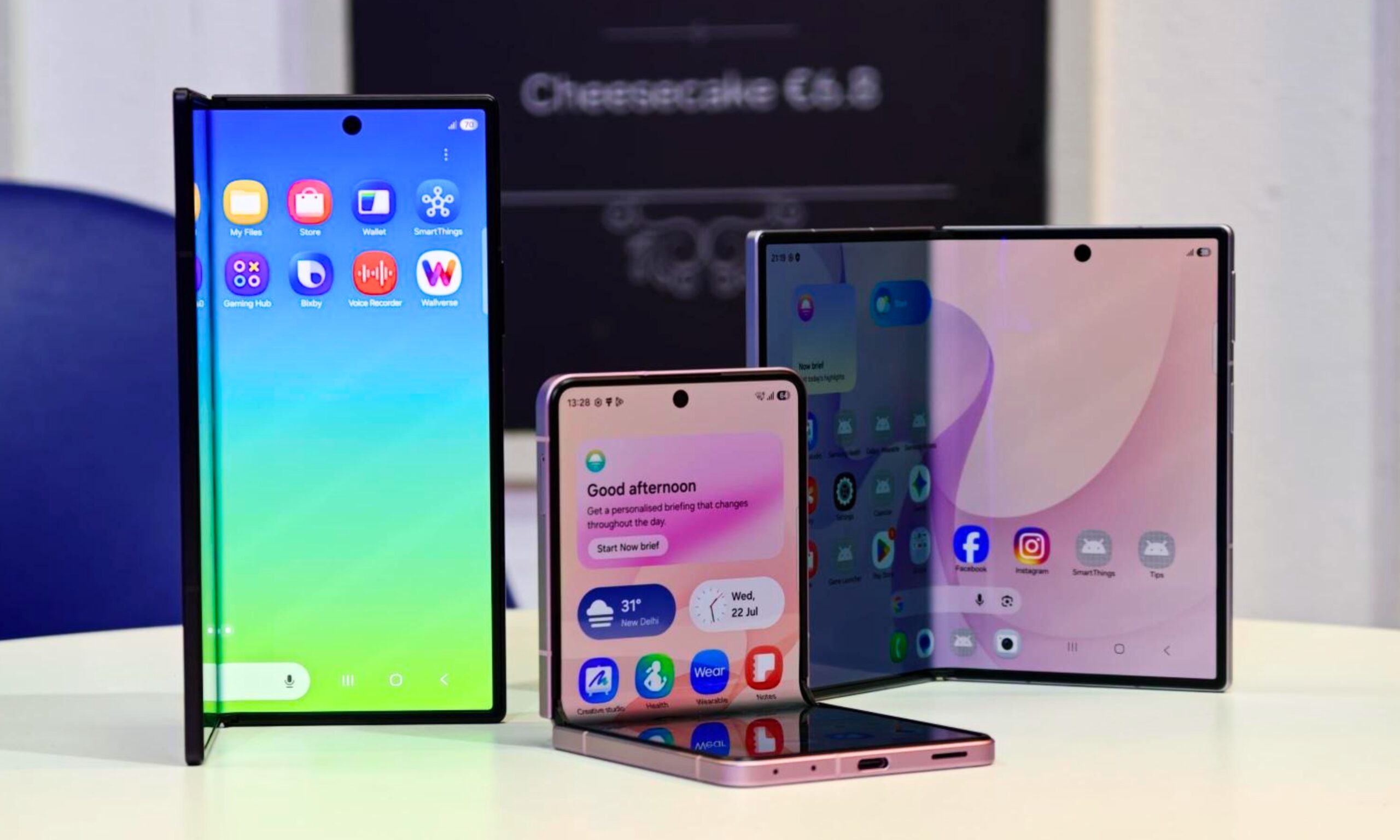
Samsung’s three new foldables solve very different problems
Galaxy foldables with its screen visible

After years of reviewing foldable smartphones, I have learned that choosing one involves much more than what looks pretty or how large you want. Book-style foldables are usually sold as productivity machines, while flip phones cater to people who value portability. Samsung’s latest lineup complicates that choice by introducing two very different book-style models alongside its familiar clamshell.

Most of their shared specifications fade into the background once you start using them. Their shapes and screens have a much greater impact on daily life. So here's how I'd make a decision when choosing between the new Galaxy Z Fold 8 Ultra, Galaxy Z Fold 8, and Galaxy Z Flip 8.

Read more
How to set up selfie video sign-in for your Google account
Your face can now serve as a way to get back into your Google account. Here's how to set it up.
Google account selfie sign in tutorial featured

Losing access to a Google account is rarely a quick fix, but Google has been actively working to make things easier. Last year, the company introduced a feature called Recovery Contacts that lets you designate a trusted friend or family member to verify your identity if you ever get locked out. Now, Google has introduced a new option, one that uses your face to get you back in instead of a phone call to a friend.

Like Recovery Contacts, the new selfie video authentication feature requires some setup before you can use your face to sign into your Google account. This involves recording the reference video that Google will use to verify your identity whenever you attempt to log in this way. Here's how to set up selfie video sign-in for your Google account.

Read more