TikTok has attracted its fair share of fame with its viral short videos, and also for state investigations over its practices. But now, the app finds itself stuck in the middle of a real-life war amid Russia’s ongoing invasion of Ukraine. Its users are engaged deeply in a bitter battle over geopolitical agendas that is unfolding right on their phones’ screens. “This is the first war that will be covered on TikTok by super-empowered individuals armed only with smartphones,” reads a column in The New York Times. And New York Magazine event went ahead with coining the term “WarTok,” a portmanteau for TikTok and war. The Chattanooga Times Free Press called it the first TikTok War.
The situation is tricky enough that the White House felt it necessary to summon 30 famous TikTok influencers to brief them on the ongoing Russia-Ukraine crisis, reports The Washington Post. The session held over a Zoom call was to make them aware of the barrage of misinformation hitting the platform, what’s at stake, and the United States’ role in the escalating conflict.
Direct and proxy state involvement
The move was an unprecedented validation of the role that social media platforms now play on a global scale, especially TikTok. In a speech (via Politico), Ukrainian President Volodymyr Zelenskyy also name-dropped TikTokers among people who can help bring an end to the invasion. However, the White House summoning TikTok stars is not merely a PR exercise, and neither is it TikTok’s first tango with the government.
The platform has been used to spread COVID-19 misinformation and dangerous challenges, but at the same time, it has also been utilized to spread awareness by agencies. But there’s another concerning motive behind TikTokers being roped in by the U.S. government — state involvement in giving a different color to the conflict. Right now, the stakes are much higher than ever before.
@geraldpierre
High enough that the Russian government is also deploying its own cadre of TikTok stars to spread the state’s agenda on the Ukraine situation. An undercover investigation by VICE uncovered a coordinated campaign on Telegram that recruited TikTokers and social media influencers to peddle Russian propaganda in exchange for money. Government authorities are already anticipating graphically disturbing videos from state agents, reports The Guardian.
Too viral for its own good
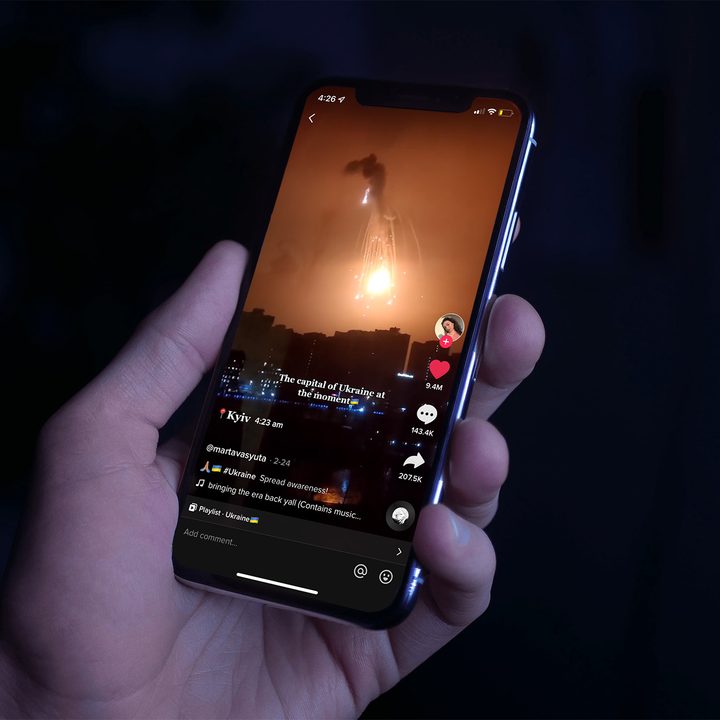
@martavasyuta 🙏🏽🇺🇦 #Ukraine Spread awareness!
But there’s another critical side to TikTok’s involvement here, and that happens to be documentation of history and showing the humanitarian side of the war. A 20-year old refugee named Marta Vastuya who is based in London amassed 36 million views of her videos, raising awareness about the difficulties faced by Ukrainians, The Times reports. Another 20-year old Ukrainian named Valeria Shashenok has seen her account getting millions of views as she shows her life in an underground bunker while the streets witness a bloody struggle and bombs flatten buildings outside, according to The Cut.
TikTok’s role in documenting the conflict has been far ahead of any other platform, even if the rivals offer better video-sharing capabilities. As per The Media Manipulation Casebook, videos with the hashtag #Ukraine have been watched over 26.8 billion times on TikTok as of March 9, while Instagram had only touched the 33 million mark. Videos explaining the confrontation and translating the ongoing war for the English-speaking world have been clocking millions of views.
@valerisssh Nice weather!
♬ Джентльмены удачи – Из к/ф “Джентльмены удачи” – Геннадий Гладков
But at the same time, clips parroting the state’s agenda and/or spreading false information have been going viral as well. As The Guardian notes, content related to the Ukraine conflict is easily getting amplified and going viral, whether it is real or fake. In response to the content war, TikTok restricted users in Russia from posting new videos and livestreaming, but misleading videos already available on the platform can still get amplified via direct sharing and algorithmic recommendations.
The inherent platform problems
TikTok’s mobile app doesn’t directly provide the original date a video was posted to assess its legitimacy, making it even more difficult for an average TikTok user to identify misleading content. Filters, on-screen text, and other visual effects, alongside the ability to mix and change background sound, make it even more difficult to discern if the video is real or not. But there’s a lot more to platform problems here.
TikTok pushes the most popular comment on a post to the top, and if that happens to be misleading in nature, the spread of misinformation is only amplified. TikTok restricts media depicting violence, blood, and corpses as part of its content policy. However, blocking such imagery gives off the impression that the war is not as taxing on human lives as it really is, and that it is all about damage to civilian and government properties.
This image claiming to show "Russian troops hoisting a flag on a public building in Kharkiv" was in fact taken in 2014 and not during the current conflict.
H/T @KianSharifi pic.twitter.com/z9UKWQPia8
— Shayan Sardarizadeh (@Shayan86) February 24, 2022
TikTok Sounds are also playing a huge role in the spread of false information. TikTok gives users a liberal hand at extracting audio from a video and then superimposing it on another video. This has allowed the spread of videos with doctored audio — often lifted from older clip. Media Matters has debunked several videos accumulating millions of views that had sounds pulled from unrelated incidents, some of which are years old.
A video that garnered 7 million videos and purportedly showed Ukrainian soldiers bidding an emotional goodbye was lifted from a 2017 film called The War of Chimeras, and was debunked by Politifact. Videos clipped from military training exercises, and even video games, according to USA Today, have been intentionally shared on the platform as jets dropping bombs in the warzone.
Setting social media precedent in a war-torn world
TikTok has actually served as a mobile theater, giving the world a front-row seat to the bloody conflict even before it started. TikTok users hailing from border regions and villages documented the movement of troops and mobilization of army vehicles weeks ahead of the on-ground skirmish. But at the same time, it risked the spread of content that might invoke mass hysteria and propaganda if it wasn’t properly verified. Even journalists and media houses can fall victim to such misleading content, as noted by Sandra Joyce from the cybersecurity and global intelligence firm Mandiant.
Then there’s the financial scam side of TikTok in the middle of the Russia-Ukraine conflict. Bad actors impersonating Ukrainian citizens and livestreaming to show the on-ground situation have collected virtual items as sympathy reward from viewers that they could later monetize, reports Financial Times. But why would someone make a fake video documenting the havoc in Ukraine?
Experts talking to NPR point the fingers toward the desire for social media popularity and money. Right now, TikTok finds itself in the trickiest situation as a social media platform with vested interests that will have huge geopolitical ramifications, especially with the Chinese government also being a stakeholder in parent company ByteDance. Irrespective of the conflict’s consequences, TikTok’s role today will serve as a huge lesson for social media platforms tomorrow.