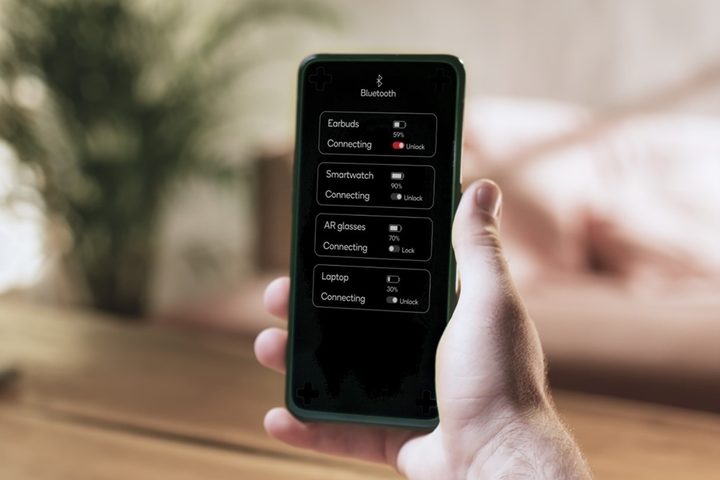
Whether you love or hate the iPhone, there’s no arguing that one area in which Apple excels is building ecosystems. Twenty years ago, the iPod spurred Mac adoption, and today the company has a broad array of products and solutions that work together seamlessly from your pocket to your living room and beyond.
Whether that’s copying text on your MacBook and pasting it on your iPhone, unlocking your Mac with your Apple Watch, or effortlessly moving whatever you’re listening to between an Apple TV, HomePod, and set of AirPods, Apple has almost perfected the magical “just works” experience of using its products together.
In more recent years, Google and Samsung have worked to do the same within their respective ecosystems, with Pixel and Galaxy phones joined by accompanying earbuds, tablets, and Android TV solutions. Now, Qualcomm is coming to the table with a much better solution that promises to unify all Android devices and accessories so they “work as one.”
This is Snapdragon Seamless
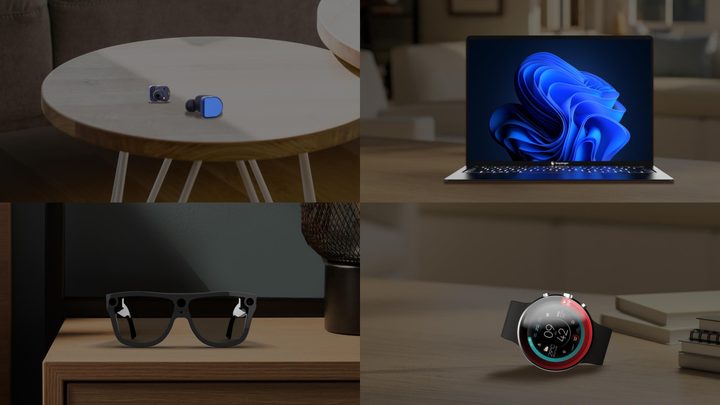
During today’s Snapdragon Summit, Qualcomm announced the next innovation in its Snapdragon chip technology. Dubbed “Snapdragon Seamless,” it’s a cross-platform solution that will allow all devices powered by its Qualcomm Snapdragon series of chips to share information and provide easy multi-device experiences so they can work as one integrated system.
Unlike Apple, Google, and Samsung, this won’t be another one-vendor ecosystem. Qualcomm’s Snapdragon chips are found in nearly every Android smartphone and tablet on the market, and they’re starting to find their way into more traditional Windows PCs, too. Hence, Qualcomm has a large list of partners to choose from, and it’s already signed on Microsoft, Android, Xiaomi, Asus, Honor, Lenovo, and Oppo for its first collaboration “to create multi-device experiences enabled by Snapdragon Seamless.”
While the announcement only came today, Qualcomm and its partners have clearly been working on this for a while, as the chipmaker says the first devices with Snapdragon Seamless could arrive later this year. The solutions go beyond merely exchanging data between phones, tablets, and laptops to even empowering mice and keyboards to work seamlessly across multiple devices.
The best part of this is that you won’t need to worry if you’re using a Microsoft Surface with an Asus smartphone and a Lenovo tablet; they’ll all just work together as one happy family of devices — as long as they have Qualcomm’s latest silicon, of course.
“Snapdragon Seamless fundamentally breaks down the barriers between [manufacturers], devices, and operating systems. It’s the only cross-device solution to truly put the user first,” said Dino Bekis, Qualcomm’s vice president and general manager of wearables and mixed signal solutions.
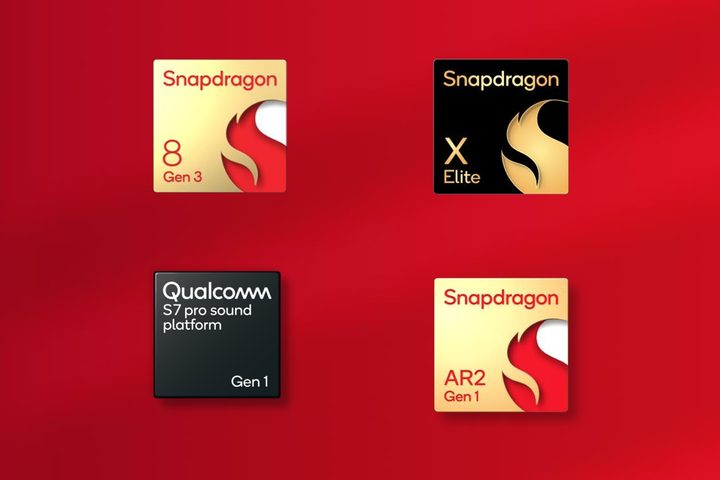
Unsurprisingly, Snapdragon Seamless is etched into Qualcomm’s latest chips, so don’t expect it to appear as an update for older devices. However, it should be available in all the new flagships, as the company says it’s incorporated into the new Snapdragon 8 Gen 3 mobile platform — the chip that will undoubtedly power next year’s Samsung Galaxy S24 series — as well as the Snapdragon X Elite PC chipset and wearables and hearables that use Qualcomm chips, such as the Snapdragon Sound platform thatvrelies on the Qualcomm S7 Pro Gen 1 chip.
For now, Qualcomm is focusing on those specific platforms, but it plans to extend Snapdragon Seamless to extended reality hardware and automotive and Internet of Things platforms down the road.
What can Snapdragon Seamless do?
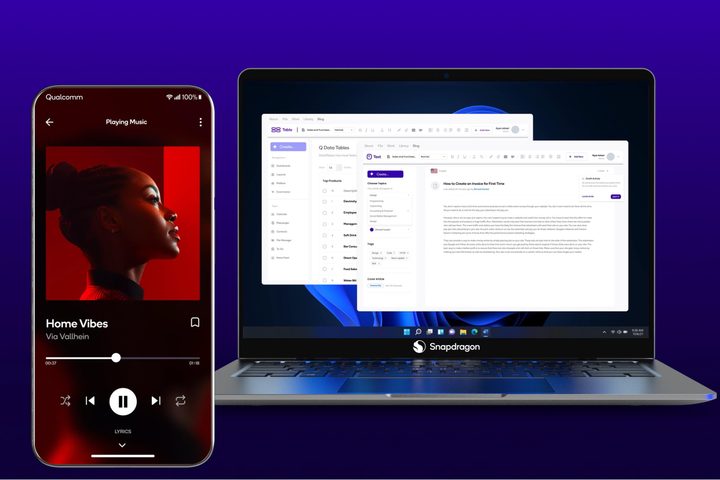
Out of the gate, Snapdragon Seamless will cover the most popular multi-device scenarios, providing easy discovery of devices on multiple platforms, file transfer, screen and file sharing, and intelligent audio switching.
In practical terms, this means you’ll be able to drag and drop a file from a Qualcomm-powered laptop to your Android smartphone without the need to go through a complicated pairing and discovery process; both devices should immediately be visible to each other as a possible destination for your files. The same technique would be used to initiate a screen-sharing session.
Intelligent audio switching is something that Apple, Google, and Samsung users are likely already familiar with. It allows AirPods, Pixel Buds, or Galaxy Buds to transparently hand off audio between their respective devices — such as when a call comes in on your iPhone while you’re listening to music on your MacBook.
However, Snapdragon Seamless will take this a step further, thanks to its cross-platform nature. For the first time, you’ll be able to do this even when all of your devices are made by different vendors — including the earbuds.

While extended reality (XR) applications are a bit further down the road, Qualcomm showed off an XR Fitness demo that illustrated how a pair of smart glasses could show a personal trainer and workout metrics superimposed over the wearer’s eyes. This was intended to show the scale of the Snapdragon Seamless platform, which would presumably be used to link up the glasses to whatever device is being used to host the workout.
Again, the biggest catch to all of this is that these devices need to be powered by Qualcomm’s Snapdragon chips. That’s very common among Android smartphones and tablets, but less so with laptops, headphones, and earbuds.
Qualcomm naturally hopes that Snapdragon Seamless will encourage more manufacturers to adopt its latest Qualcomm chips, but there’s one thing that seems clear — Apple fans are going to be left out of the multi-platform party. Although Qualcomm says that Snapdragon Seamless is “open to everyone,” that should be read as everyone who builds Android, Windows, and Snapdragon devices. With the exception of its 5G modem chips, Apple doesn’t rely on Qualcomm’s Snapdragon platform, which means that iPhone and iPad owners are just going to have to continue enjoying life in their own walled gardens.