1. Home
  2. Space
  3. Emerging Tech
  4. News

SpaceX will attempt yet another high-velocity rocket landing tonight. Here’s where to watch

Add as a preferred source on Google

Update: The launch has been delayed, and is now scheduled for no earlier than Friday, May 27th at 5:39pm ET. Stay tuned for updates

SpaceX hopes to safely bring another Falcon 9 rocket home tonight after launching a Thai telecommunications satellite over 20,000 miles above Earth, into a high-elliptical orbit known as geostationary transfer orbit (GTO). The rocket is scheduled to lift off from Cape Canaveral at 5:40 PM EST. As usual, SpaceX will webcast the event for those who can’t attend .

THAICOM 8 Hosted Webcast

This launch marks SpaceX’s twenty-fifth flight, and it isn’t the first time the aerospace company has delivered a payload so far from Earth. Earlier this month, SpaceX brought the JCSAT-14 satellite to a GTO before the first stage rocket decoupled, began its descent, and attempted to land hundreds of miles off the Florida coast on an autonomous spaceport drone ship (ASDS) named “Of Course I Still Love You.”

Recommended Videos

Prior to that launch, both Elon Musk and SpaceX shared doubts about the rocket’s ability to return home safely – the mission’s high-elliptical orbit meant high velocity that would make landing much more challenging. Reentry heat would would be far higher than previous returns, and the additional fuel used to achieve velocity would inhibit controlled engine burns. However, despite extreme reentry heating and limited fuel, the rocket stuck its landing.

SpaceX is surely more confident after this year’s two safe drone ship landings and last year’s successful land landing. That means if this evening’s rocket does safely return home, SpaceX’s will have to find storage room for four rockets. Still, a series of failed attempts –and even a failed launch– last year mean it’s never a sure bet.

This launch’s payload is Thailand’s Thaicom 8 telecommunications satellite, which –if successful– will be the second Thaicom satellite SpaceX has deployed into orbit.

Dyllan Furness
Former Contributor
Dyllan Furness is a freelance writer from Florida. He covers strange science and emerging tech for Digital Trends, focusing…
SpaceX Starship reaches orbit for the first time but its historic flight ends early
Starship reaches orbit for the first time and deploys 26 Starlink satellites before an early splashdown.
spacex-starship

After 13 suborbital test flights and more than $15 billion in development costs, SpaceX's Starship has finally reached orbit. The 407-foot megarocket, the most powerful ever built, lifted off from Starbase, Texas, on Monday and delivered its first real payload on it's 14th attempt. The celebration came with an asterisk, though, since SpaceX had to cut the planned 10-hour mission to roughly three hours.

https://twitter.com/SpaceX/status/2104601695711904180

Read more
Starship is finally going orbital, and SpaceX has picked September 22
Flight 14 is aiming for orbit, Starlink V3 deployment and a very long day in space.
Starship rocket.

SpaceX is finally ready to give Starship its biggest test yet. The company says the massive rocket's 14th test flight is scheduled for September 22, when it will attempt to put the upper stage into Earth orbit for the first time. The launch is currently pending regulatory approval, with a 75-minute window opening at 7:15 a.m. CT.

Starship has 26 Starlink satellites to deliver

Read more
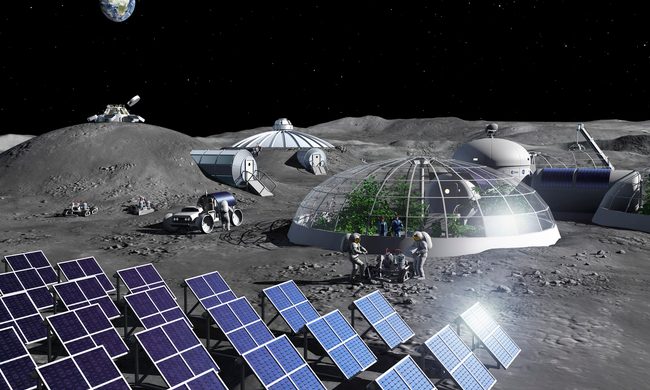
Want a city on the Moon? Scientists say there’s not enough water
A billion tons still comes up short
Artist impression of activities in a Moon Base.

For decades, humanity has looked up at the Moon and wondered what it would be like to live on it. Think sprawling cities, factories, research centers, and permanent human settlements. Unfortunately, there is one fairly fundamental problem with that vision.

A new study published in Frontiers in Space Technologies argues that even the Moon's potentially enormous reserves of frozen water may be nowhere near enough to support city-sized populations sustainably. Researchers Martin Elvis and Jonathan McDowell estimate that the permanently shadowed regions near the lunar poles could contain roughly one billion tons of water. It sounds like an extraordinary amount until you put a million thirsty humans next to it.

Read more