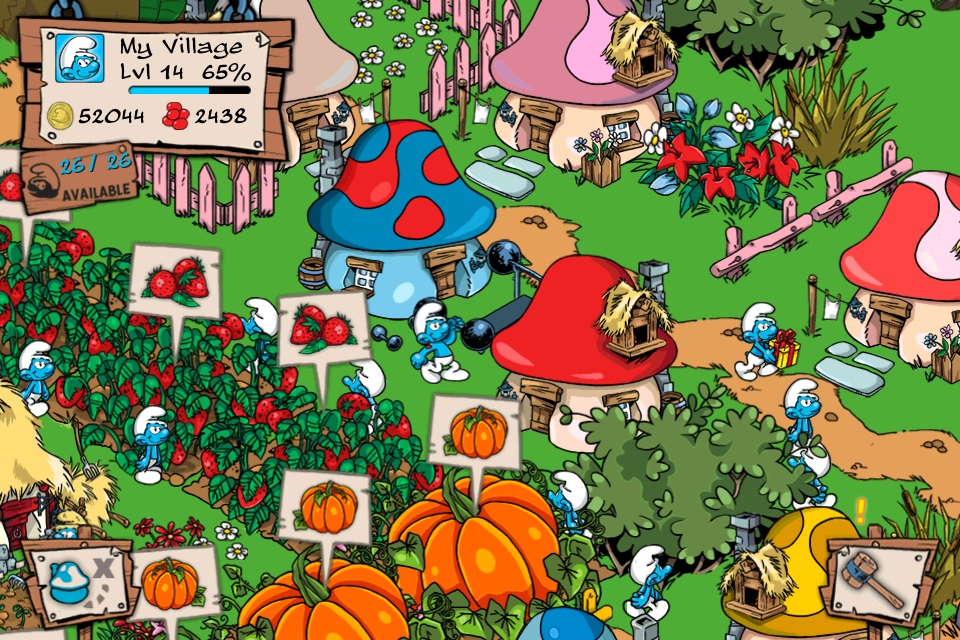
Decking out your iPhone Smurf house may cost more than you thought. The Washington Post reports that an 8-year-old girl named Madison amassed a $1,400 bill from apple for decorating her home in Smurf’s Village, an iPhone and iPad game by Capcom. Though the game is targeted at young children, it lets players cheat their way toward faster rewards by using real money to purchase bountiful amounts of Smurfberries, a valuable currency within the game.
Much like FarmVille, players like Madison start Smurf’s Village with only a “single mushroom house and a lone plowed plot of land.” From there, players attempt to grow Smurfberries so they can afford enhancements to their home and village so they can grow even more Smurfberries and improve their village even more, and so on, and so on. Games like these are designed to be highly addictive. But is it right to market them explicitly to kids, who may not even be old enough to understand the concept of money?
 Smurfing is expensive

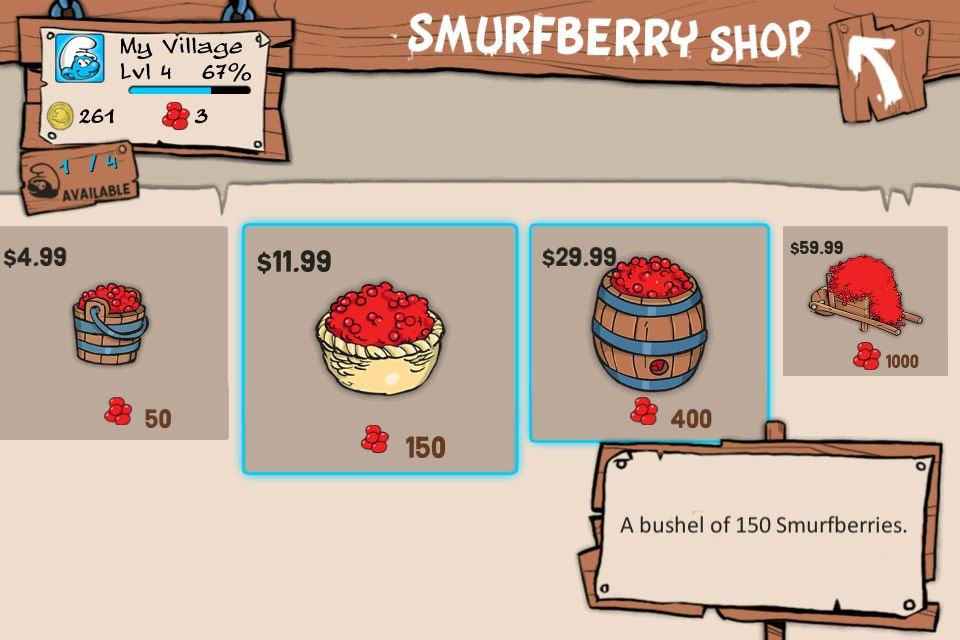
Though Smurf’s Village is aimed at children 4 years old and up, it baits them with in-game purchases that can cost almost $100. Only a password is required to buy Smurfberries, and once entered, users (kids) have 15 minutes to purchase as many items as they can before having to reenter any passwords (ask their parents).
Here are the top purchases in Smurf’s Village (via iTunes):
- $4.99 – 1 BUCKET OF SMURFBERRIES
- $9.99 – 2 BUSHEL OF SMURFBERRIES
- $24.99 – 3 BARREL OF SMURFBERRIES
- $4.99 – 4 BUCKET OF SMURFBERRIES
- $11.99 – 5 BUSHEL OF SMURFBERRIES
- $99.99 – 6 WAGON OF SMURFBERRIES
- $49.99 – 7 WHEELBARROW OF SMURFBERRIES
- $59.99- 8 WHEELBARROW OF SMURFBERRIES
- $29.99 – 9 BARREL OF SMURFBERRIES
While we’re already confused why someone paid $4.99 for 1 bucket of Smurfberries while others received 4 buckets for said price, the list shows the ridiculously large amounts of money Capcom is charging children for in-game content. Even one mistake could cost a family $99. To add perspective, the smallest popular purchase, $4.99, is about the full price of a premium iPhone/Android game. Is it right to bait children with in-game purchases like these?
Capcom knows about the problem. In December, the publisher added this warning to the iTunes description of the game. “PLEASE NOTE: Smurf Village is free to play, but charges real money for additional in-app content. You may lock out the ability to purchase in-app content by adjusting your device’s settings.” The warning did not come soon enough for Madison’s family. And is a small warning enough, when the entire game is monetized by milking users (children, in this case) of real cash?
Deceptively cheap
The Smurfs are not alone. Many other free-to-play games use this model of in-game purchases to subsidize their initial price of “free” on Apple’s App Store. The problem will soon spread. Last week, Google announced the addition of in-app transactions to its Android platform, allowing games like Smurf’s Village to pillage the wallets of Android users everywhere.
“Parents need to know that the promotion of games and the delivery mechanism for them are deceptively cheap,” said Jim Styer, president of Common Sense Media, a public advocacy group for online content for children. “But basically people are trying to make money off these apps, which is a huge problem, and only going to get bigger because mobile apps are the new platform for kids.”
The video game industry loves the idea of microtransactions and in-game purchases because publishers can charge less upfront and squeeze money out of customers by offering small rewards for small amounts of extra cash. In essence, these types of games trick people into spending a dollar here and there. Over time, these small transactions add up to big money for publishers. A couple years ago, it was common for mobile game and app publishers to charge recurring monthly fees of $2.99 to $4.99 for products that didn’t need or require long-term payment (they didn’t have subscription content). Like Smurf’s Village, these types of apps make the majority of their money from user confusion. Often, app buyers forget to cancel subscriptions, a process that is sometimes time consuming and difficult. Other times, they don’t realize they have a subscription to cancel.
Don’t be sly
Publishers are entitled to be paid for their works, but there is an ethical line they can cross. A game isn’t really a game if you have to buy your way to the top, and it isn’t fair to charge a young audience who may not even understand the value of a dollar. There are many games, especially for kids, that have currencies within them. Not all children will understand that what they are buying costs real money. Worse, parents often don’t realize the problem until it’s too late.
What can be done? Publishers could release an adults-only version of games like Smurf’s Village that includes these massive in-game charges or simply charge users $4.99 to $9.99 for the game upfront and get rid of the issue entirely. What do you think?