1. Home
  2. Computing
  3. News

Oculus Touch pre-orders go live, giving buyers a motion-control option

Add as a preferred source on Google

Oculus Rift owners will now be able to enjoy the same experiences that HTC Vive users have been partaking in for the better part of this year.

Pre-orders for the Oculus Touch go live on at noon PT on Monday, giving users motion controls, and finally putting it on par with the HTC Vive and PlayStation VR.

Recommended Videos

Arguably the first to market with a virtual reality headset, Oculus will be last to offer motion controls. Since launch, gamers have had to stick to Xbox One controllers to experience gaming in VR. While Oculus has had Touch in the works for a while, it has been at a disadvantage when compared to Vive. HTC bundled motion controls with the Vive at launch, and that is one possible reason why Steam users have been willing to spend the extra $200 on it over Oculus.

The major distinction between Oculus Touch and the HTC Vive will be how both work with motion. Vive uses full-room tracking, meaning users actually have to install sensors that are constantly tracking movements in a space. Touch, on the other hand, just uses cameras mounted in front of the users. While this gives tremendous tracking when the user is looking directly forward, it can be problematic when users are facing another direction. Because motion-based VR has people moving all around to interact with the environment, users can be lost in a separate world with paths that disorient where they are in actual space.

Now that all three major VR headset manufacturers will have some sort of motion tracking, it will be interesting to see where users gravitate. Because PlayStation VR retails for $400-$500, it is the most economical offering. Vive, on the other hand, has the most technology, and is therefore the most expensive. Oculus, is caught right in the middle, not the cheapest, nor the most technical.

Oculus Touch pre-orders will retail for $199, and begin shipping on December 6.

Imad Khan
Imad has been a gamer all his life. He started blogging about games in college and quickly started moving up to various…
Google rejects alarming report that says its Search AI tools are unsafe for kids
The company says it couldn’t reproduce many of the responses cited and argues that the testing doesn’t reliably measure product safety
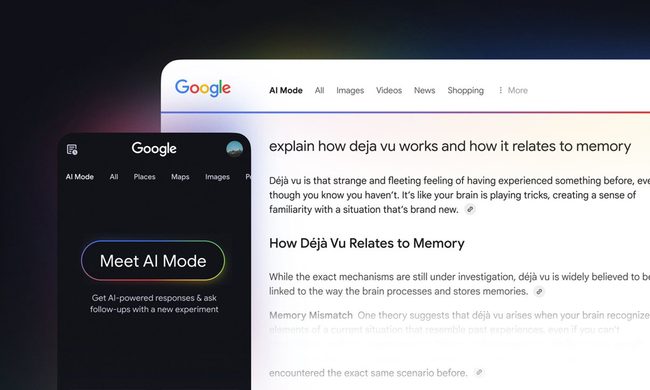
Google AI Mode on mobile and desktop

Google has rejected a new report that labels its AI-powered Search features an “unacceptable risk” for children and teenagers.

Common Sense Media’s Youth AI Safety Institute gave AI Overviews and AI Mode its lowest overall rating. The two tools performed poorly against seven of the institute’s eight AI safety principles and failed every category involving potentially severe harm. Google says those findings came from searches that don’t resemble how people normally use its products.

Read more
What should you look for in a printer for high-volume home printing?
From ink costs to wireless printing and scanning, here's how to pick a printer that keeps up with busy households without constant cartridge replacements.
Computer Hardware, Electronics, Hardware

This post is brought to you in paid partnership with HP

Most people find out their printer wasn't built for them at the worst possible moment. You need to print something urgent (a permission slip, a tax form, a boarding pass) and you're out of ink. Or low on magenta, which for reasons no one has satisfactorily explained, also blocks you from printing a black-and-white document. You order a cartridge, wait two days, and finally print the thing you needed on Tuesday the following Thursday.

Read more
This AI doesn’t just translate languages, it invents brand-new ones
Forget translating, this AI builds languages from scratch, sounds, grammar, and all.
ConlangCrafter open on laptop

Ever wondered what a language built entirely by AI would sound like? A team of researchers just made a tool that answers exactly that question. A new paper published in the Proceedings of the Association for Computational Linguistics introduces ConlangCrafter, a tool that uses large language models to build brand new languages complete with their own sounds, grammar, and vocabulary.

Morris Alper, the paper's lead author and soon-to-be assistant professor at the University of Miami, explained that the goal was to create languages with features you don't normally find in the ones we already speak. 

Read more