“Microsoft’s ergonomic Wireless Comfort Desktop 5050 combo remains a reliable, comfortable choice.”
- Inexpensive
- Comfortable to use
- Numerous Windows shortcut keys
- Either top or bottom can be inclined
- Mouse is ambidextrous
- Escape, function, and other keys are too small
- Keys not backlit
- Incline/decline not high enough, or adjustable
“Why you can trust Digital Trends – We have a 20-year history of testing, reviewing, and rating products, services and apps to help you make a sound buying decision. Find out more about how we test and score products.“
If you, like us, spend a good portion of your life banging on computers, the first thing you do after buying a new PC is replace the stock USB keyboard, and mouse that comes with it. Upgrading to aftermarket peripherals such as, say, the Microsoft Wireless Comfort Desktop 5050 review unit we have here, not only improves the aesthetics of your desktop and increases comfort, but can also be a wise investment in the well-being of your wrists and hands.
Compared to some other keyboard and mouse combos we’ve looked at recently, including the Logitech Performance MK850 Wireless Mouse and Keyboard Combo ($80), Microsoft’s Desktop 5050 is relatively inexpensive. It lists for $70, but we found it at several outlets for $50. While the Logitech MK850 specializes in allowing you to pair with multiple devices simultaneously, the Desktop 5050, in addition to its ergonomic design, comes with several additional keys for assigning shortcuts in Windows. Does it, however, provide enough comfort and convenience to warrant laying out half a C-note?
Classier than the price suggests
The first thing we noticed while unpacking the Desktop 5050 was the somewhat unorthodox shape of both the keyboard and mouse. The top edge — which holds an extra row of keys, or buttons, we’ll get into in a moment — conforms to the ergonomic curve of the keys. And the mouse is a bit plumper on in the palm than many of its competitors.
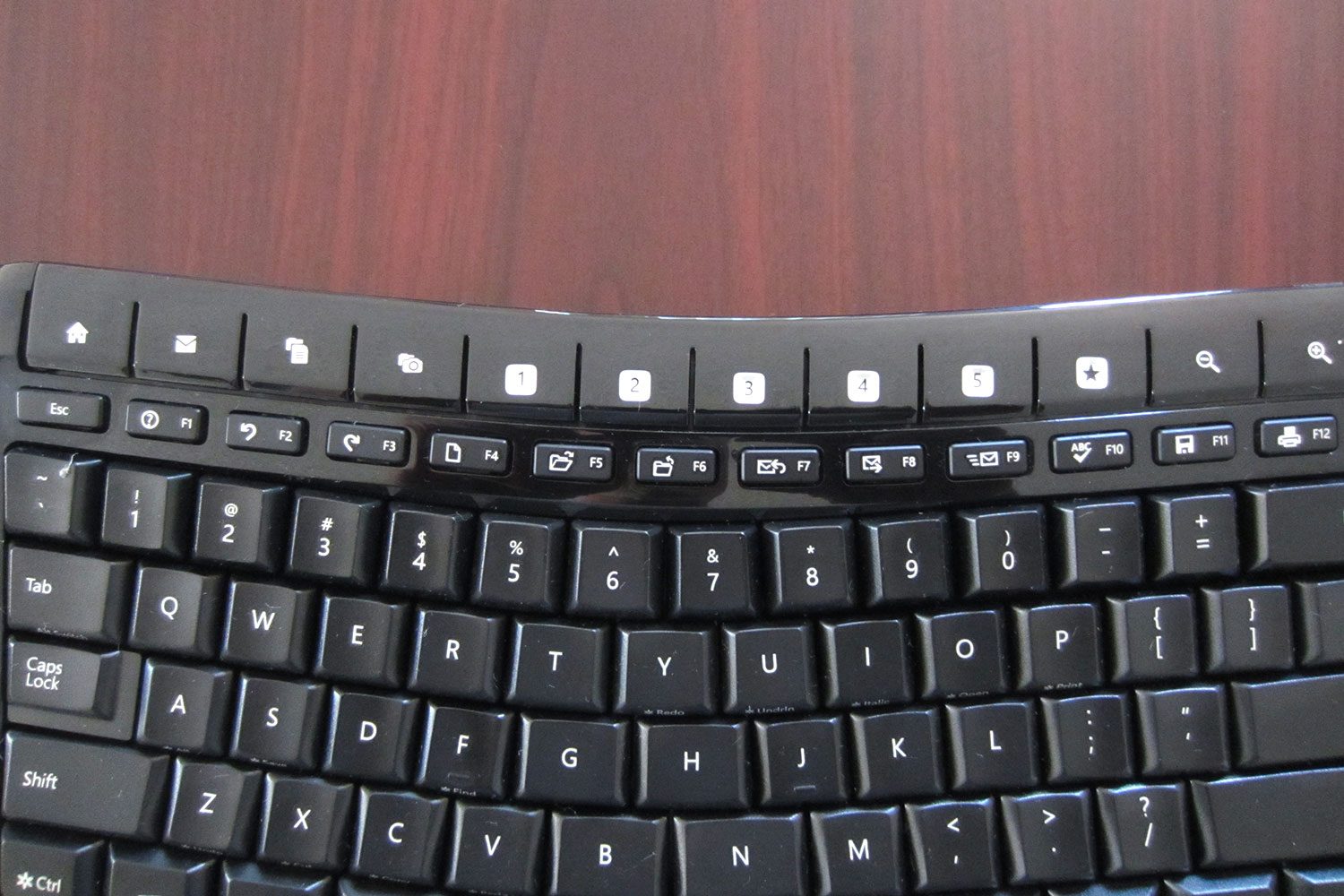
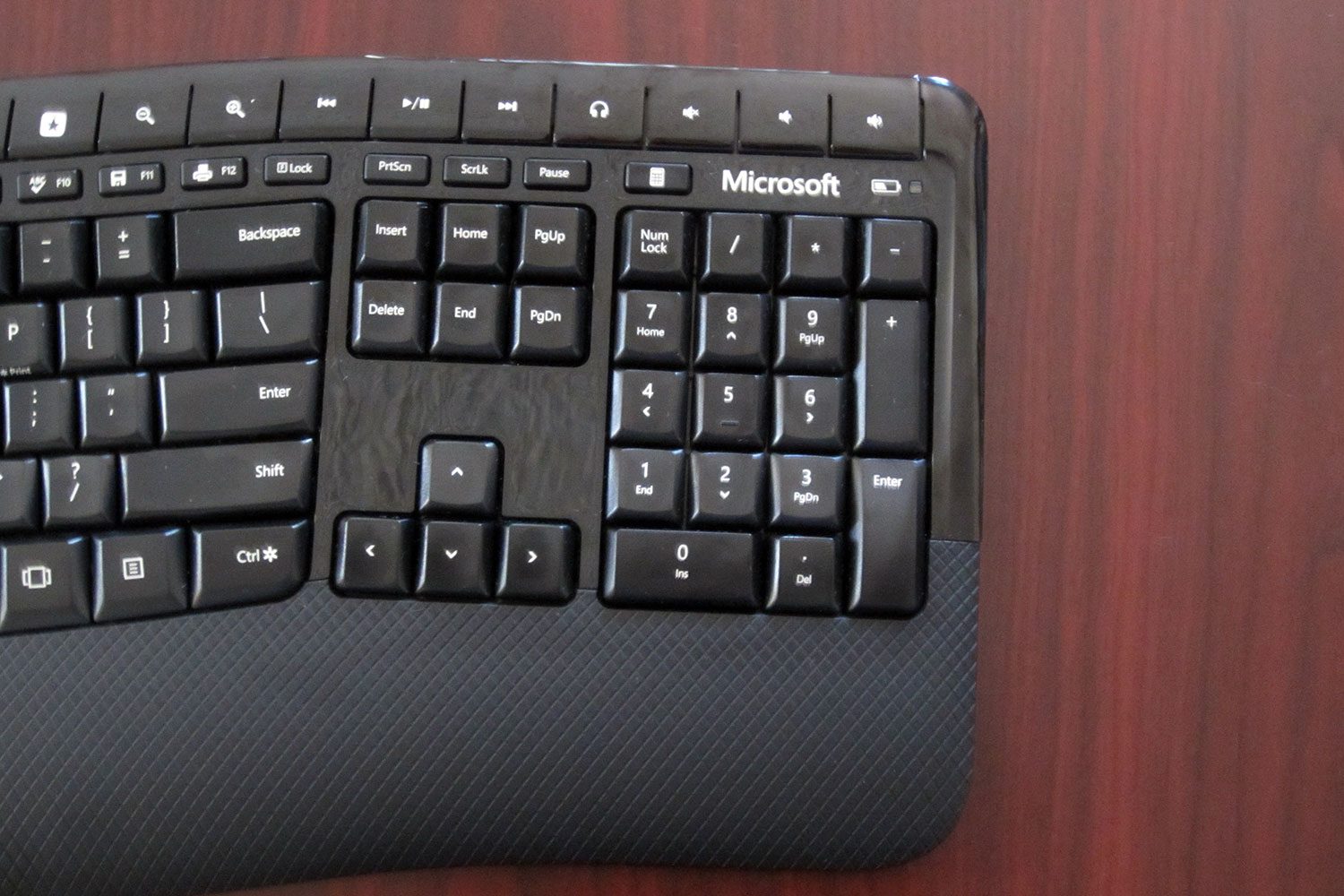
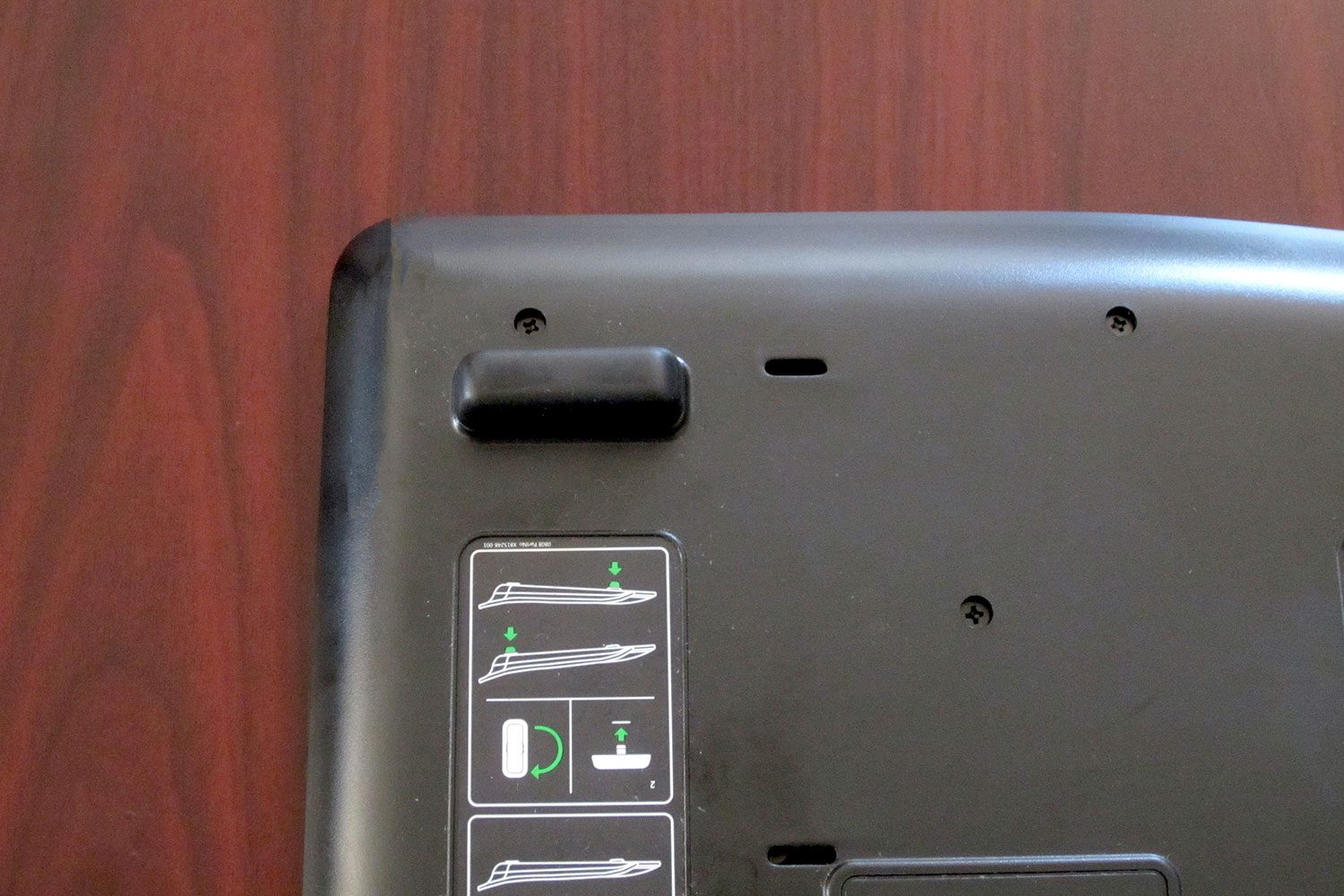
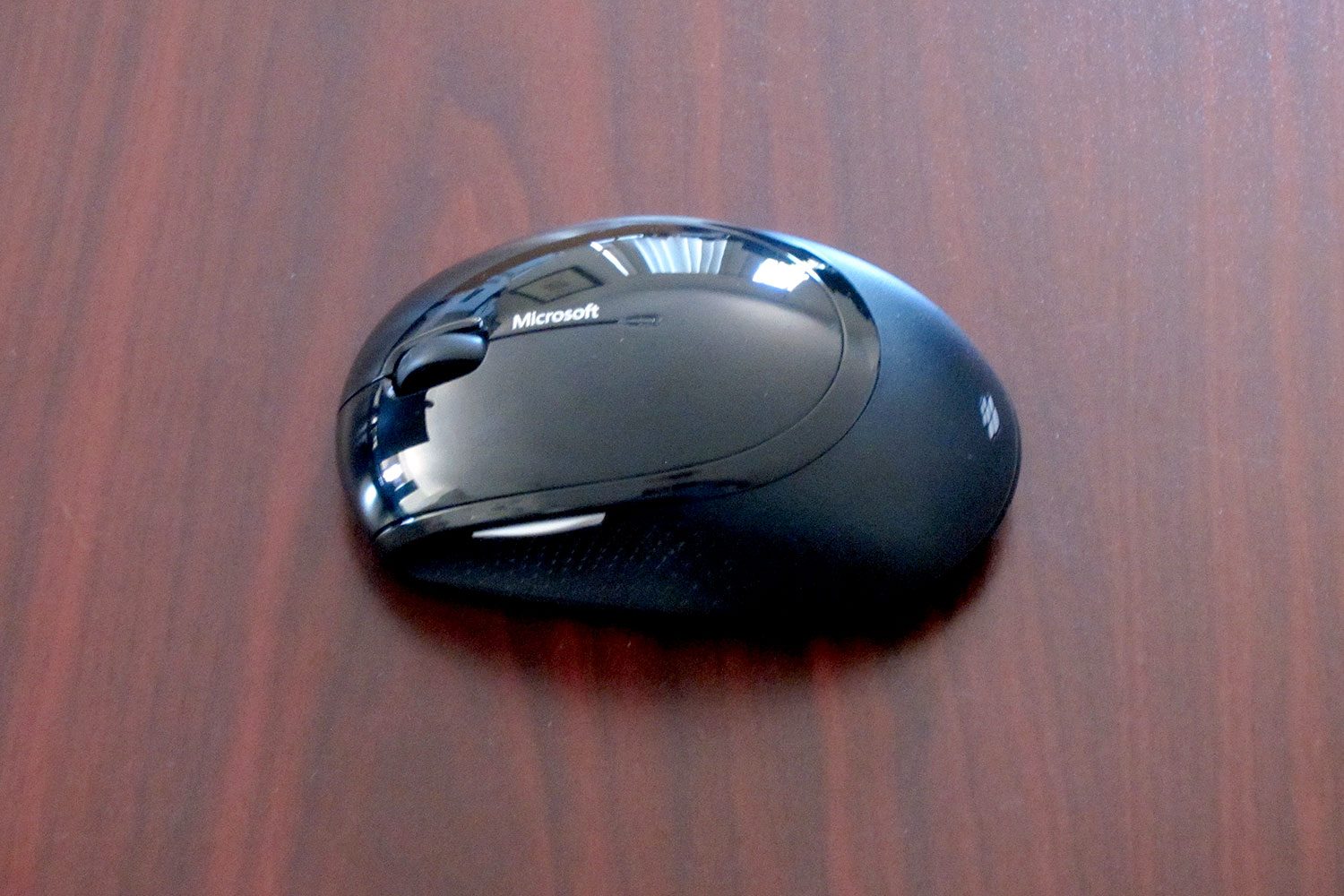
With its removable feet attached, the keyboard measures just under 2 inches high, by 17.8 inches across, by 8.6 inches from top to bottom, and it weighs 1 pound 13 ounces. Made primarily of plastic, the color scheme consists of three complementary shades of black. The keys are flat black, the deck and row of shortcut keys across the top are glossy black, and the wrist rest, which is coated in a rubberlike material embossed with a diamond pattern, is yet another shade of flat black. The underside, where you’ll find a small compartment that houses two (included) AA batteries and slots for attaching the feet, is the same plastic as the keys.
In addition to its ergonomic design, it comes with several additional keys for assigning shortcuts in Windows.
The two detachable feet, designed to elevate the keyboard, can be inserted at either the top or bottom. In other words, you can use them to incline the back edge of the keyboard, or to elevate the wrist rest. While this is a great idea—some people do find comfort in inclining the keyboard toward them—we found the incline itself not quite steep enough for maximum comfort, and there’s no way to adjust it.
The mouse also comes in three shades of black. Its right and left buttons, as well as the underside, are made from the same glossy black plastic as the keyboard deck, the four-way scroll wheel is the same flat black plastic as the keys, and the palm rest and side thumb and finger indentations are coated with the same rubbery material as the wrist rest. In addition to a compartment for two AA batteries, the bottom of the mouse has a small indentation that holds the included USB dongle, to stow it away for easy travel. Unfortunately, the dongle is required. The keyboard and mouse don’t pair over Bluetooth.
Comfort and Convenience
Switching from any keyboard to another usually requires a short adjustment period, but transitioning to the Desktop 5050 shouldn’t take long. Key travel is quiet and comfortable, and we overall found it quite easy to type on. However, the Escape, function, Print Screen, and other keys in the top row are less than half the size and height than on most other keyboards. Using them, especially the ESC key, feels awkward and unnatural, requiring concentrated effort.

We found the row of 19 shortcut buttons across the top edge to be exceptionally handy. Most of them are already assigned with tasks such as opening a browser, opening your email client, opening Windows Explorer, and so on. The last seven are media control keys, such as Play, Pause, Volume Up, and Volume Down. Six of them, though, are unassigned, and, like most keyboards (and mice) nowadays, you can remap all of them, as well as the function keys, to any tasks you want. There’s also a small button just above the Numpad lock key for opening the Calculator app. Remapping and other configuration tasks are handled from Microsoft’s downloadable Mouse and Keyboard Center app.
The mouse buttons, too, are completely remappable, and the mouse itself is ambidextrous—it’s the same shape and size on both sides. Instead of two buttons along the top left indentation, both the right and left indentations have just one button, mapped by default to Back (left side) and Forward (right side). As mentioned, the mouse itself is a little broader and higher at the back, filling more palm space, which we found significantly more comfortable than mice with lower and slimmer profiles. The scroll wheel is four-way, meaning that in addition to up and down, you can also scroll right and left, or reassign those positions to do something else.
Warranty information
Microsoft warrants the Wireless Comfort Desktop 5050 for three years under normal use, which is unusual for this type of product. Most offer a one-year warranty.
Our Take
The Microsoft Wireless Comfort Desktop 5050 is an attractive, comfortable to use, and feature-rich set of input peripherals for your desktop or laptop. It’s ergonomically designed, and it comes with a slew of extra keys for setting up shortcuts to your favorite programs and documents. We did find the redesigned function keys awkward. However, the $50 street price makes this combo a solid value.
Is there a better alternative?
If you’re looking for a comfortable, affordable keyboard and mouse combo, we don’t know of many with this quality at this price point. There are costlier solutions out there, but this one comes with a set of shortcut keys you won’t find on many other comparably priced competitors. If you need a wireless mouse and keyboard combo for switching back and forth between multiple computing devices, the Logitech MK850 is a better choice, but otherwise the Desktop 5050 is a good value.
How long will it last?
Both the mouse and keyboard are very well built and should easily last for five to ten years. Microsoft guarantees it for three years, which is plenty long enough to get $50 worth out of it.
Should you buy it?
Yes. The Microsoft Wireless Comfort Desktop 5050 makes using Windows comfortable and easy. If, on the other hand, you’re looking for a keyboard combo for working with multiple computing devices, we recommend the Logitech MK850.