Shopping for a new TV (especially if you haven’t done so in a few years) can be a crash course in three to four-letter acronyms. From sales floor price tags to online marketing, Samsung, LG, Sony, TCL, Hisense, and every TV brand under the sun is all about the tech verbiage — QLED, OLED, mini-LED, QD-OLED, UHD, HD (these are just a handful of the go-to selections). But each one of these acronyms stands for something important, which in most cases is the kind of picture technology the TV is utilizing to give you things like mesmerizing brightness, rich colors, and awesome black levels.
But as products continue to evolve, there’s one set of TV acronyms that may not get the kind of magnifying glass attention it once commanded, even though it’s certainly still relevant when it comes to how your TV is illuminated, and that’s LED and LCD. Even though most TVs are actually LEDs these days, LCDs are definitely still around, and it pays to know the difference between both of these lighting technologies. Thus, we’ve put together this handy explainer to help you decide which is better, as well as the similarities and differences between both display types.
LED and LCD: Together forever

Despite having a different acronym, LED TV is just a specific type of LCD TV, which uses a liquid crystal display (LCD) panel to control where light is displayed on your screen. These panels are typically composed of two sheets of polarizing material with a liquid crystal solution between them. When an electric current passes through the liquid, it causes the crystals to align, so that light can (or can’t) pass through. Think of it as a shutter, either allowing light to pass through or blocking it out.
Since both LED and LCD TVs are based around LCD technology, the question remains: What is the difference? Actually, it’s about what the difference was. Older LCD TVs used cold cathode fluorescent lamps (CCFLs) to provide lighting, whereas LED LCD TVs use an array of smaller, more efficient light-emitting diodes (LEDs) to illuminate the screen.
Since the technology is better, all LCD TVs now use LED lights and are colloquially considered LED TVs. For those interested, we’ll go deeper into backlighting below, or you can move onto the Local Dimming section.
Backlighting
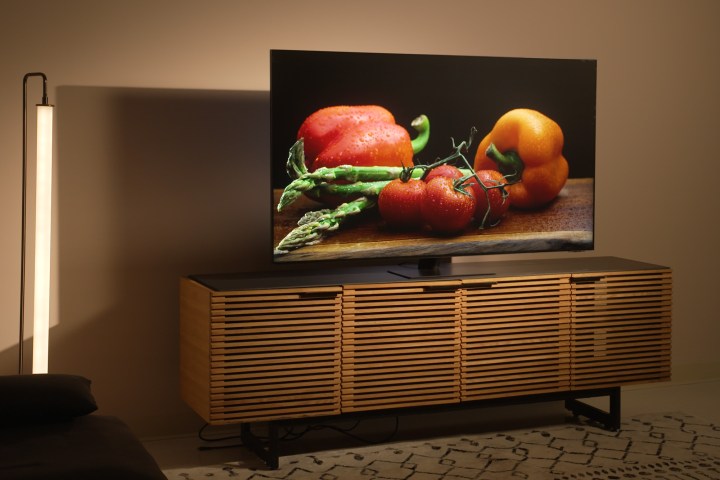
Three basic illumination forms have been used in LCD TVs: CCFL backlighting, full-array LED backlighting, and LED edge lighting. Each of these illumination technologies is different in important ways. Let’s dig into each:
CCFL backlighting
CCFL backlighting is an older, now-abandoned form of display technology in which a series of cold cathode lamps sit across the inside of the TV behind the LCD. The lights illuminate the crystals fairly evenly, which means all regions of the picture will have similar brightness levels. This affects some aspects of picture quality, which we discuss in more detail below. Since CCFLs are larger than LED arrays, CCFL-based LCD TVs are thicker than LED-backlit LCD TVs.
Full-array backlighting
Full-array backlighting swaps the outdated CCFLs for an array of LEDs spanning the back of the screen, with zones of LEDs that can be lit or dimmed in a process called local dimming. Fully backlit LED TVs are one of the most common types of LED lighting used in TVs today, with brands like Samsung, Sony, and TCL implementing this tech into many of their midtier and premium sets, including QLEDs and QD-OLEDS (more on these TV types later). This is because full backlighting arrays are able to deliver powerful brightness levels that can be very precisely controlled with features like local dimming, resulting in a final picture that is both vibrant and well-balanced in terms of colors and contrast.
Nowadays, you’ll also see TV companies using something called mini-LED lighting. These are much smaller light-emitting diodes that can deliver better overall brightness and better colors and contrast through local dimming, simply because more diodes can be packed into the entire lighting array.
Edge lighting
Another form of LCD screen illumination is LED edge lighting. As the name implies, edge-lit TVs have LEDs along the edges of the screen. There are a few different configurations, including LEDs along just the bottom, LEDs on the top and bottom, LEDs along the left and right sides, and LEDs along all four parts of the frame. These different configurations result in picture quality differences, but the overall brightness capabilities still exceed what CCFL LCD TVs could achieve. While there are some drawbacks to edge lighting compared to full-array displays (especially in terms of local dimming), TV manufacturers have gotten really good at making edge-lit TVs that use features like picture upscaling to make an edge-lit display look and perform like a full-array screen. Plus, edge-lit TVs are generally cheaper than fully backlit TVs!
What is local dimming?
Local dimming is a feature of LED LCD TVs wherein the LED light source behind the LCD is dimmed and illuminated to match what the TV’s signal source demands. LCDs can’t completely prevent light from passing through, even during dark scenes, so dimming the light source itself aids in creating deeper blacks and more impressive contrast in the picture. This is accomplished by selectively dimming the LEDs when that particular part of the picture — or region — is intended to be dark.

Local dimming helps LED-LCD TVs more closely match the quality of modern OLED displays, which feature better contrast levels by their nature — something CCFL LCD TVs couldn’t do. The quality of local dimming varies depending on which type of backlighting your LCD uses, how many individual zones of dimming are employed, and the quality of the processing.
TVs with full-array backlighting have the most accurate local dimming and therefore tend to offer the best contrast. Since an array of LEDs spans the entire back of the LCD screen, regions can generally be dimmed with more finesse than on edge-lit TVs, and brightness tends to be uniform across the entire screen. Hisense’s impressive U7H TVs are great examples of relatively affordable models that use full-array backlighting with local dimming.
Because edge lighting employs LEDs positioned on the edge or edges of the display to project light across the entire LCD screen, (as opposed to coming from directly behind it), it can result in very subtle blocks or bands of lighter pixels within or around areas that should be dark. The local dimming of edge-lit TVs can sometimes result in some murkiness in dark areas compared with full-array LED TVs. It should also be noted that not all edge-lit TVs offer local dimming, which is why it is not uncommon to see glowing strips of light at the edges of a TV and less brightness toward the center of the screen.
OLED vs. QLED vs. QD-OLED
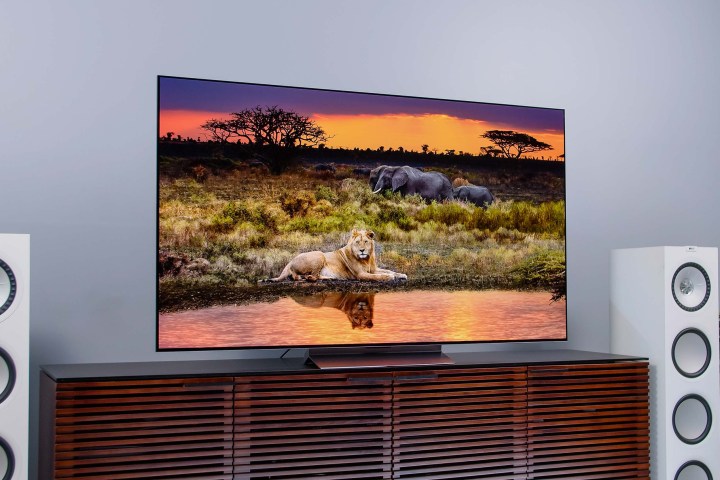
When shopping around for a TV these days, you’ll still see LED and LCD acronyms tossed around a bit, but two of the more common keywords you’ll find at Best Buy and on Amazon is OLED and QLED. Oh, and now there’s also QD-OLED to contend with!
An OLED display uses a panel of pixel-sized organic compounds that respond to electricity. Since each tiny pixel (millions of which are present in modern displays) can be turned on or off individually, OLED displays are called “self-emissive” displays, which means they require no backlighting at all. These kinds of TVs, made popular by LG, offer incredibly deep contrast levels and better per-pixel accuracy than any other picture tech on the market. And because they don’t require a separate light source, OLED displays are also amazingly thin — often just a few millimeters.
Then there are the QLED TVs — think of them as a kind of supercharged LED TV –that were made popular by companies like Samsung, TCL, and Hisense. Unlike OLED displays, QLED is not an “emissive” display technology (actual LED lights still illuminate QLED pixels from behind). However, QLEDs feature an updated illumination technology over regular LED-LCDs in the form of quantum dots (the “Q” in QLED), which help to give a big boost to an LED TV’s color saturation and brightness capabilities. When combined with features like local dimming, many QLED TVs can even rival the rich colors and inky black levels once only delivered by OLED TVs.
With all these warring picture types, it’s a shame that TV manufacturers won’t come together to create a premium TV that combines the best parts of a QLED with the best parts of an OLED. Actually, that’s a thing now, and this new acronym and picture tech is called QD-OLED. A four-layered approach to flagship picture quality, QD-OLEDs combine an LED backlight with quantum dots (just like a QLED), on top of an LCD matrix with a color filter to produce a vibrant picture with a ton of color and contrast detail (just like an OLED).
Right now, Samsung and Sony are the two QD-OLED kingpins, but we expect to see this revolutionary picture tech implemented on more and more TVs as time goes on.
Editors' Recommendations
- Best Buy TV deals: Save on QLED TVs, OLED TVs, and 8K TVs
- The 12 best TVs of 2024
- The 7 best QLED TVs for 2024
- Samsung unveils pricing and preorder details for its 2024 OLED TVs
- OLED vs. LED: Which kind of TV display is better?