1. Home
  2. Emerging Tech
  3. Mobile
  4. News

SweepSense makes your phone or laptop smarter by using its speaker and microphone

If you’re listening to music or a podcast on your smartphone and need to pause the audio to greet a friend you recognize on the train, you’ll have to remove your earbuds, and then tap the pause button on the phone’s screen. A project called SweepSense removes the need for the second step of that process, and its potential real-world applications are far-reaching.

Three researchers at Carnegie Mellon University are behind SweepSense, which aims to make devices smarter by giving them the ability to sense their surroundings using the speakers and microphones they already have. The project uses a smartphone or laptop’s speaker to send out ultrasonic frequencies, which will reflect off of nearby objects and be measured by the device’s microphone. The information relayed by the reflected sound can be used to trigger specific actions.

Recommended Videos

SweepSense already has two self-contained demos showing how this can be applied in the real world. In one scenario, a pair of earbuds is plugged into an iPhone. When both earbuds are inserted into the user’s ears, a certain ultrasonic frequency is received by the phone’s microphone. When one of the earbuds is removed, SweepSense makes it possible to determine which earbud was removed.

When an earbud is removed while the user is listening to music, the researchers used software to pause the audio on the device. Alternatively, when an incoming call is received on the phone, the user can simply remove an earbud to answer the call.

The researchers also show how SweepSense can be used on a laptop to determine the angle of the screen. This can be used to trigger certain actions. For instance, if the display is angled back, a MacBook’s dashboard screen will be shown.

SweepSense is far from a perfect approach to making devices smarter. The researchers admit, for example, that the low-frequency ultrasound may be audible to children, the elderly, and animals, which may cause annoyances, according to MIT Technology Review.

The researchers have plans to explore additional applications in public address systems in subway stations and supermarkets, sound systems at concert venues and stadiums, and cars.

Jason Hahn
Former Contributor
Jason Hahn is a part-time freelance writer based in New Jersey. He earned his master's degree in journalism at Northwestern…
Too lazy to shower? This human washing machine can clean your body in 15 minutes
Everyday bathing with a spa-like experience inside a futuristic pod
human-washing-machine

What’s happened? If you have ever wished your shower could do the hard work for you, a company from Japan has finally delivered the gadget of your dreams. A new human washing machine, now officially on sale, promises a full-body wash while you basically lie there and let the machine pamper you.

A hands-free wash cycle that cleans and rinses you automatically in 15 minutes.

Read more
Save on the SenseRobot Chess — the AI chess master everyone wants
SenseRobot Chess

This post is brought to you in paid partnership with SenseRobot

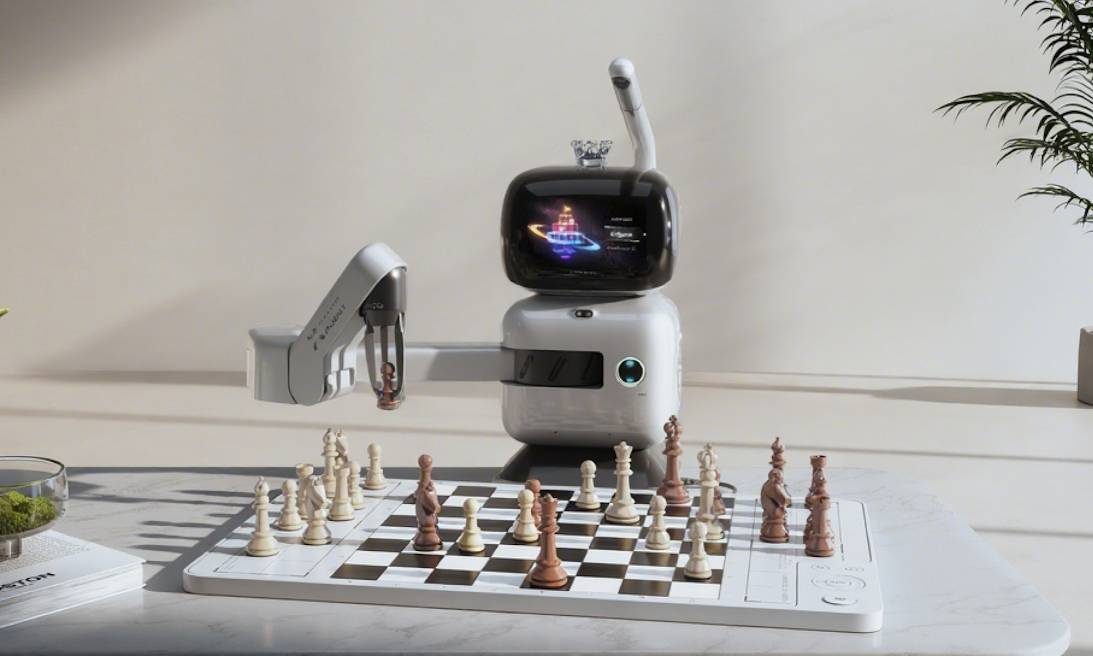
The holidays are almost upon us, and one deal is standing out for tech enthusiasts, chess lovers, and shoppers. The SenseRobot Chess, the world’s first mass-produced AI chess robot arm designed for home use, is now available at its Christmas holiday special price of $699.98, with an additional $35 off at Amazon when using the code CHESS2025. This limited-time 26% off offer brings intelligent robotics and interactive learning within reach.

Read more
Google’s virtual try-on app now helps you discover and shop outfits tailored to you
Doppl just made it easier to discover, try, and buy your next favorite look.
Illustration showcasing Doppl's new shoppable discovery feed.

Google introduced a virtual try-on app called Doppl earlier this year that uses AI to help users visualize how different outfits look on them. The company has now added a shoppable discovery feed to the app that offers outfit recommendations with direct links to merchants.

In a recent blog post, Google said that the idea behind this new feed is to help users "discover new favorites," try them on a virtual avatar of themselves, and purchase them right within Doppl. This discovery feed works like a personalized style stream, surfacing outfit recommendations based on user-specified preferences and past interactions.

Read more