In the world of tech gadgets, we constantly look down: at laptops, smartphones – even at the just-announced iPad. Yet, for some of the most amazing technology, you have to crane your neck up toward the sky. Over the next few years, NASA and a few private spaceflight firms are planning some spectacular outer space voyages.
Orion spacecraft
The Orion spacecraft is perhaps the most exciting of all planned space missions. The craft, currently being tested at NASA’s Plum Brook Station in Sandusky, Ohio, will be used for the first mission to the moon in 2020, and may be used to visit the space station as early as 2015. The 750,000-pound space vehicle is a behemoth that can withstand 1.35 times gravitational force.

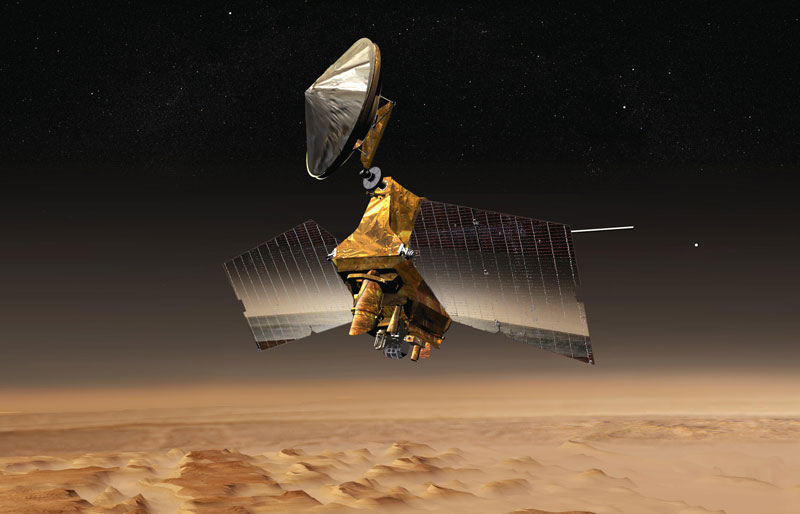
Mars Reconnaissance Orbiter
Most of the attention about NASA space programs to Mars have focused on the actual landing craft (the Spirit and Opportunity, both still in operation). Yet, it’s the Mars Reconnaissance Orbiter, launched in 2005, that has provided some of the best imagery of the planet, including satellite images that are so detailed they zoom in to an area about as big as a computer desk. The orbiter has captured about 10,000 images so far, or about 44 percent of the planet surface. As recently as September, the orbiter was returning images on polar ice cap regions. It has multiple cameras that can scan for impact craters, and a spectrometer that can examine crater deposits.
“There are remnants of glaciers and layers of subsurface ice at mid-latitudes where they are not in equilibrium with the current climate,” says Suzanne E. Smrekar, the deputy project scientist with the Jet Propulsion Laboratory (JPL) who is in charge of the mission. “We’ve also mapped layers of ice and dust in the polar caps that record millions of years of climate change. We’ve caught avalanches off the polar caps in real time, and seen evidence of new gullies forming in the last several years.”
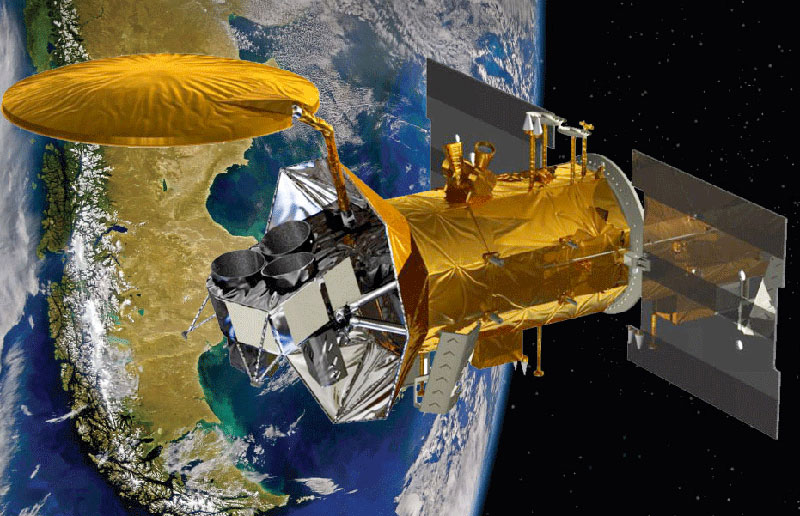
Aquarius Mission
This JPL science project, set to launch this year, is a satellite that will scan oceans for “salinity” (or saltiness) in order to understand climate change on a global scale. According to Aln Buis, a NASA contact for the Earth project, the Aquarius Mission is a first of its kind in researching water cycles. About 86 percent of all global evaporation and 78 percent of global precipitation occur over the ocean. The project will scan surface water salinity to see how this fresh water change effects climate.
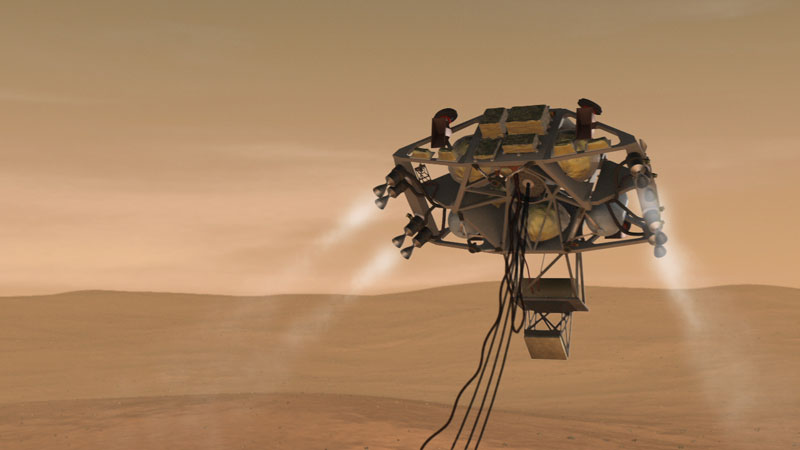
Mars Science Laboratory (MSL)
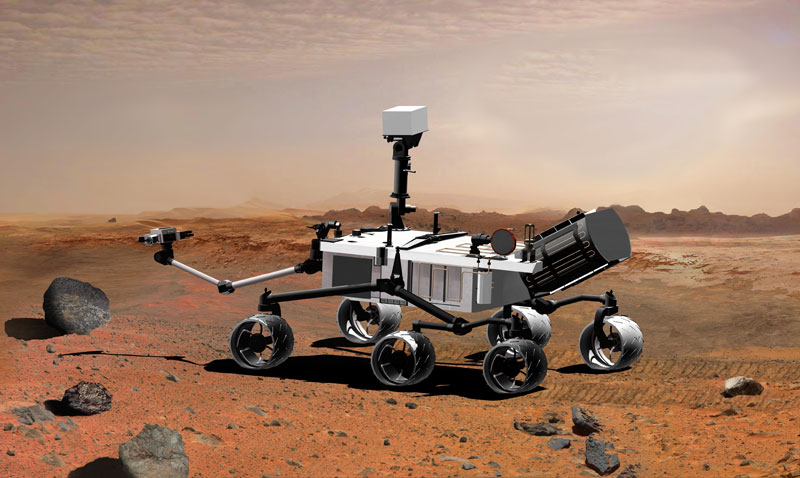
If the current Mars rovers are about the size of a golf cart, the next rover — part of the Mars Science Laboratory at NASA, set to launch in 2011 – is about as big as a Mini Cooper. The tank-like vehicle will be able to roll over objects (such as sand dunes and rocks) as tall as 30 inches and speed along at about 300-feet per hour. A major upgrade from the current rovers, the MSL has 10 times the instrumentation and will be able to examine mineral deposits in greater detail. Because of its greater size, the lab will have to land on Mars in a different way from the current rovers. Instead of landing on air cushions, the new rover will descend from a secondary surface craft on a tethered line.
“Every time we go to Mars we learn more,” says Bret Drake, a MSL mission scientist who spoke with Digital Trends. “The engineering involved in getting a spacecraft there is difficult and is not like other missions where you get real-time data — there is six minutes of lag time between communications.”
Virgin Galactic SpaceShipTwo
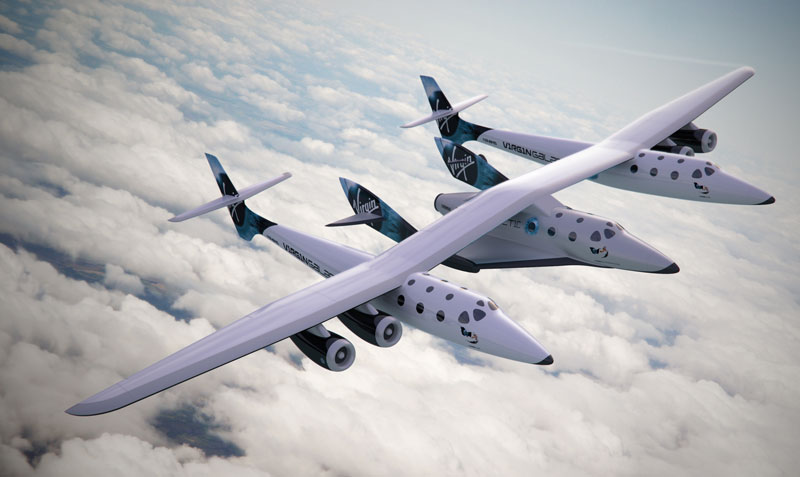
Unveiled officially in December of 2009, the SpaceShipTwo is Virgin Galactic’s commercial space flight vehicle, set to launch in 2011 for anyone who ponies up for the $200,000 ticket. The flights will soar about 60 miles above the earth at speeds approaching 2,600 mph. The innovative design of the craft uses less fuel because it will launch from another craft and run on a single booster rocket.
“Less fuel and clean fuel all add up to a space launch system which will be completely unprecedented in its low environmental impact compared with current space flight,” says Sir Richard Branson, the CEO of Virgin Galactic, speaking in a press release. “The spaceship’s carbon footprint for each of its passengers and crew will be about a quarter of that for a trip from London to New York.”
Lunar Truck
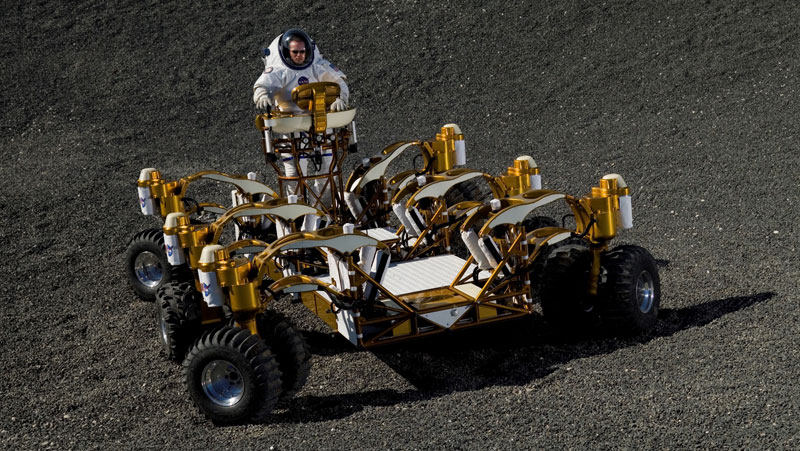
This space mission might not seem as exciting as a galactic spacecraft or a space vehicle that flies to the moon, but the Lunar Truck is a ruggedized, all-terrain vehicle that NASA will use on the next moon mission in 2020. The vehicle is about the size of a Ford truck, with 12 indestructible wheels that can help astronauts drive on the surface of the moon and even into craters. The truck weighs about 6,600 pounds, stands about nine feet tall, and runs on electricity for 14 days at a time.
Dextre Space Robot
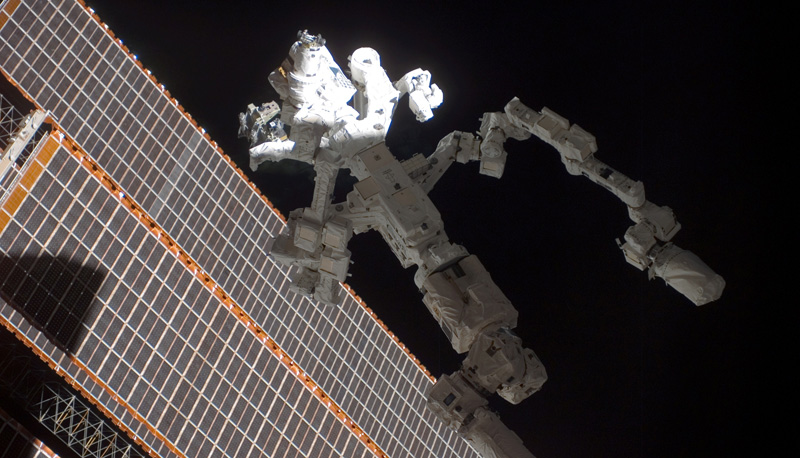
Now attached to the International Space Station but not fully operational, the Dextre robot (or Special Purpose Dexterous Manipulator) will assist astronauts in repairing the station. Launched last year as part of the Canadian space program, the Dextre is too large to launch from Earth, so was launched in pieces and is being assembled in orbit. There are four main tools to use for repairs, and the robot runs on 1,400 watts of power, weighs about 3,300 pounds, and stands almost 13 feet tall.
NASA Space Elevator
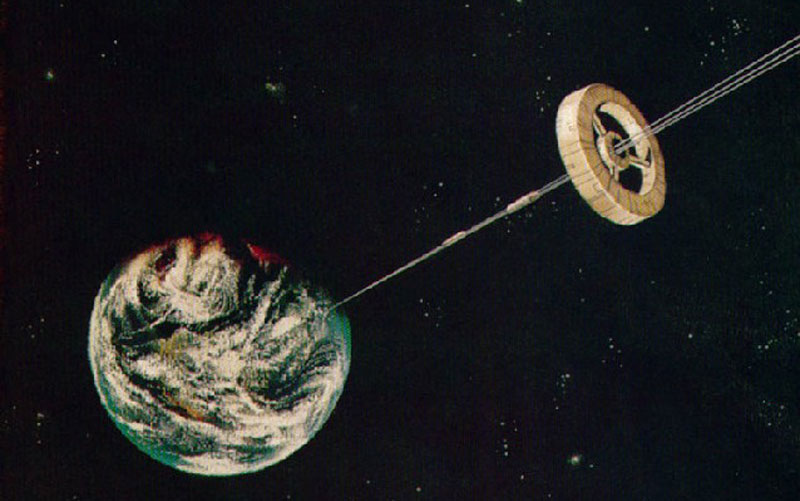
Partly a science education project for universities to experiment with ideas, partly a joke among scientists, and partly a serious effort to make space travel more feasible, the space elevator program at NASA intends to build an elevator in space that can carry people to orbiting craft. Just last fall, a company called LaserMotive won a $900,000 prize from the Spaceward Foundation for designing a “cable climber” that connected to a hovering helicopter about 3,000 feet from above the earth.
Chang’e Lunar Mission
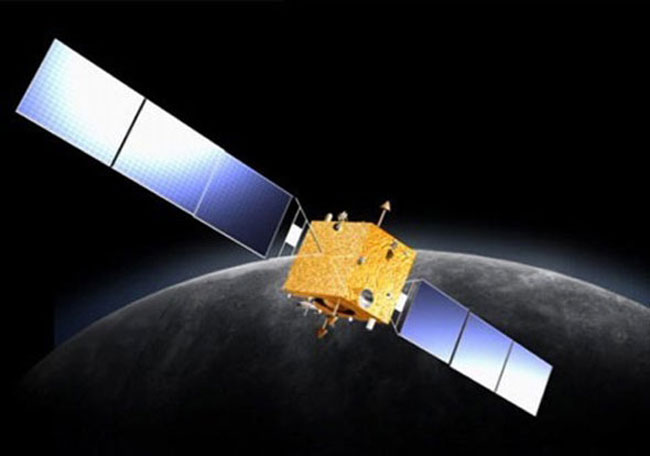
This Chinese mission to the moon – confirmed in 2009 by government officials – will begin in earnest in 2012 when the country sends an unmanned rover. By 2017, China will send a manned space vehicle to the moon. One goal of the mission is to collect an extraordinary number of samples (about 4.4 pounds) and return them to earth, possibly to determine whether the deposits on the moon can be used for further scientific benefit and an eventual lunar colony.
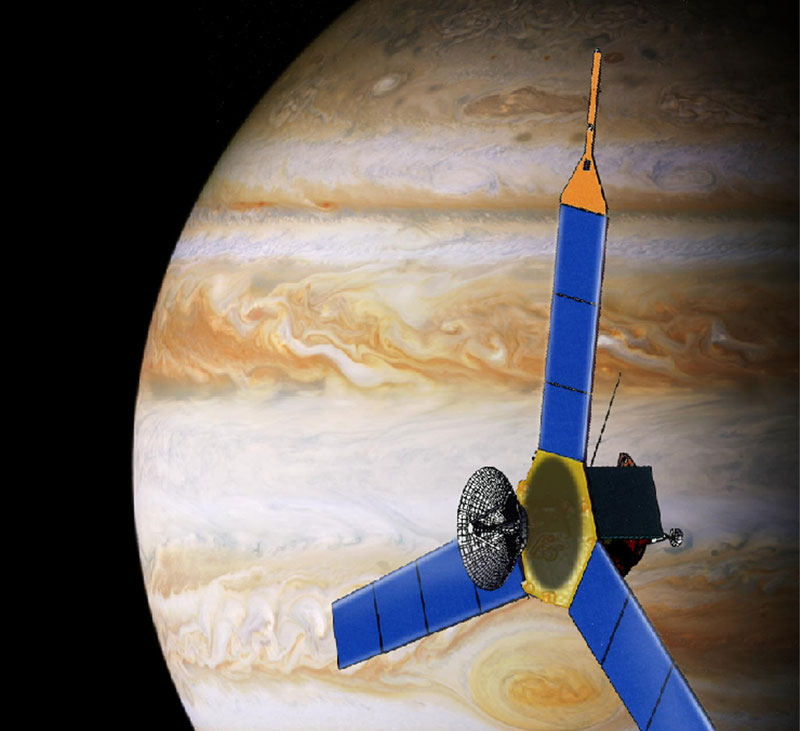
Juno
One of the most unheralded NASA missions, but one that is sure to reveal some interesting scientific discoveries, is the Juno mission to Jupiter, set to launch next summer. The probe will scan the surface of the planet and examine its atmosphere and solid core in order to figure out how this giant planet came into existence and, even more importantly, how it affects our own planet.