If you think your EnergyStar certified Whirlpool is efficient, just wait until you get a look at this crazy new(ish) washing technology from Xeros. This is what the future of laundry looks like.
Born out of research conducted a few years ago at the University of Leeds in the UK, Xeros’s machines use an entirely different technique than other washers do. Instead of just water and detergent, Xeros employs millions of tiny, reusable, dirt-absorbing polymer beads to remove stains and odors from your garments. Amazingly, not only is this process more effective at cleaning clothes, but it’s also far more efficient.
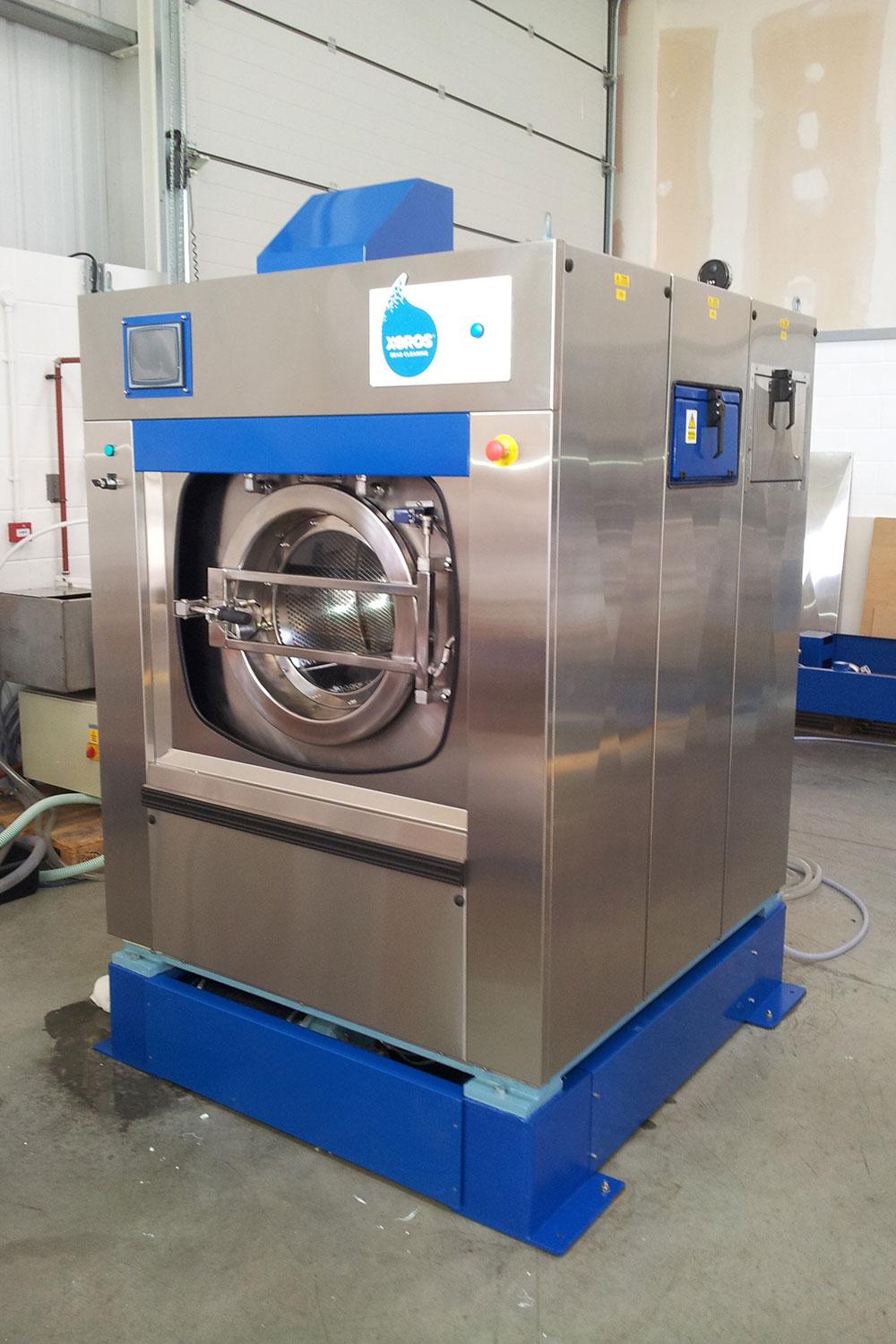 Oddly enough, the researchers that developed this technology were actually trying to solve the opposite problem at first. Originally they were working on ways to help dyes stay in fabrics longer, but then discovered that the process could work in reverse and be used for stain removal. A few years later, they had built it into a working prototype.
Here’s how the whole process works. During the wash cycle, more than a million tiny beads are added into the load via a wet sump pump. With little more than a cup of water and a few drops of Xeros’s special detergent, the beads then become polarized so that they attract dirt particles. After the water dissolves the stains a bit, the gunk is absorbed into the center of the beads, where it remains trapped forever. After the cycle is complete, the beads are spun out of the load through holes in the drum, where they then return back to the sump pump and are reused. According to company execs, this process has been refined so that on a given load, little more than a dozen beads remain trapped in your clothes at the end.
Washing in this way gives Xeros a number of advantages over traditional washers. For starters, they’re vastly more resource-efficient. These machines reportedly require less than ten percent of the water used in a normal washing machines, and also use just a fraction of the electricity needed to complete a cycle with a traditional machine. Xeros estimates that if all UK households converted to Xeros cleaning, that would save approximately 7 million tons of water per week, equivalent to 5.6 million swimming pools per year.
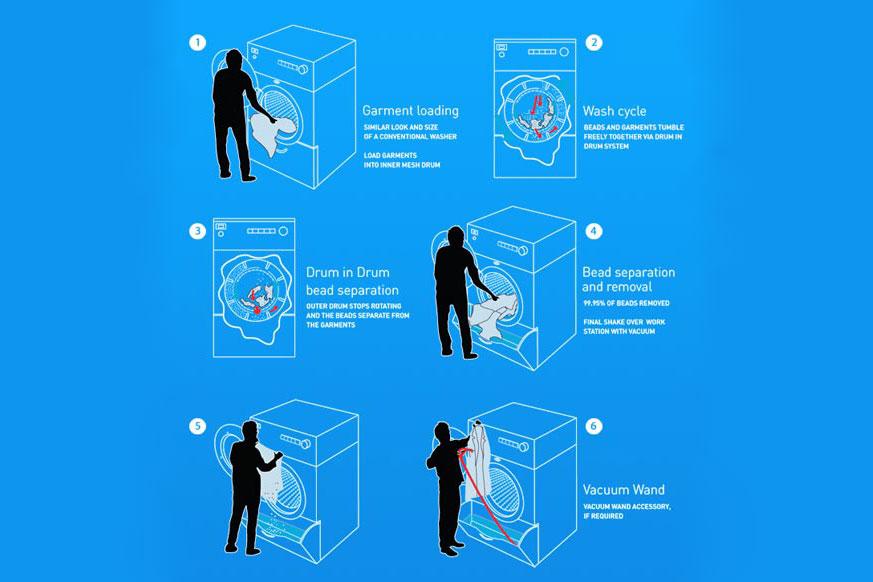
The polymer beads also cut down the amount of detergent needed to clean your clothes, and can be used for up to 500 loads before they need to be replaced. After they’re no longer useful for stain removal, the beads can be recycled and used in other products. Additionally, thanks to the amazing chemical properties of nylon, the beads also resist dye transfer between colors and whites. In short, this means no more segregating your laundry – it can all go in the same load.
Unfortunately, for the time being at least, you won’t be able to put one of these badboys in your laundry room. Right now Xeros is selling its technology to commercial customers like hotels and laundromats, although company execs did confirm in our interview that a consumer model is in the works. They couldn’t give us an exact date or comment on how far along they are in the development process, but suggested that the company is working fast to shrink the technology down into a size that’s more home-friendly.
Keep an eye out for Xeros machines in 2015. Until then, you can find out more here.