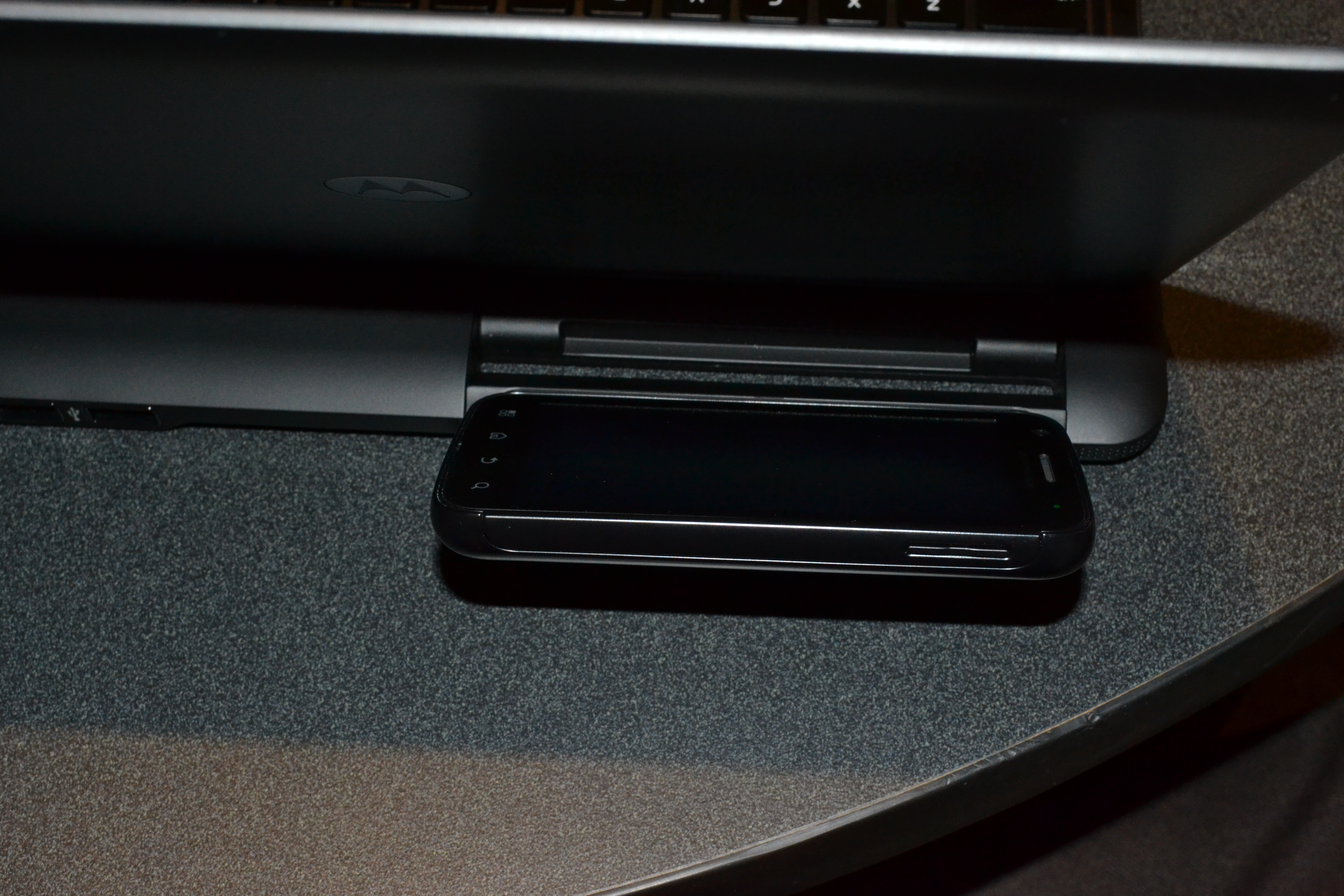
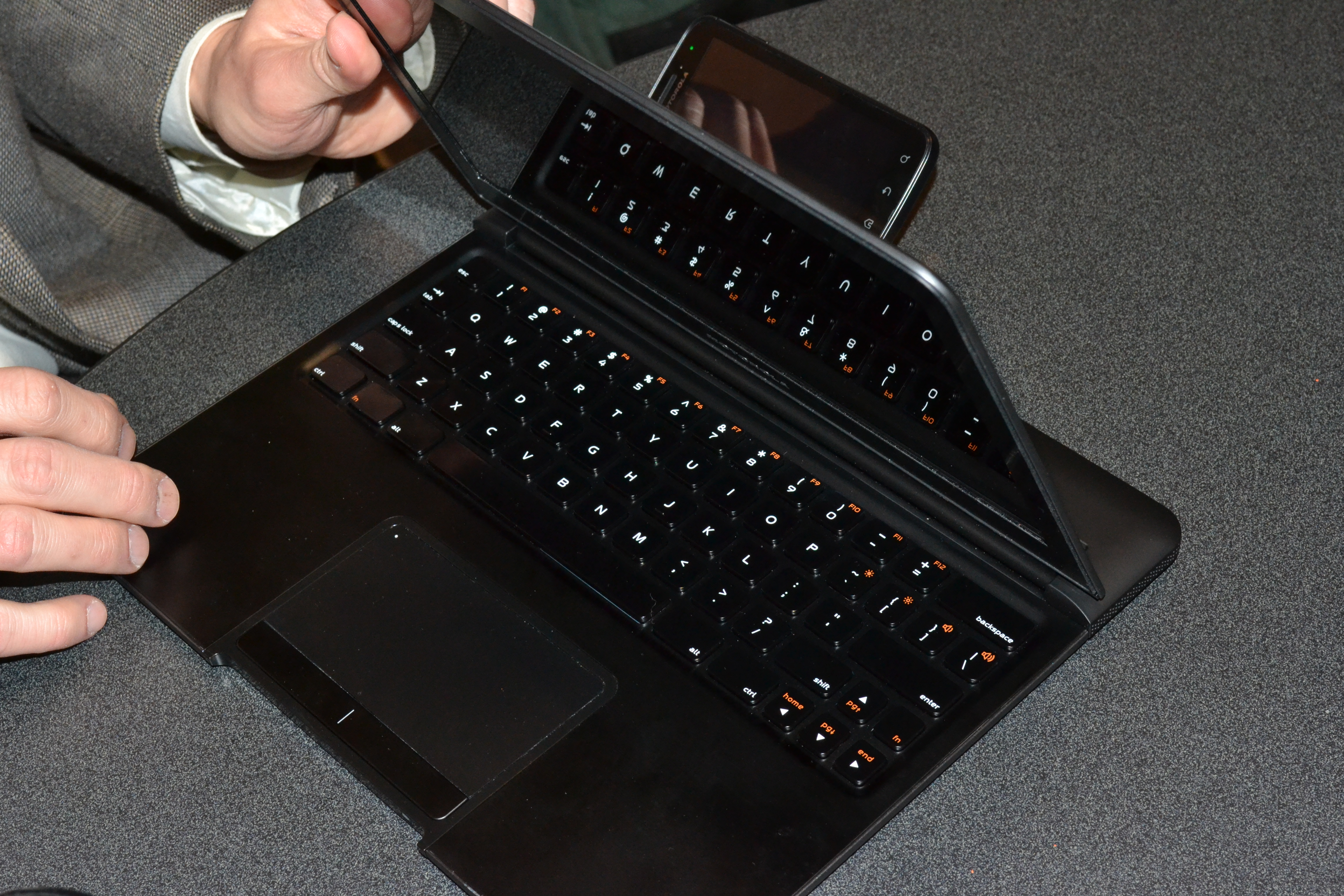
Also check out our full Motorola Atrix 4G review.
CES has been full of tablet PCs and 3D devices, but few of them really stand out or solve a problem. Will TV shows like The Office truly get more exciting with a foot of depth added to them? I’m not so sure. With the Atrix, however, Motorola has gone and invented a new product entirely, one that is both exciting and potentially useful.
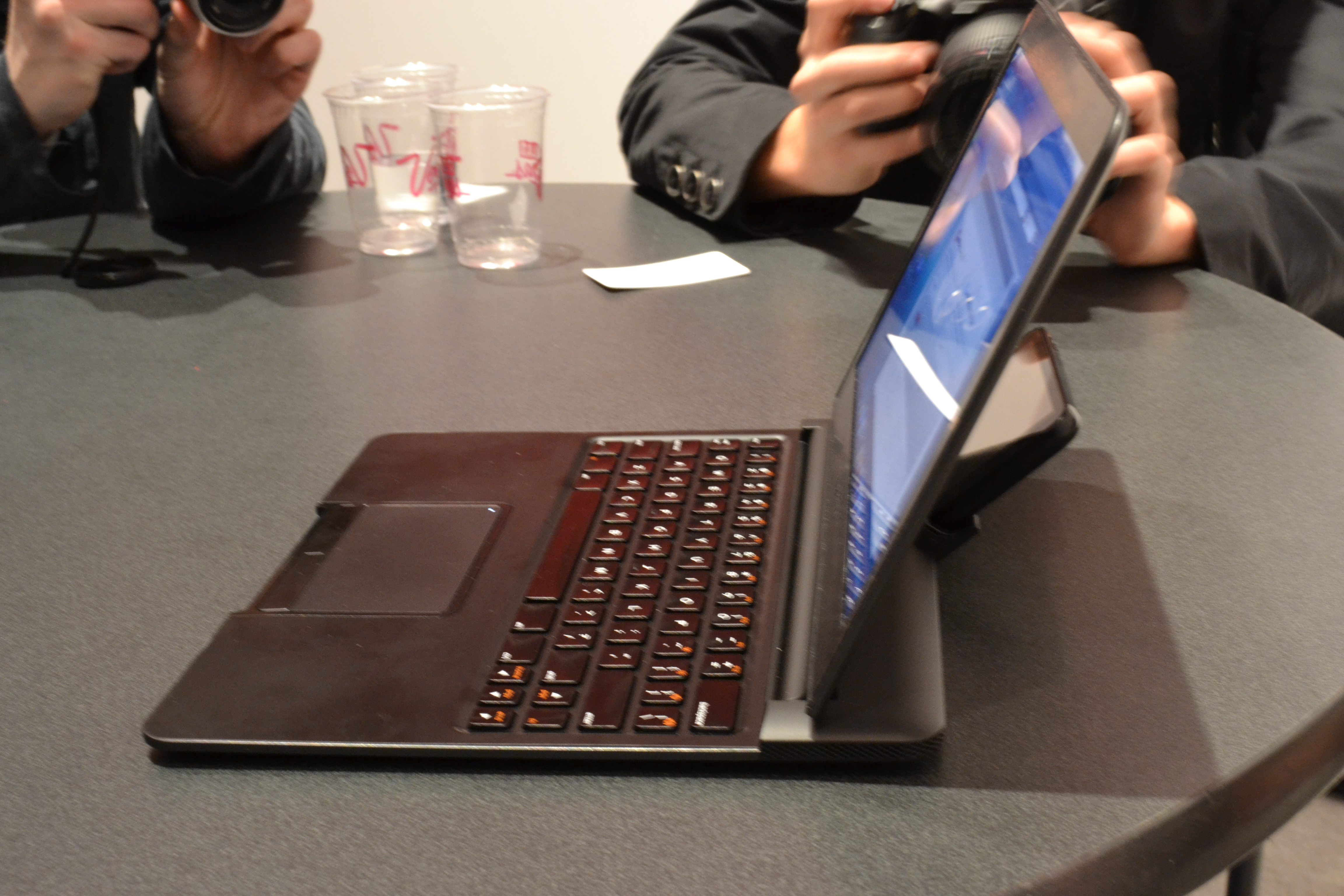
The Atrix is really two devices: It’s a high-end dual-core 4G Android phone, and it’s a laptop computer. By snapping the phone into the back of a new laptop dock, it powers a full-size screen and keyboard with a modified Android (Linux) display made to resemble a desktop computer.
The Atrix phone
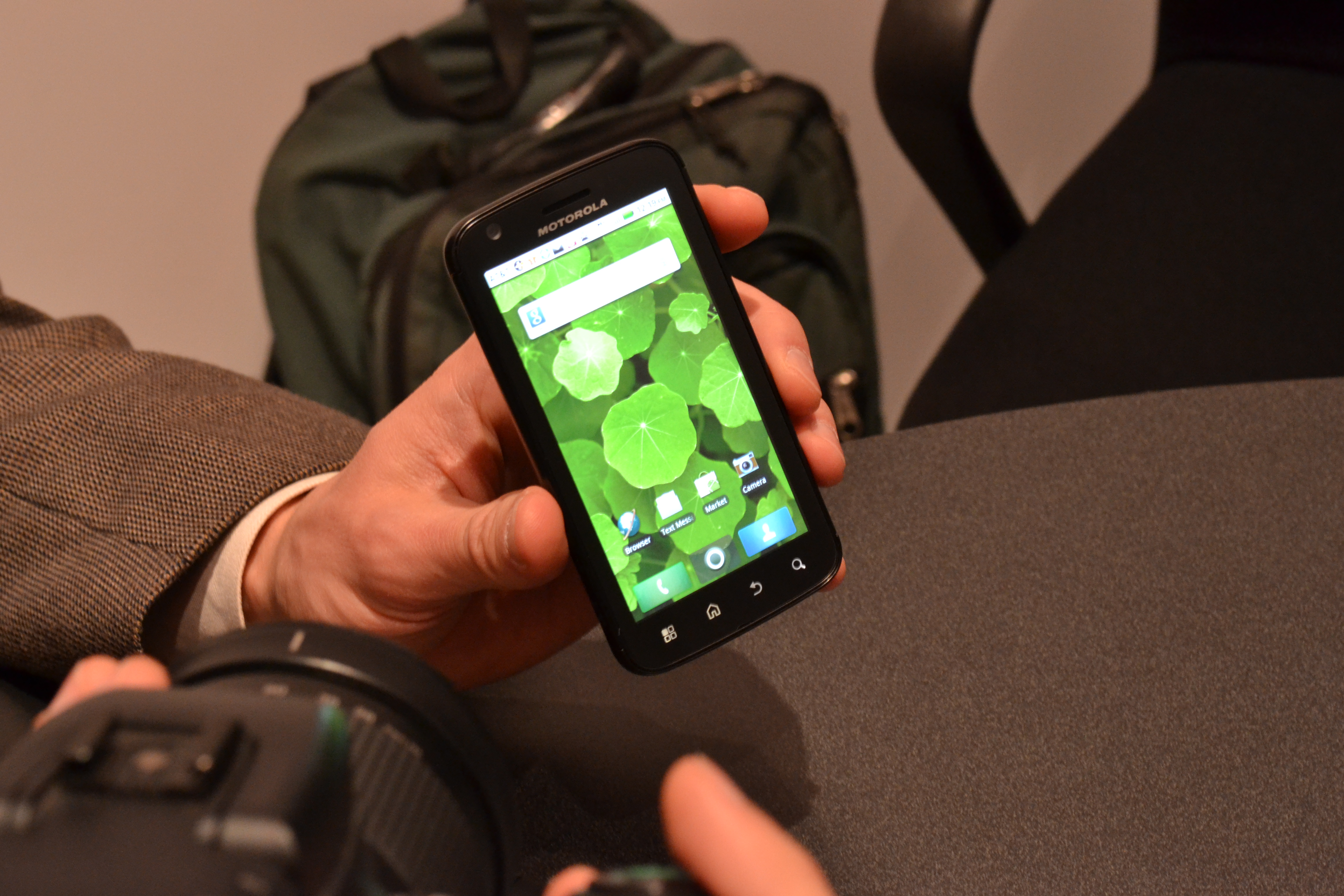
First, the phone. For a phone to also run a laptop, one needs some horsepower. From what we saw, the Atrix has some impressive specs. The Android 2.2 device is powered by Nvidia’s 1GHz Tegra 2 AP20H dual-core processor (one of the first dual-core phones) and has an impressive 1 GB of RAM, 16GB of internal memory, a powerful 1930 mAh battery, a 540×960 4-inch multitouch screen with gorilla glass (scratch and shatter resistant), a VGA front-facing camera, a 5MP rear camera that can record 720p video, and a proximity sensor for auto-turn-off.
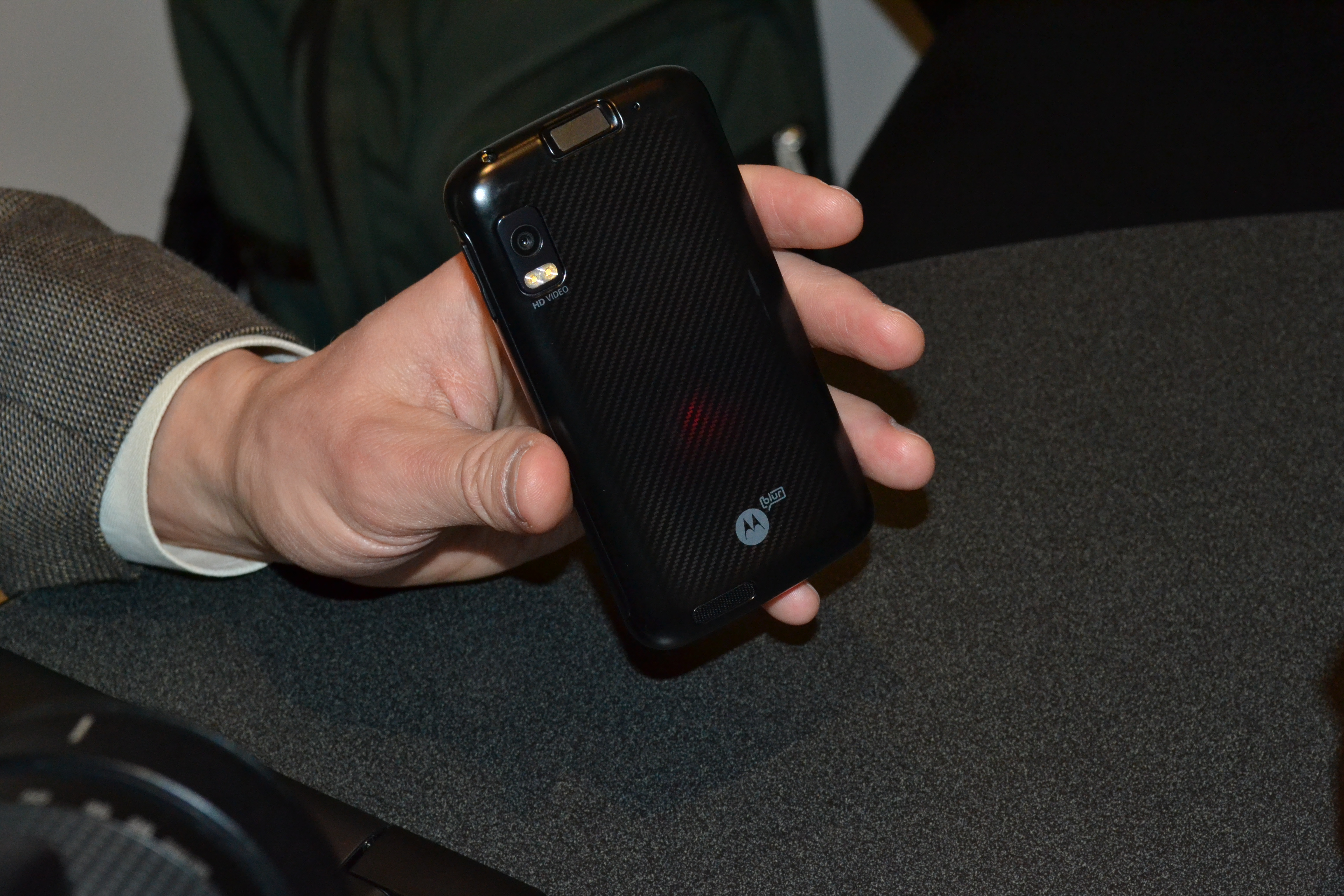
The shot above shows another unique feature of the Atrix: it’s biometric fingerprint reader. The power button on the top rear of the unit doubles as the sensor, meaning that if someone that isn’t you tries to turn on your phone, it just won’t work. It would be a good security feature for those of you who (like me) tend to accidentally leave your phone in Las Vegas cabs when attending CES conventions.
The Atrix is also capable of 4G speeds, but is only being sold on AT&T in the United States, which may hurt its potential, considering the vitriol some have toward AT&T’s network and the success Motorola has had with its Android devices on Verizon Wireless. Verizon recently launched its own 4G network, but Motorola’s Atrix was not one of the 10 new 4G devices announced. The 4G Droid Bionic will launch on Verizon.
Becoming a laptop

Motorola has been pushing its docking solutions since the original Droid launched on Verizon more than a year ago. Like the original Droid, the Atrix will have have a Navigation dock for autos and a clock stand. However, the company is now introducing a new dock that effectively turns the Atrix into a thin laptop that resembles a Macbook Air. The peripheral is little more than a 15 (or so) inch screen and island-style keyboard with a built-in 8-10 hour battery. The phone connects via Micro USB and Micro HDMI connections on the side of the phone.
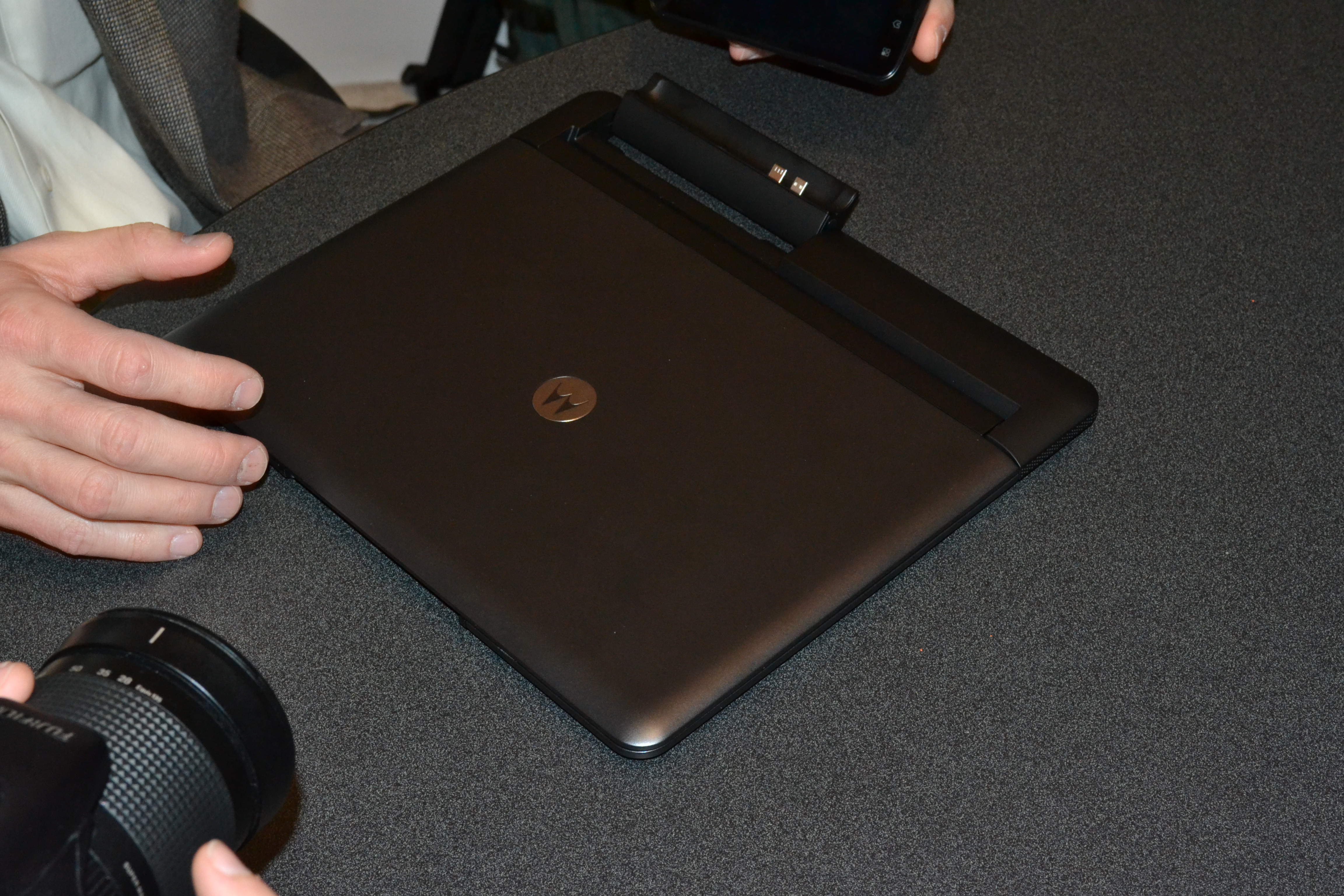
Using ‘Webtop’ mode
When docked into the rear of the laptop shell, the Atrix is charged by the dock and powers the device. Though the resolution seemed somewhat low, a split screen on the laptop shows the phone display and has space for some app shortcuts along the bottom (similar to Mac OS X) and app windows in the screen. Motorola is calling this the “Webtop” display mode. This form-factor is a Motorola modification of the standard Android OS, or may be powered separately by a Moto version of Linux. Our unit had shortcuts to a folder/directory navigator for browsing files, QuickOffice, and Mozilla Firefox. A big make-or-break for the Atrix will be how many other apps are available for the desktop client, how usable they are, and how easy they are to obtain. As it stands, the device appeared to be fairly competent as a Web browser and seemed good for most netbook-like light applications and uses.
Using the clock dock, the Atrix also has a desktop mode, for those hoping to plug the phone into a full monitor and keyboard (picture). The desktop version works identically to the laptop UI, from what we can tell.
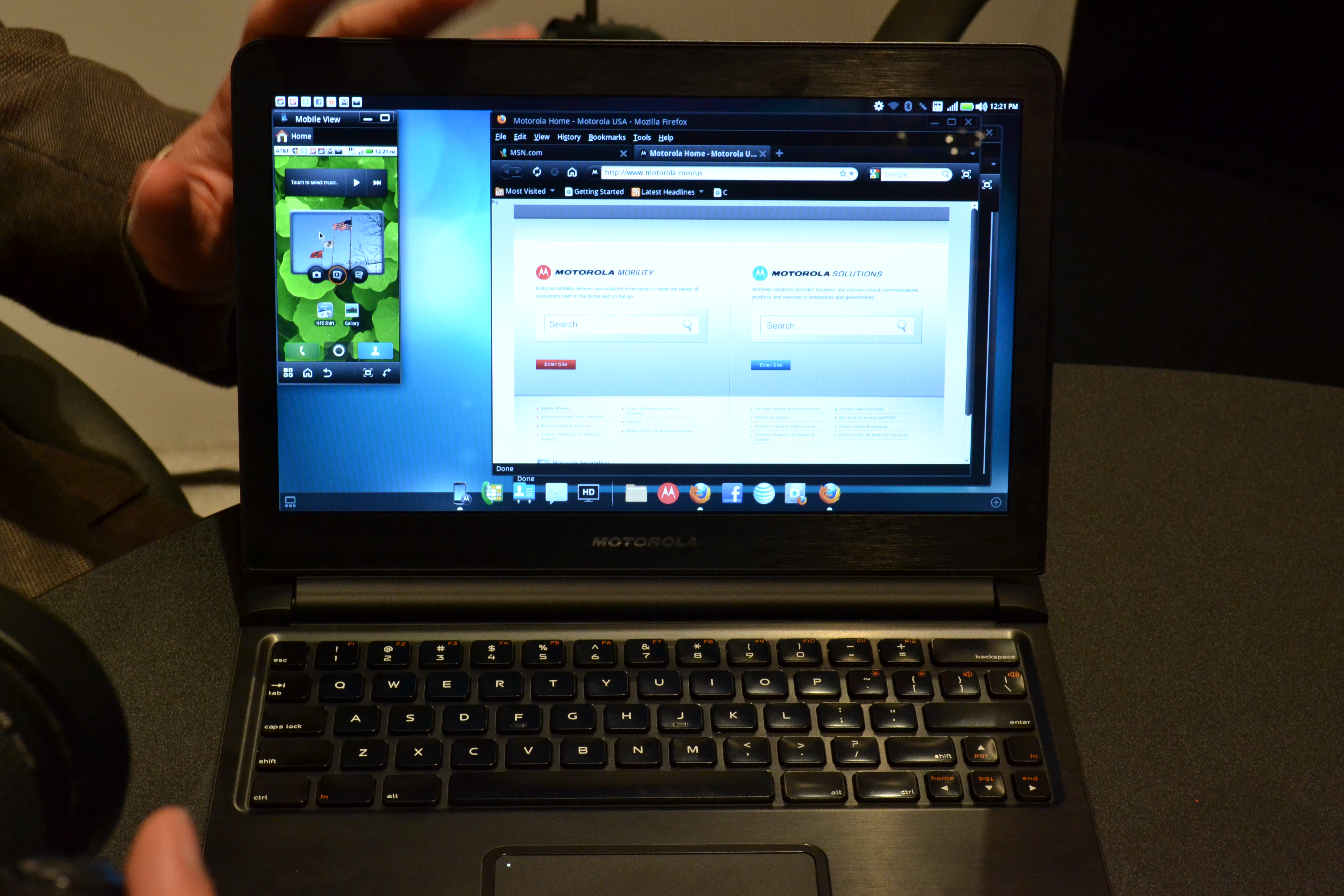
Motorola representatives told us that when you undock your phone, it will suspend and hold all of your desktop apps and browser windows until you reconnect, making it possible to undock and redock without having to start your work over. If the phone is turned off between dockings, the apps will have to restart, but the Atrix will save your browser windows and docs before shutting off.
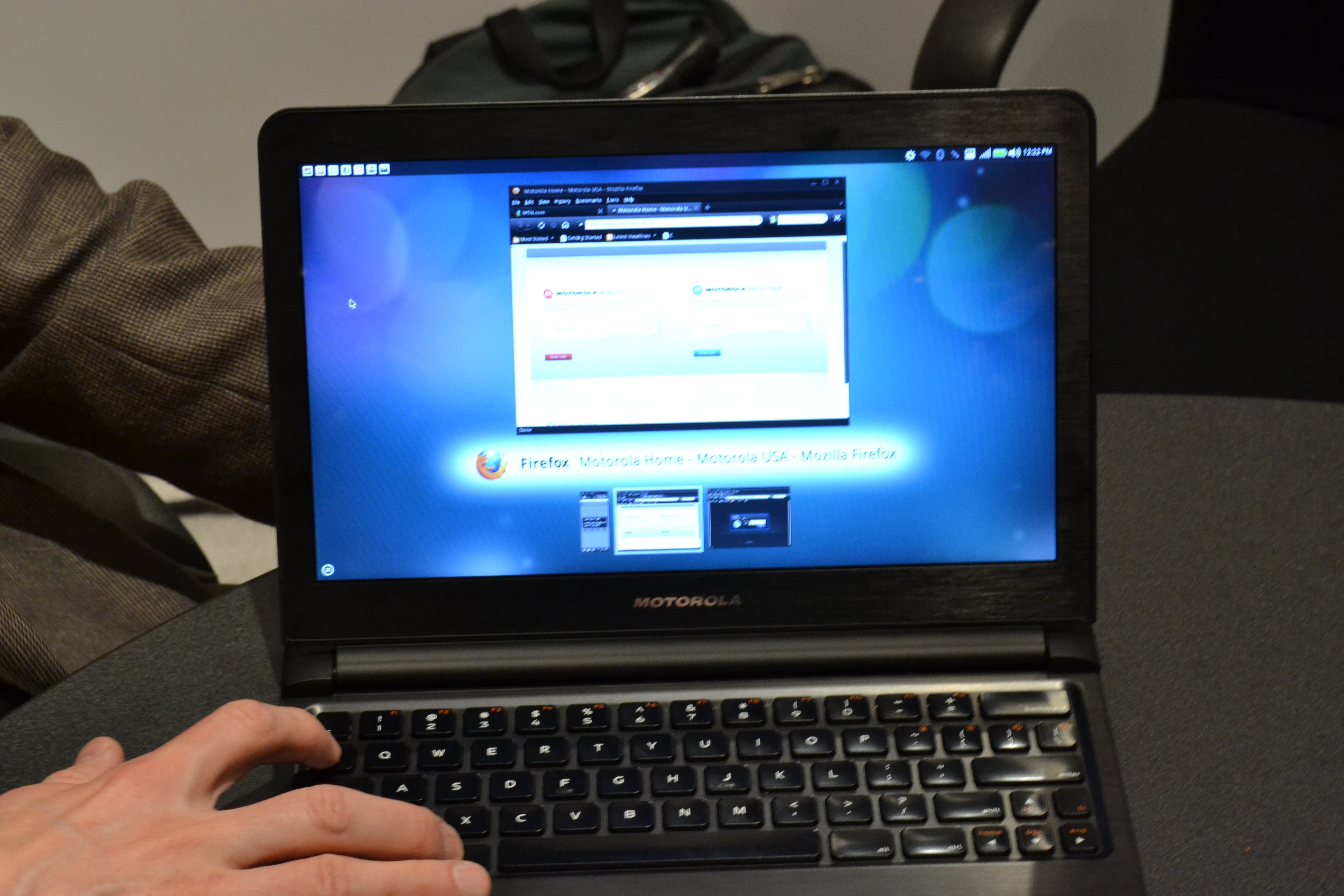
The unit also has some interesting multitasking features. Since the phone still has a window inside of the Webtop display, you can make calls using the speakerphone or a bluetooth headset, and do almost anything else you normally do on your phone. You can also open up Android apps and run them in full-screen. I’d imagine if the Atrix gets Android 3.0 (Honeycomb) at some point, most apps will already have a widescreen tablet display mode to them, making a unit like this all the more usable. With a button click, you can swap between open Webtop and phone applications on the fly (seen above).
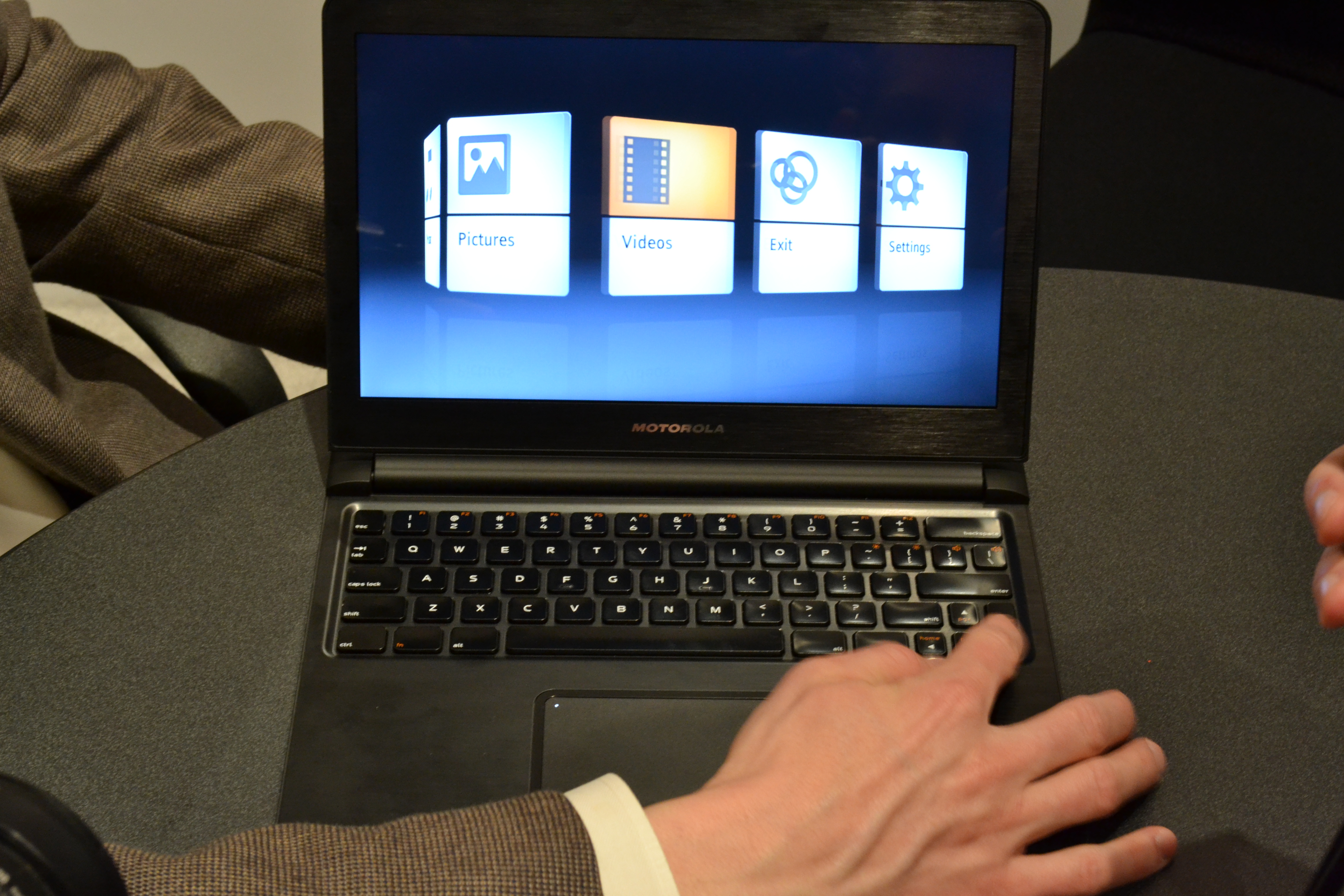
No modern consumer product would be complete without a custom, odd looking media player, and the Atrix is no exception. A pretty looking series of domino-ish icons let you experience any pictures video, and music available on the device. We watched some sample videos on the device, which rendered quickly and looked great.
Are we ready?
The Atrix is a great first attempt at merging the worlds of PC and smartphones. Unlike tablets, which are better suited as consumption devices, the Atrix should appeal to those who still need or prefer a full keyboard and mouse to create content. With a built-in charger and long battery life, it will also be a great device for long flights and those on the go. The dock is fairly thin and well-built with what appears to be an aluminum shell and solid island-style keyboard.
The question is, will consumers embrace a new desktop interface? Though Android has taken off, the desktop world is still owned by Microsoft Windows and Mac OS X. Like Google Chrome, Motorola is attempting to introduce a new operating system into a very mature market. If applications aren’t easy to find and download and the platform isn’t open enough, it will likely be rejected after the “wow” factor wears off.
The other looming question is how much it will cost. If the phone already costs between $200 and $300 with a 2-year AT&T contract, how much will the extra dock cost? If it’s much more than $100, I can’t imagine it becoming a mainstream success. Low-end laptops and netbooks cost about $400 and up. If Motorola can’t beat or get close to that price, it’s hard to see many consumers choosing the Atrix as a desktop solution. There’s also the problem of bandwidth. It’s already easy to blow through AT&T’s $25 2GB data plan and with a full desktop client, many users will constantly encounter overages. Hopefully AT&T will address this and adapt plans, especially on its 4G network.
Still, the Atrix is my favorite new product out of CES so far. It has the potential to be a game-changing product and if it succeeds, we could see some very cool updates in the years to come. Hopefully Motorola will fully support the device.
CES Video
Below is a long 9 minute demo we got from a Motorola executive. I apologize about the length, but was too fascinated to stop recording. Fair warning, the audio is a bit faint and I am no professional photographer. Thanks to our own Greg Mombert for the photos seen above.




can u multi task like on the iphone 4? like can i be on the phone talking and look something up on the web?
android phones had multitasking far before apple caught on….
the fact that the iphone4 has it is a response to google's use of it.
How about a smartphone with a built in USB connector that you can slide out and connect to your laptop.
Somebody over reached on this one. Why reinvent the wheel?
you are missing the point, Attrix is not connecting laptop. Its connecting to dumb screen , and powering it with its brain power.
Pretty innovative product.
It is too bad they failed to add a webcam in the laptop dock.
I've been looking for some information on what the on-board keyboard looks like on the Atrix and what size is it?
How does it compare with an iPhone? I have large fingers and I'm not sure I would want a keyboard any smaller than the iPhone. Can anyone help?
the onscreen keyboard would be the same as any other android phone, with the added benefit of swype.
Honestly, with 2 Cams on the Phone Itself, why would you want basically a 3rd Component just eating away more juice? The Laptop Dock is great for composing Messages and working with Files, if you want to video chat, just pop the phone out and give it a go.
The biggest issues of this are:
1) phone apps are designed for touch, not for click based device such as mouse and touchpad
2) making and receiving calls will make the experience disrupted, for the big screen freezes
3) phone apps are optimized for small screens, not for bigger screens (on the other hand, Honeycomb is not for phones, so Atrix will not have it installed)
Awesome idea…
OMG this gives me an erection just looking at it….i cant wait for this to come out…the phone is probs gonna be a problem for the iPhone 4
Terrific concept! I would still want to have the phone dock in the front, maybe in the position of the trackpad so that it simply slides I to a cavity there and doubles up as the trackpad too :) Any takers?!?
An Interesting idea, but it would mean more wear and tear on the screen and a thicker bottom shell. Perhaps when Moto phones get a bit thinner, this concept could work well. Interesting idea!
That thing doesn't have a low resolution. It's the fault of GTK and its default spacing, A lot of themes for gnome and xfce look really big if not tweajed a bit.
This is the most intriguing device ive seen out of ces this year.if only the cliq hadn't tainted my view of motorola
waiting for interactive projections to be built in phones, now that would be worth changing from iphone unless apple does it first. Not a big fan of the digital finger print, now for every account you make there going to want your finger print or some bullshit like that., big brother is watching : P lolz
Game-changing product??? Isn't this what the Palm Foleo was supposed to be? The community criticized that idea and caused Palm to kill the project. Don't people remember anything that came before… especially the writers/editors of articles??? Get with the program!!! By the way, the iPhone pretty much copied the form factor of the Sony Clie TH55 from 2004, and I can't stand when articles state that a new smart-phone copied the look of the iPhone. Then there's the concept of an "App Store." Didn't anyone ever used Handango.com or PalmGear.com/PocketGear.com??? Stop re-writing history!!
Execution, delivery, timing, marketing…all of these matter.read james burke for perspective on your rant
From the Wikipedia article I just read about the Foleo they are NOT the same things at all. Palm was giving you a "netbook" type of device that ran a Linux OS: "The device ran on the Linux operating system and featured 256 MB of flash memory and an immediate boot-up feature."
That's like getting a smartphone + smart-netbook = why would you want to have two devices that are basically the same?
The Atrix gives you a mobile computer that docks to a desktop or laptop hardware setup. The Atrix is still the computing power, not the laptop or desktop. Therefore, with the Atrix everything is in one compact device that is highly portable.
ATT Data plans are going to kill this awesome idea. ATTs data rates are way to high and their usage limits way to low. If they have data plan priced right, this device will be mine.
Not crazy about motoblur but love the concept, and the device. Could work for me i drive my office where ever i need to go.
I have been envisioning this sort of things for some time. As you indicated, the question will be cost of the "extras". However, as Processing Power and other things increase, why would the single person NOT want to be able to take pretty much EVERYTHING Digital with them on the go. They can undock the phone for day to day needs and keep their digital life with them (the FingerPrint On/Off seems to provide some level of security) and then when they get back home, they just dock and have full features. It appears the dock is even small enouch for trips (business or pleasure). Everything at your fingertips and not having to have multiple devices. Motorola needs to commit to keep the dock compatible with future phones (as Dell for for a number of years) so that a purchase now, will work with future phones.
Seems silly to me. Once you bother carrying around the laptop "dock", you might as well put a processor and some memory in it.
It would be useful to be able to run applications on the phone remotely, but any Android phone should be capable of that with a bit of software.
i think on a technology stand point its pretty awesome…but if im at starbucks someone could easily just grab my phone and run…lol
Yes, they can if you so lost in your screen.
"Our unit had shortcuts to a folder/directory navigator for browsing files, Google’s QuickOffice, and Mozilla Firefox."
Since when does Google have a product called QuickOffice? Did Google buy QuickOffice?
Mistake on my part. I thought QuickOffice was a part of Android. Turns out it is just something Motorola and maybe other manufacturers seem to include. I will investigate further. Thanks for pointing this out!
With Citrix receiver on Attrix, you can connect to your remote desk or office m/c or home. Hence all software (including word / office ) available througjavascript: postComment(1);h your remote m/c
Great concept though, but my question is, since Android is a Linux platform, can you run an emulator on it so you can run Microsoft programs like Word and Excel, or even a dual boot with Windows 7?
:) When's this baby coming out? also, what phone company gets dibs on it? if sprint, im so down for that
its sad that its only att !!! whats the point of a 4g phone with no 4g network in place!!
they are getting a 4g network and its very soon
AT&T is farther than you think on 4G LTE, I was a cell tech for them for 8 years, and worked on the development launch in Dallas until recently, and it is at least a year + in select cities, and the majority of cities are 2+ years out. Unless of coarse you are calling AT&T and T-Mobles enhanced 3G UMTS 4G, like they are in their comercials, then AT&T has had 4G for over 2 years.
They missed a built in webcam for the laptop.
I don't see this. Can you confirm it is part of the unit?
yeah…. missed one…
Looks pretty revolutionary. I know he said you would conserve battery with two CPUs because you could turn off one, but that doesn't make a lot of sense to be honest. I still think battery life could be a major issue.
It is cool that you do not need both a phone and a laptop, the OS is shared etc when using it.
Battery life is not issue, because when using in lapdoc mode, its getting charged !