1. Home
  2. Phones
  3. Android
  4. Apple
  5. Business
  6. Mobile
  7. News

Apple’s App Store revenue surges 80 percent higher than Google Play store

Add as a preferred source on Google

Android has been far ahead of Apple in device sales for a while now, but revenue continues to be a sore point for the Google Play store, still trailing far behind its rival. The most recent findings from App Annie show Apple’s App Store generates 80 percent more revenue than its main rival, Google Play.

The discrepancy in revenue is mostly due to the ban of the Google Play store in China, while Apple’s App Store is permitted in that country. India, Indonesia, and Brazil are also hotspots for Android usage; regions that tend to place low on the app revenue charts.

app-annie-total-downloads-revenue-apps
Image used with permission by copyright holder

For iOS, the regions with the most downloads tend to generate the most revenue, but that is not the case for Google Play. Brazil, India, Russia, and Mexico are all in the top five for downloads, yet none appear in the top five for revenue. Instead, smaller, more developed regions like Taiwan, Japan, and South Korea account for most of Google Play’s revenue.

Recommended Videos

Only the United States can be found on all four charts for iOS and Google Play. The United Kingdom is the only country to be in the top five for iOS total downloads and revenue, yet not appear on either of the top five for Google Play, showing a big disparity between iPhone and Android owners in the country.

It ain’t all bad for Android, though, as establishing the platform in countries like India could be a major boon in a few years. India is already the third-largest region for app downloads on Google Play, with only 15 percent mobile penetration in the country.

The Google Play store may be unbanned in China soon, according to reports. Having the Google Play store in the country would raise revenue and potentially remove a lot of malware from Chinese Android devices.

Revenue in regions like North America and Europe tends to be higher on iOS, which may be why we still see developers choose iOS over Android. That said, Microsoft and Facebook have started prioritizing Android as the dominant mobile platform, due to the larger user base.

David Curry
Former Contributor
David has been writing about technology for several years, following the latest trends and covering the largest events. He is…
Vibecoded apps are flooding Apple’s App Store, and users are getting sick of them
App Store submissions have doubled this year as AI tools make it easier than ever to build an app, but downloads haven't kept pace, and for good reason.
Apple App Store homepage on an iPhone

Apple's App Store is in the middle of its steepest submission surge in years. Developers submitted nearly 600,000 new apps last year, marking a 30 percent jump over the previous year. That number has already doubled to roughly 560,000 new apps in just the first six months of this year, according to estimates from analytics firm Sensor Tower cited by the New York Times. The reason behind the spike is vibecoding, which allows people with no prior development experience to create new apps using AI tools.

A familiar boom, with a twist

Read more
Google Photos adds a quick toggle between AI and classic search
Classic search is finally easier to reach for people who enabled Ask Photos
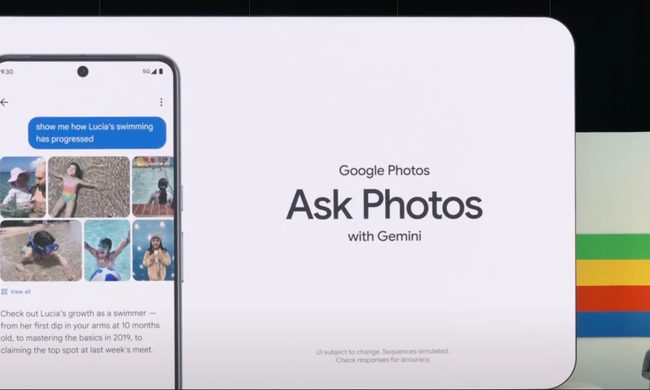
Google's Ask Photos debut.

Google Photos is giving users an easier way to leave its Gemini-powered search when a simple keyword would do. A new toggle now sits at the top of the results page, letting users switch between Ask Photos and classic search without digging through settings.

The change appears to address feedback from people who opted into Ask Photos but wanted a quicker way to return to classic search when Gemini was slower or less useful for a straightforward query.

Read more
Snapseed Camera now lets Android users save original photos and add geotags
Google updates Snapseed Camera with geotag support and non-destructive photo editing
Snapseed App

Google appears to be quietly turning Snapseed into something more than just a photo editing app. Over the past few weeks, the company has been steadily adding new capabilities to Snapseed Camera, its standalone camera app for Android. The latest update introduces two practical features that many smartphone users have come to expect from modern camera apps: the ability to save an untouched copy of every image for future editing and support for embedding location data directly into photos.

Neither feature is flashy, but together they make Snapseed Camera a more capable photography tool, particularly for users who like experimenting with filters without permanently altering their original shots. According to a report by 9to5Google, the features are rolling out with Snapseed Camera version 4.1.1.x on Android.

Read more