Now that a California jury has issued a $1.05 billion verdict in Apple’s patent infringement battle with Samsung, the mobile industry is going to have to adjust to Apple’s newly-fortified high ground in intellectual property wars. Many future battles remain unfought: Samsung will certainly appeal the decision, and other jurisdictions might not find in Apple’s favor at all — after all, just last week a South Korean court found the companies infringed on each others’ patents. But suppose Apple’s victory holds — or at least amounts to more than a temporary ripple in the mobile industry. What might it mean for future mobile products, and how companies attempt to complete?
What’s a utility patent?
Apple’s victory over Samsung was based on infringement of two types of patents: utility patents and design patents.
In United States law, utility patents cover inventions that have some demonstrable benefit and are capable of being used — meaning they have to be operational, practical, and beneficial. Utility patents cannot be granted simply for cool ideas: For instance, the U.S. Patent Office has an outright ban on patent applications for devices like perpetual motion machines.
There is no special class of “software patent,” so most patents covering computer software are utility patents covering the functionality of a particular feature or application. Utility patents do not cover the algorithm behind particular kinds of software; however, they can protect software that performs a particular function based on an algorithm. In other words, if someone comes up with a novel way for (say) analyzing harmonic content of digital audio, that algorithm probably isn’t patentable. But applications that rely on it — like digital tuners, automatic song recognition apps like Shazam, or even melodic transcribers — could be protected by utility patents.
There’s no standard for how minor (or how broad) a utility patent can be: It merely has to demonstrate that it’s useful to someone with normal knowledge and skills in a particular field. Most challenges to utility patents are on the basis that the patented innovation would have been obvious to anyone familiar with the technology and prior art: If an invention doesn’t pass this “obviousness” standard, it isn’t patentable.
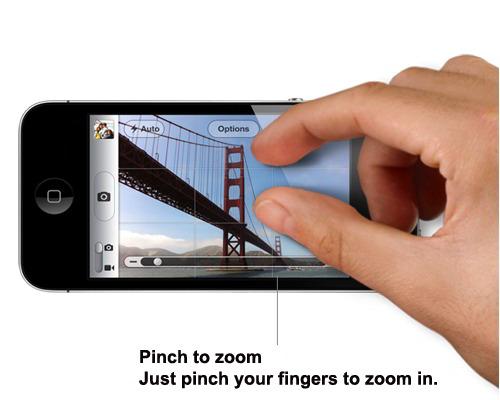
Apple’s case against Samsung was whittled down to three utility patents. Perhaps the most significant is the so-called ‘381 patent. It covers overscroll bounce (or rubber-banding) to indicate that a user has reached the end of a scrolling content area, but also common touchscreen actions like dragging documents, pinch-to-zoom, and twist-to-rotate. Another Apple utility patent (‘915) covers distinguishing between a single-touch scroll action and a multi-touch pinch-to-zoom gesture, while a third covers double-tapping to enlarge and center onscreen content.
What’s a design patent?
Design patents live in the area between utility patents and protections like trademark and copyright. Design patents cover the distinctive non-functional ornamentation of an otherwise functional item. In the software world, design patents are most often used to cover on-screen icons and other non-functional aspects of an interface.
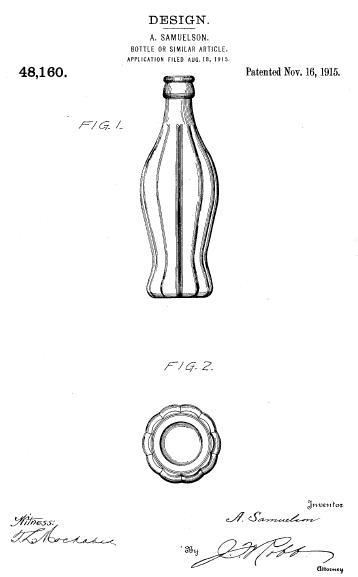
One of the first U.S. design patents was awarded in the 1840s for a typeface, but one of the best best-known objects protected by design patent was the original Coca-Cola bottle. The particular design and ornamentation of the bottle didn’t mean that nobody else could make bottles — but it did mean if another beverage maker mimicked the design of Coca-Cola bottles for a different product, Coca-Cola could claim patent infringement. Designs can be covered by both design patents and trademark: Coca-Cola’s design patent has long since expired, but since trademarks remain active as long as a product is on the market, it’s still protected by trademark.
While utility patents can be invalidated if they’re found obvious, one irony of design patents is that they can be invalidated if they’re found to be useful. If the Coca-Cola bottle design enabled more-efficient packaging or strengthened the bottle, competitors could have sought to have it invalidated. However, utility patents differ from copyright in that patent holders do not need to show that an alleged infringer copied an original work: Even if someone arrives at the same ornamental design completely independently, they can still be sued under a design patent.
(Another famous design patent covered the Statue of Liberty, although it’s hard to argue what the practical utility of the statue might have been. The patent was mostly issued to protect sales of small versions of the statue, proceeds of which were used to built the full statue.)
Design patents are generally considered weaker than utility patents, because they cover things that are (by definition) useless. They also run for a shorter period of time: Design patents typically last 14 years, while utility patents last for 20. Furthermore, unlike utility patents, design patents are limited to a particular field or industry. For example, if a jewelry designer files for a utility patent covering a particular design and someone can find a kitchen utensil with the same design — guess what? The jeweler is out of luck.
Was Jobs right to focus on style?
Amongst technology companies, Apple has been uniquely concerned with design patents. Of the nearly 360 Apple patents that list Steve Jobs as a co-inventor, more than 300 are design patents. A great deal of these have nothing to do with the iPhone: In fact, two cover the glass staircases in some Apple retail stores. Many others cover the final design of a multitude of Apple products, including iPods, keyboards, mice, notebook power adapters, and even product packaging and lanyards included with some iPods. Jobs was famous for berating companies like Microsoft for having no style and failing to bring taste and sensibility to their products.
Apple’s predilection for design patents no doubt dates back to the early days of its competition with Microsoft over graphical user interfaces. Apple fought a long and bitter court battle with the Redmond software giant, alleging Windows copies key elements of the Macintosh user interface — something that was pretty obvious to anyone who saw before-Mac and after-Mac versions of Windows, in much the same way the iPhone’s impact on smartphone design is obvious when looking at the evolution of smartphones. However, due to a licensing agreement the companies had in place, Microsoft was able to fight the case under contract law rather than copyright law, and Apple lost. Apple learned its lesson, and since Steve Jobs’ return to Apple in the late 1990s, the company focused on using all available legal means to protect its designs, including trademark, copyright, and design patents.
Apple’s victory over Samsung represents a partial vindication for its protection strategy, and the ostensibly weak design patents that go along with it. The jury found that Samsung infringed on three Apple design patents, including the front-face appearance of the iPhone, the general outline of the iPhone (including the infamous round rectangles), and the grid of round square app icons on a black background that serves as the iPhone’s home screen. However, the jury did not find that Samsung infringed on an Apple design patent covering the design of the iPad — which is why Samsung is now requesting a June 26 injunction on U.S. sales of the Galaxy Tab 10.1 be lifted.
If the decision stands, Apple will have proven what consumers (and its competitors) have known all along : design matters. Apple is used to being copied: It was the first computer maker to move keyboards back from the front lip of a notebook computer; as soon as the iMac appeared, computer makers around the world started making candy-colored all-in-one computers. Pretty much everybody thought they could make iPod knockoffs, and Apple’s MacBook Air essentially invented a new category of notebook computer. The iPhone and iPad’s impact on the mobile and tablet markets is undeniable.
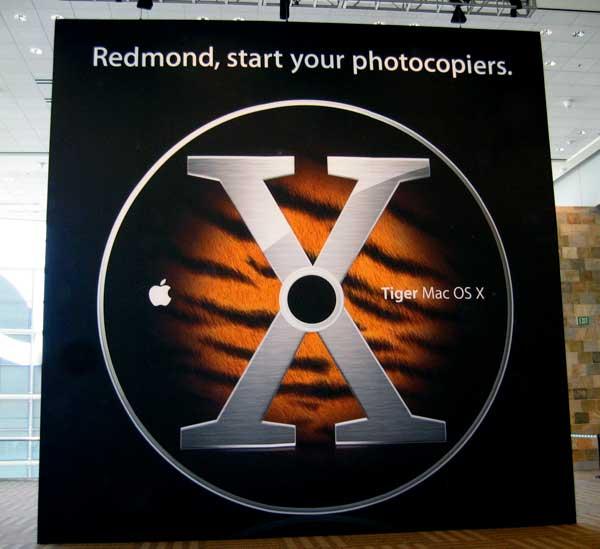
But where Apple previously mocked copycats with marketing taunts like “Redmond, start your photocopiers,” the company can now come back with a much more forceful response: “See you in court.”
Suppressing innovation?
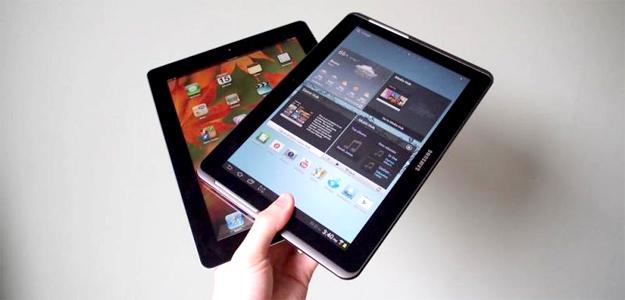
Apple’s victory over Samsung has drawn out discussion over weaknesses in the existing patent system. Critics have argued that many of the patents at issue in the case are trivial items that shouldn’t be eligible for patent protection, and Samsung itself continues to articulate its dismay that something as seemingly simple as a rectangular phone with rounded rectangles should be eligible for design patent protection. Others have argued that Apple’s utility patents are overly broad: Tectonics creative director Bill Flora (formerly involved with Windows Phone) likened Apple’s ‘381 utility patent covering pinch-to-zoom and twist-to-rotate as the equivalent of patenting a car’s steering wheel. (We bet Alfred Vacheron would have patented his steering wheel back in 1894 if automobile tillers hadn’t been all the rage — and plenty of other steering wheel designs have been patented since.)
There is some truth to these concerns. In the existing legal environment, it’s practically impossible for a small company or determined individual to take a great new idea for a phone or tablet, run with it, and have a major impact on the market. The mobile marketplace is only accessible to companies with broad patent portfolios or substantial cash reserves to license other companies’ patent portfolios. Preferably, a company needs both. For now, that means only the big names can compete in the market.
Apple’s victory on design patents might also create a new playing field for patent trolls. Individuals or companies might now start acquiring design patents in hopes of being able to license them (or leverage them) against mobile device makers. In any case, designers of everything from on-screen icons to smartphones to tablets are going to be looking over their shoulders with every move they make, lest their great ideas turn out to be covered by someone else’s design patent. Thanks to the ways design patents work, determining whether they’re in the clear or not will mean much more than an exhaustive search for prior art in the computing or mobile industries: They’ll have to look at everything from furniture and architecture to jewelry and typefaces to be sure they’re in the clear.
However, it’s also easy to argue these concerns are overblown. It’s true that the current patent landscape means small companies are essentially locked out of the mobile device arena — and I would argue that’s a bad thing. However, there are many players with both the patent portfolios and the operating capital to make a go: these include not only successful mobile device makers like Samsung, HTC, Nokia, RIM, Amazon, LG, Google/Motorola, and Asus, but also companies like Microsoft, Sony, Dell, and even HP (if it could ever pull its head together) — and that’s not even considering companies likt ZTE. Apple did not create the patent and licensing landscape that is keeping small, fleet-footed innovators out of the market — it’s just that, right now, they’re among the companies most successfully negotiating it. That breeds a certain amount of resentment.
Are Apple’s utility patents so broad that they prevent others from making competitive mobile products? I have real trouble believing that — particularly if Apple’s competitors are even half as smart as they claim. There’s nothing in Apple’s utility patents that prevents a company from conceiving, building, and marketing a device that consumers will embrace as being superior to the iPhone or iPad, or from creating some new class of mobile device that the market hasn’t imagined yet. The smartphone and tablet market so far has been focused on trying to catch up with the iPhone and the iPad, mainly by appealing to consumers through lower price tags. Smartphones and tablets are the focus of the market right now. If a company wants to innovate, perhaps it should consider skating to where the puck will be, rather than complaining about where Apple was five years ago.
Editors' Recommendations
- The best tablets in 2024: top 11 tablets you can buy now
- iPhone SE deals: Refurbished 2nd and 3rd Gen iPhones
- Apple is about to do the unthinkable to its iPads
- Best refurbished iPhone deals: Get an iPhone 14 for $513
- AirTags range: here’s how far the tracker can reach