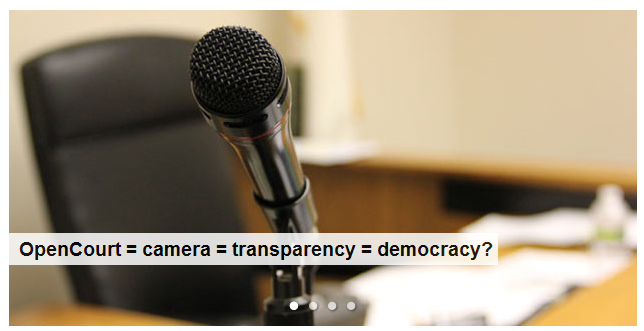
 A Massachusetts courtroom is putting reporting into the hands of citizens by experimenting with social networking. OpenCourt is an experiment out of Quincy District Court run by Boston’s NPR station, and will allow journalists, bloggers, and anyone with an iPhone to use Wi-Fi to create real time updates and live stream cases as they unfold.
Up until now, courts have tried to bar electronic communication from the courtroom. Use of sites like Twitter and Facebook has resulted in mistrials, and the OpenCourt project is not without controversy. The full multimedia access to various court cases is supposed to “foster the openness of the American courts with the idea that more transparent court make for a stronger democracy,” but many are calling foul, saying their privacy is being infringed upon. Brian Dodge, charged with disorderly conduct and in court today, told the AP, “People at home being able to watch this and know my business – I don’t like that. Why does everybody need to see my case [online]? It’s nobody else’s business.” Alleged offenders aren’t the only concerned parties: Local defense attorney Richard Sweeney revealed he’s “not overly fond of the idea. I think there are a lot of pitfalls. I understand and respect the concept – they want an open court. In this era of everyone having cellphones and videos, I can understand that, but it’s fraught with perils for attorneys with conversations that can be picked up.”
 Visiting the court’s site reveals real time updates on the day’s events via its Twitter stream. “Man caught drinking Mike’s hard lemonade + beer in park gets 10 days community service but would rather pay $100 fine,” one post reads. Certain things are off limits, however. The presiding judge can determine whether or not the video steam goes live and is able to limit multimedia coverage of cases altogether. Restraining order hearings and juvenile sessions will be kept private, and no information that could harm witnesses or victims will be broadcast.
It’s an ambitious project, and one that could easily go two ways: Citizens may indeed increase their knowledge and awareness of the American legal system, but it also wildly multiplies the chances that confidential information could go public, or find itself in the wrong hands.
Editors' Recommendations
- This Twitter vulnerability may have revealed owners of burner accounts
- Twitter Communities: A guide to the Reddit-like world within Twitter
- What is Section 230? Inside the legislation protecting social media
- Practically every major social app has a Stories function now. This is why
- Sen. Ron Wyden: Trump wants to force Twitter to ‘play host to his lying’