1. Home
  2. Emerging Tech
  3. Business
  4. News

US military may get hoverboards, jetbikes, and ‘floating rescue stations’

Add as a preferred source on Google

Zapata Racing made all of our childhood Back to the Future dreams come to life with its jet-powered hoverboard, the Flyboard Air — and it’s currently being acquired by a major defense technology company called Implant Sciences, which specializes in developing technology for the Department of Homeland Security and other clients.

“The contacts [Implant Sciences] have with the U.S. Army was something very exciting for me,” Franky Zapata — company founder, world’s farthest hoverboard flight record holder, and something approaching a real-life Iron Man — told Digital Trends. “We have the technology, but having access to those contacts was very valuable to us. The money they will bring to the company also means that we’ll be able to develop a [range of new technologies]. Those two reasons are why we chose to team with them.”

Recommended Videos

Right now, the acquisition is in the “due diligence” phase, although the deal is likely to be completed very soon. In the meantime, things are moving on to more in-depth discussions about the potential future military applications of the technology. “At the moment, the meetings that we’re having are to explore how we might most get value from the military environment,” Seth Gerszberg, president of Zapata Racing, tells Digital Trends.

So does this mean that we’re close to having the military on hoverboards? Crazily enough, maybe yes.

In particular, Implant Sciences has designs on flying medical stretchers, jetbikes, and “floating rescue stations, scaffoldings, and unmanned heavy payload delivery drones.” Zapata says that the company will continue to focus on its more consumer-facing applications, but the acquisition will also open up new possibilities for him within his own job.

“Yes, my role will change,” he says. “I will be able to focus more on research and development. I will have a team around me to facilitate that, which will be a nice opportunity.”

“The potential acquisition of Zapata brings Implant Sciences a best-in-class personal balance and flight technology that has far reaching military and consumer applications,” said Robert Liscouski, president and board member of Implant Sciences. “We are beyond excited to have visionaries like Franky Zapata and his team on board and we are thrilled to allow for shareholders to benefit from the many breakthrough products he has already invented and the new innovations he will be unveiling in coming months and years.”

We’re definitely excited to see what comes of all of this. It all feels a bit like we’re living in a James Cameron movie.


Luke Dormehl
I'm a UK-based tech writer covering Cool Tech at Digital Trends. I've also written for Fast Company, Wired, the Guardian…
Google just canceled its AI Studio mobile app, and it’s not all bad news
Logo, Symbol, Disk

Google AI Studio was on track to make its way to Android and iPhone, giving developers and AI enthusiasts a dedicated place to build prompts and experiment with Google's latest models from their phones.

That's no longer happening. In a post shared by the official Google AI Studio account on X, Google confirmed that it's canceling the standalone AI Studio mobile app before launch. The announcement comes despite the company saying nearly 800,000 people had already pre-ordered the app across iOS and Android.

Read more
Google Earth’s AI misadventure lasted only a day. It was a tale of dangerous ignorance.
Nuclear reactors, tanks, and historical destruction on a life-like satellite map? Yeah, that's bad.
Nano Banana AI image generator representation.

Technology behemoths are clearly not reading the room, or they are just moving faster than they should when it comes to AI deployment. Google has already stuffed its Gemini AI in every corner of its software stack, from Android to daily productivity tools like Gmail that are used by hundreds of millions of users every day. AI is everywhere. Not all of it is bad, mind you. But in a few places, it just feels forced.

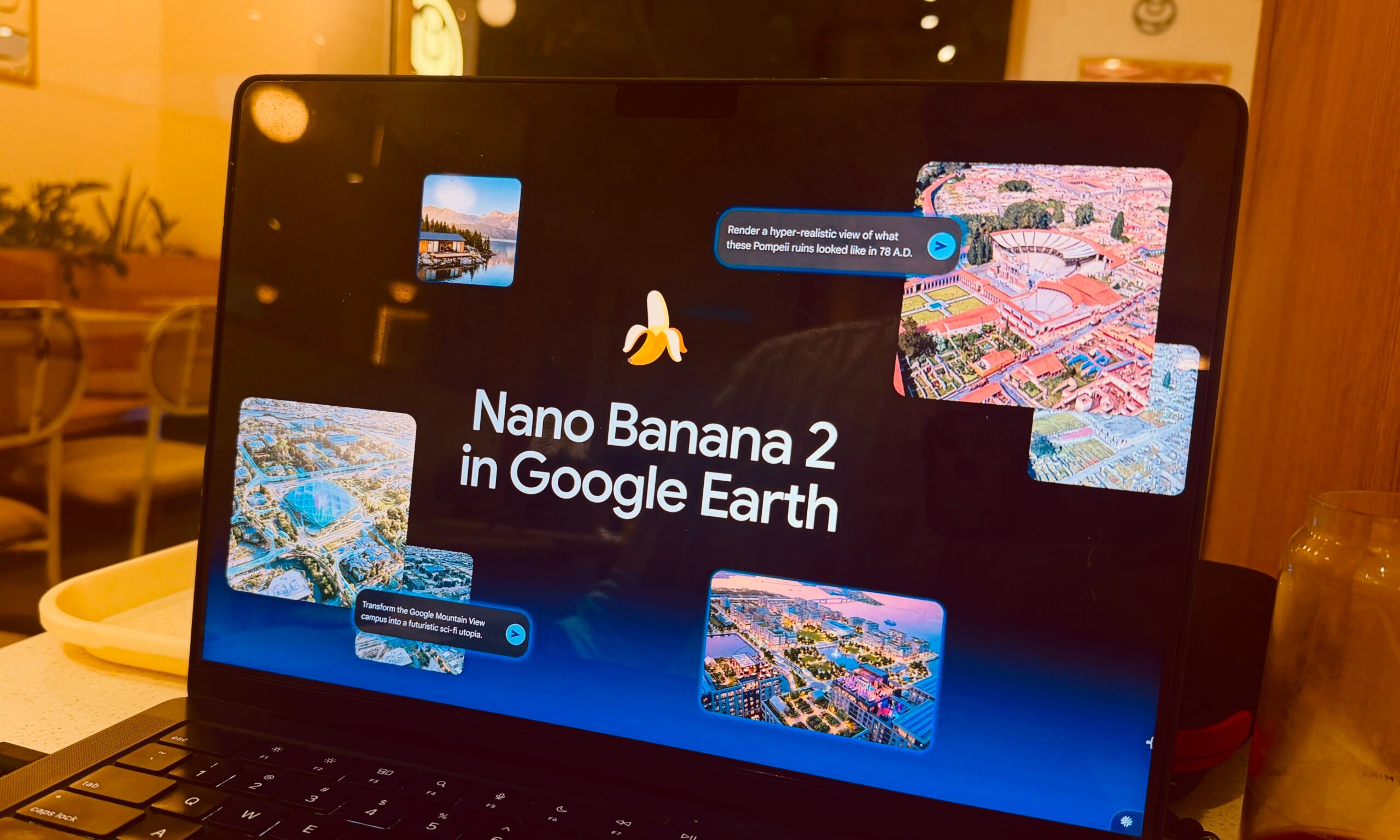
In its latest AI-fication experiment, the company targeted Google Earth. The idea was to let the audience use its Nano Banana 2 AI image generator and make images that can be placed on the map view. On paper, it's a cool idea. What would the Colosseum of Rome look like in your urban neighborhood? Yeah, fun stuff like that.

Read more
Google’s new AI gives robots better balance, smarter hands, and teamwork capabilities
Google just made robots a lot less clumsy and a lot more helpful.
Gemini robotics 2.0

Google DeepMind just brought sci-fi robots closer to reality, and it is very exciting. Building on its original Gemini Robotics model, the company has introduced Gemini Robotics 2, an AI system designed to help robots think, move, and even work together. Unlike most robots today, which rely on pre-programmed routines or someone controlling them remotely, this new system lets robots figure things out on their own when situations get unpredictable.

Can robots finally handle whole-body tasks?

Read more